The air inside the stadium smelled of damp wool, spilled malt beverage, and the copper tang of fear.
It was late November, that cruel stretch of the calendar where the Midwest stops pretending to be hospitable and turns its fields into frozen sheets of grey concrete. Outside, the wind whipped off the plains, biting through heavy parkas and finding the marrow. Inside, sixty-five thousand people were packed shoulder to shoulder, generating enough body heat to melt a glacier, yet everyone was shivering.
Football in the cold is not a game of arithmetic. It is a slow, grinding attrition. It is an exercise in applied physics where twenty-two bodies crash together with the kinetic violence of minor car wrecks, over and over, until the grass is chewed down to mud and the players can no longer feel their fingertips.
On this particular afternoon, the Kansas City Chiefs and the Indianapolis Colts were locked in a strange, beautiful kind of wrestling match. A 33-30 overtime thriller. Numbers on a stat sheet. But numbers are liars. They don't tell you about the silence that falls over a stadium when a 240-pound running back lowers his shoulder like a battering ram. They don't capture the sudden, electric snap of tension when a quarterback drifts backward in the pocket, his eyes scanning a landscape of moving steel, looking for a window no wider than a dinner plate.
Kenneth Walker knew about that silence.
To understand what happened on the turf that day, you have to look past the scoreboard lights and peer into the mechanics of exhaustion. Walker stood in the backfield early in the contest, his breath pluming white in the freezing air like a locomotive building a head of steam. Every step he took required a negotiation with gravity. The turf was a trap. Cleats slipped. Ankles groaned.
When the ball snapped into his breadbasket on a third-and-short in the second quarter, the sea parted—and then immediately slammed shut. That is the reality of modern sport. You are given a fraction of a second to make sense of chaos. You see a flash of a jersey, a helmet dipping low, an arm reaching out to snatch your progress away.
Walker didn't think. Thinking is fatal at twenty miles per hour. He reacted. He planted his right foot, felt the ankle pop slightly in protest, and cut hard against the grain. It was a violent, geometry-defying shift of momentum that left a linebacker grasping at thin air and frozen blades of grass.
He gained seven yards. Not a touchdown. Not a highlight-reel eighty-yard sprint that would loop on morning television. Just seven brutal, hard-earned yards that kept the chains moving. That is how football is actually played. It is built on the backs of anonymous collisions, bruises that don't fade for a week, and the quiet refusal to go down on first contact.
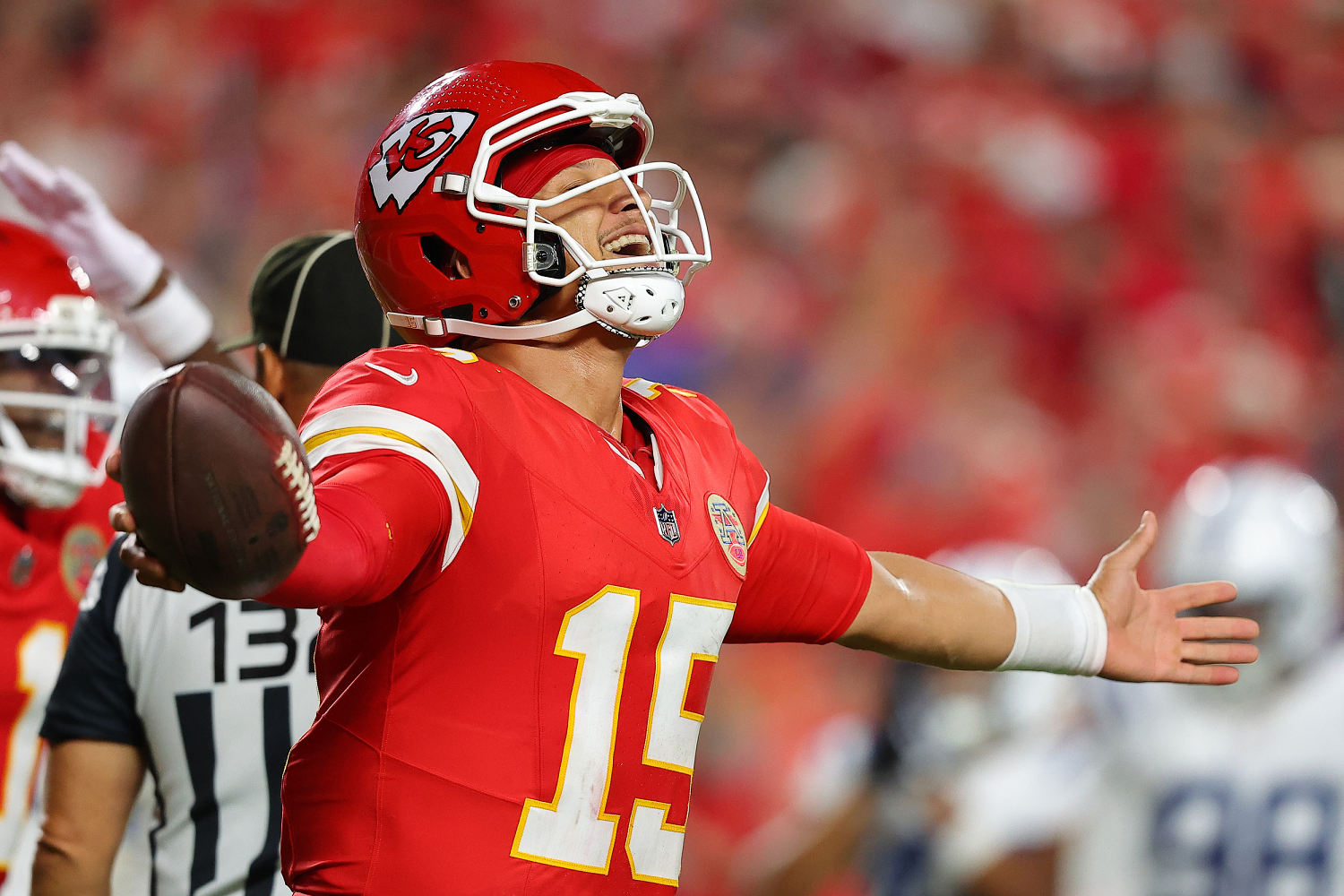
Across the field, on the other sideline, stood Patrick Mahomes.
Mahomes operates in a different register of reality. While the rest of the world sees a chaotic scramble of twenty-two players, he seems to see the matrix in slow motion. There is a strange serenity to him when the pocket collapses.
Picture the scene. It is the fourth quarter. The clock is bleeding out. The score is deadlocked, and the weight of an entire city—its bars, its living rooms, its fragile hopes—is pressing down on his right shoulder. The pass rush breaks through the line. A defensive tackle, sweating through his jersey despite the twenty-degree chill, is barreling toward Mahomes' ribs like a freight train with failed brakes.
Most human beings would tuck the ball and brace for impact. Survival instinct demands it.
Mahomes instead takes a subtle, almost imperceptible hop backward. He ducks under an outstretched arm. As he spins away, he doesn't look downfield; his body is moving horizontally, parallel to the turf, defying the basic rules of biomechanics. While falling backward, falling away from the target, his arm cocks.
It is a flick of the wrist born of backyard catch sessions played in the blinding Texas sun years ago, translated now into the blinding lights of a November twilight.
The ball leaves his hand with a strange, humming velocity. It cuts through the biting wind, tracking a tight, perfect spiral over forty yards of open air. It lands softly into the waiting arms of a receiver who barely has to break stride.
The stadium erupts. The roar hits you in the chest like a physical blow. But Mahomes is already jogging back to the huddle, his face expressionless, his breath still fogging the air. He doesn't celebrate. He doesn't scream. He simply adjusts his chin strap and starts calculating the next play.
Overtime is a cruel invention.
By the time the extra period arrived, both teams were running on pure adrenaline and whatever glycogen was left in their muscles. Sweat had frozen to the backs of jerseys. Hands were swollen and stiff, making every catch feel like trying to grab a rock thrown at high speed.
The Colts had fought tooth and nail. They had clawed their way back from deficits, trading punches with a heavyweight champion who simply refused to stay down. Every drive was a chess match played with sledgehammers.
Then came the final sequence.
The Chiefs drove into field-goal range, but a field goal is a nervous, jittery way to end a masterpiece. They wanted the end zone.
Mahomes took the snap. The defense dropped into a deep cover-two, trying to take away the big play, daring the Chiefs to bleed the clock. But football rewards the audacious. Mahomes rolled right, buying time, extending the play into a backyard scramble. He pointed a finger, signaling a receiver to break deep across the field.
It was a throw that should not have been completed. The angle was impossible; the defender was draped over the receiver's back like a winter coat.
The ball arrived anyway. Right on the numbers.
Thirty-three to thirty.
As the final whistle blew, the players collapsed into each other in a chaotic pile of exhausted humanity. Helmets came off. Steam rose from their bodies like heat venting from a factory floor. They slapped each other on the back, exchanging the quiet, respectful nods of men who had just survived a war together.
In the locker room afterward, the noise died down to a dull murmur. Ice bags were strapped to knees and shoulders. Taped ankles were cut away with heavy shears. The cold outside was still waiting, but inside, the room was warm with the heavy, golden scent of relief.
They had won. Or they had lost. In the grand scheme of a long season, tomorrow the film would roll, the mistakes would be dissected, and the meat grinder would start all over again. But for one fragile, electric moment in the freezing November dark, twenty-two mortals had touched something timeless.