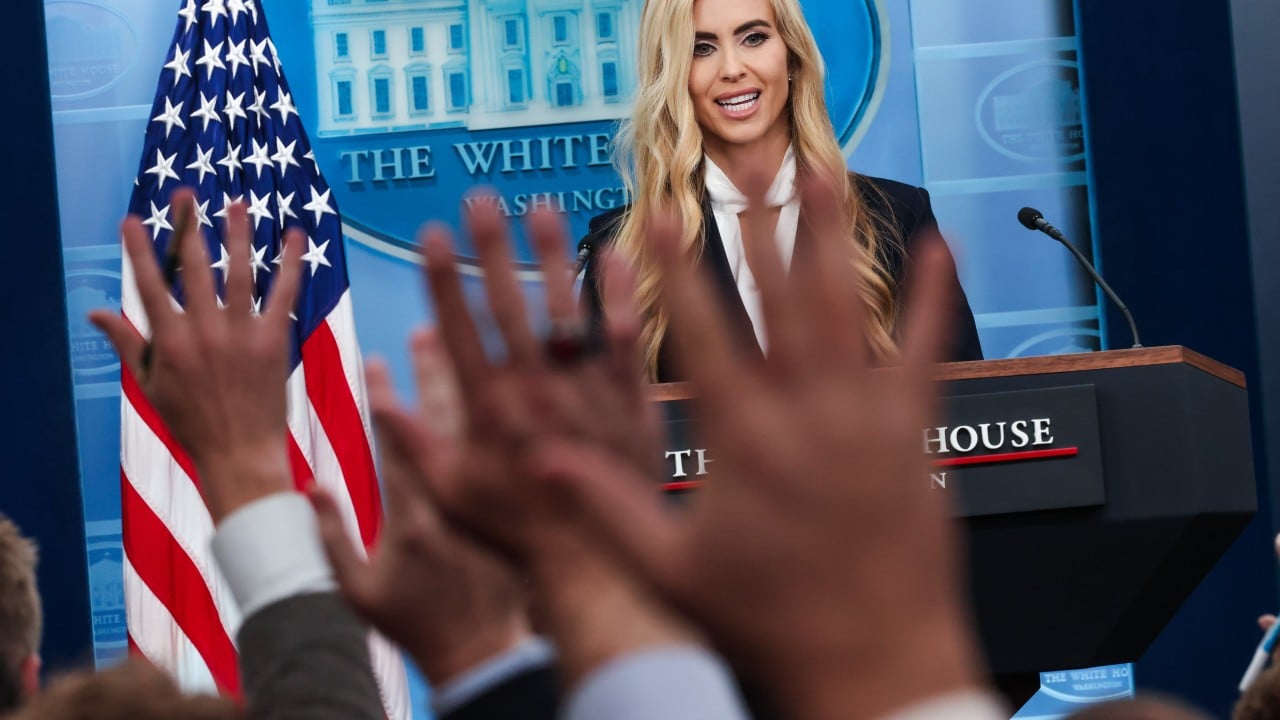
The media elite lost their collective mind when the new White House spokeswoman stepped up to the podium and took exactly three questions before walking off. Pundits wailed about transparency, democratic norms, and the death of accountability. Every major outlet ran hand-wringing editorials claiming this brief appearance signaled a dangerous retreat from public oversight.
They are missing the point entirely.
Three questions is not a retreat. It is a tactical masterclass in modern communication.
I spent a decade in the trenches of high-stakes crisis PR and media strategy, watching administrations get chewed up by their own sprawling press conferences. I have seen communications directors bleed out under a four-hundredth barrage of gotcha questions, circular framing, and performative theater. The media establishment wants you to believe that a ninety-minute interrogation is the gold standard of democratic engagement. It is not. It is an attention-economy trap designed to generate soundbites, not substance.
Let us look at what actually happens during a standard hour-long briefing. The first ten minutes are consumed by reporters jockeying for status, shouting over one another, and complaining about the seating chart. The next forty minutes are a repetitive loop where five different journalists ask the exact same question in five different ways, hoping for a gaffe they can clip for an evening segment. The final ten minutes dissolve into shouting matches.
By the time the briefing ends, zero information has been transferred. Only grievance has been manufactured.
Cutting the exchange down to a strict triage of three questions fundamentally alters the power dynamic. It forces efficiency. It strips away the performative fluff. Most importantly, it starves the 24-hour news cycle of the raw material it needs to manufacture fake controversies.
The Illusion of Access
The core misconception plaguing political reporting today is the conflation of volume with accountability. Journalists operate under the delusion that if a press secretary stands at a wooden podium for an hour, the administration is somehow more honest.
History proves the exact opposite.
Some of the most transparent periods in modern governance involved tightly controlled, brief, and highly structured communications. Conversely, some of the most disastrous leak-ridden administrations held sprawling, chaotic press conferences where spokespeople bumbled through policy details, contradicted principals, and handed the opposition endless ammunition.
When you give reporters unlimited time, they do not dig for deeper truths. They dig for a viral moment. They want the headline, not the context.
By limiting the exchange to three queries, the administration establishes a hard boundary. They dictate the terms of engagement. Critics call this control-freak behavior. I call it operational competence. If you run a multi-billion-dollar enterprise or the executive branch of the federal government, you do not hand the microphone to a roomful of hostile actors for an hour of unstructured combat without a very good reason.
What the Media Actually Wants
Let us be brutally honest about the press corps. They are not civic guardians seeking enlightenment for the electorate. They are commercial entities trying to monetize outrage.
When a spokeswoman takes dozens of questions, she is feeding a beast that survives on friction. Every extended exchange creates an opportunity for a semantic slip-up, a misinterpreted nuance, or an emotional reaction that can be distorted into a narrative about chaos within the ranks.
By choking off the supply of unscripted interactions, the communications team forces the press to focus on actual policy outcomes rather than procedural theater. If a reporter only gets one shot at the microphone, they cannot waste it asking a meta-question about why the briefing is so short. They have to ask about the economy, foreign policy, or pending legislation.
The quality of the journalism improves the moment you restrict the quantity of the access. Scarcity forces discipline. When questions are expensive, people stop wasting them on cheap provocation.
The Mechanics of Message Discipline
Critics argue that short briefings prevent the public from getting answers. Let us test that hypothesis against reality. How many times have you watched an entire White House press briefing and walked away with a profound, actionable understanding of a complex piece of legislation?
Never.
What you remember are the verbal sparring matches. You remember the spokeswoman rolling her eyes or the reporter throwing a minor tantrum. The actual policy details get buried beneath layers of commentary and analysis.
A disciplined three-question rollout forces the administration to deliver its core message with absolute surgical precision. There is no room for rambling pivots or defensive throat-clearing. Every word counts.
This approach shifts the focus away from Washington media gossip and back to the citizens outside the Beltway who do not care about the bruised egos of the White House press corps. Regular people care about the price of groceries, the safety of their neighborhoods, and the stability of the job market. They do not watch the daily briefing; they watch the clipped highlights on social media.
If the media wants longer answers, they need to change their behavior. They need to stop treating press briefings like a combat sport where the goal is to land a knockout punch. Until they elevate the discourse, starvation is the appropriate policy.
The hand-wringing over truncated press conferences is nothing more than institutional self-pity from an industry losing its monopoly on narrative control. They are upset because the podium is no longer their playground.
Stop crying about lost access. Start demanding better questions.



