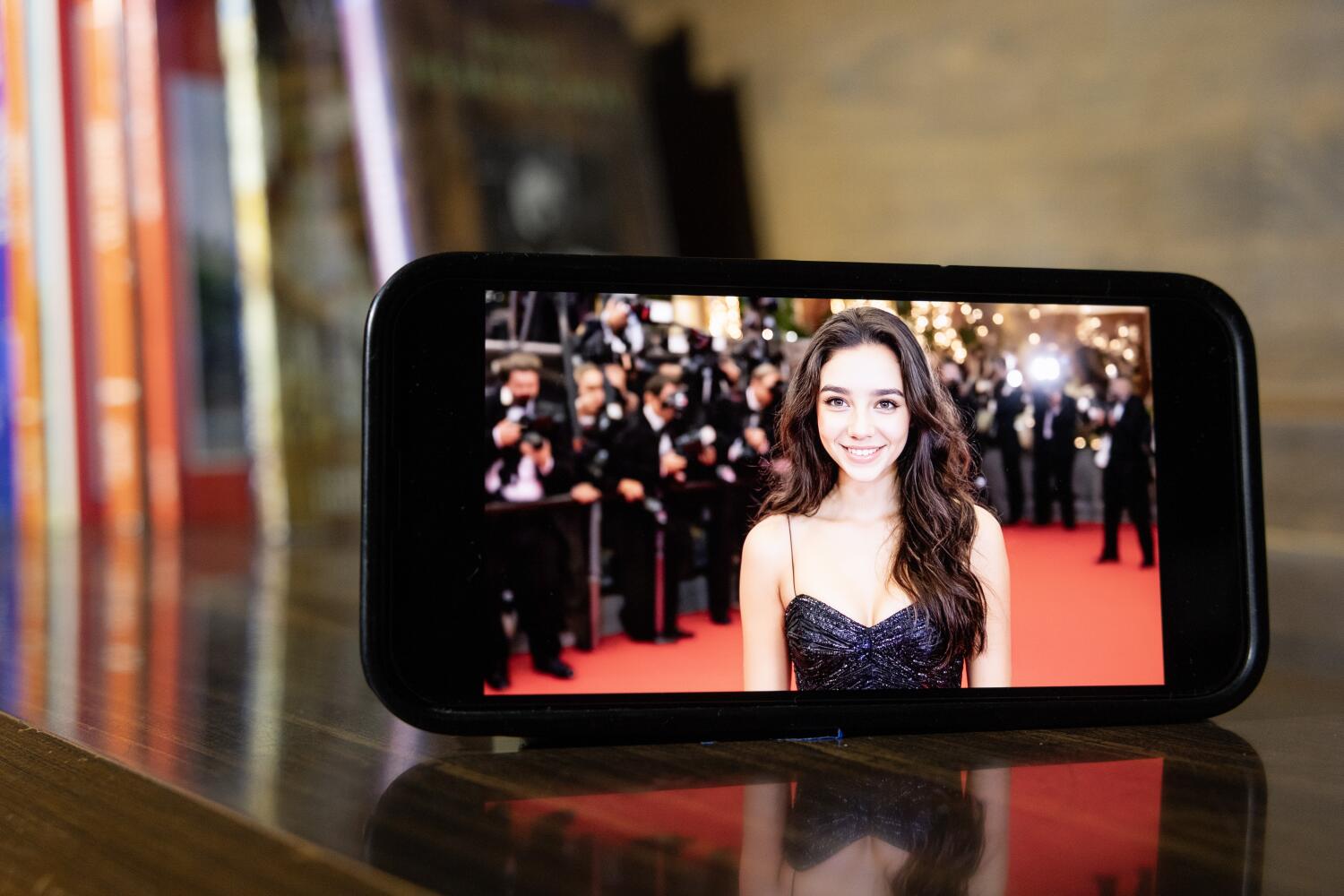
Tilly Norwood isn't real, but her paycheck is. If you've spent any time on social media lately, you've likely seen her face. She has that specific, uncanny symmetrical perfection that marks the current era of high-fidelity AI generation. But Tilly isn't just another static image used to sell vitamins or fast fashion. She’s the anchor of the "Tillyverse," a growing digital ecosystem that’s pushing the boundaries of what it means to be a celebrity.
The creator behind Tilly isn't just playing with filters. They're building a franchise. While human influencers burn out or get "cancelled" for decade-old tweets, Tilly stays on brand 24/7. She doesn't need sleep. She doesn't have a messy personal life. Most importantly, she can be in a thousand places at once. This isn't just a gimmick; it’s a blueprint for the future of intellectual property.
Why Virtual Humans Are Winning the Attention Economy
Most people look at an AI influencer and see a toy. That’s a mistake. The real power of the Tillyverse lies in its scalability. When a brand hires a human actor, they're paying for a limited window of time. There are logistics, travel costs, and the inevitable "creative differences." Tilly removes those friction points entirely.
The Tillyverse takes this a step further by creating a narrative world around the character. She has a backstory, a specific aesthetic, and a "personality" that remains consistent across platforms. This consistency builds trust with an audience, even when that audience knows she's made of pixels. It’s the same psychological mechanism that makes us care about Lara Croft or Spider-Man. We know they aren't real, yet we’re invested in their journey.
Digital avatars like Tilly offer a level of control that traditional talent agencies can only dream of. If a campaign needs to pivot from a moody, cinematic vibe to a bright, pop-art aesthetic, the creators just tweak the prompts and the lighting seeds. No re-shoots. No extra budget for a new wardrobe. Just pure, mathematical iteration.
The Technical Engine Behind the Tillyverse
Creating a character like Tilly Norwood requires more than just hitting "generate" on Midjourney. It involves a stack of technologies working in tandem.
- Consistent Seed Generation: Keeping a face exactly the same across different angles and lighting.
- Motion Synthesis: Using LoRA (Low-Rank Adaptation) models to ensure her movements feel fluid and weighted.
- Voice Cloning: Giving her a distinct vocal fry or a specific accent that matches her "hometown" in the lore.
- LLM Integration: Allowing her to "chat" with fans in real-time using a persona-locked large language model.
This isn't a hobbyist’s project. It’s a production pipeline. The "Tillyverse" implies an expansion into various media—short films, interactive games, and perhaps even virtual reality spaces where fans can "meet" her. By diversifying the medium, the creators ensure that Tilly isn't tied to the whims of a single social media algorithm. If Instagram dies, Tilly lives on in a million other shards of data.
Intellectual Property in the Age of Synthetic Media
The legal side of this is a total mess, and that’s actually an advantage for early movers. Right now, the law is struggling to keep up with who owns what. If I train an AI on a specific actor's likeness, that’s a lawsuit. But if I create a completely original synthetic human like Tilly, I own the copyright to that "person" in a way that’s much cleaner than a standard talent contract.
Investors love this. A human star can leave an agency. A human star can age out of a role. A human star can demand a 500% raise for a sequel. Tilly Norwood stays exactly how her owners want her to stay. She is a permanent, appreciating asset.
The Identity Paradox
There’s a weird tension here. We crave "authenticity" more than ever, yet we’re flocking to characters who are objectively fake. Maybe it’s because humans are tired of the curated "realness" of traditional influencers. We know the girl drinking the green juice is faking it for the camera. With Tilly, there’s no deception because the "fakeness" is the starting point. It’s honest about being a construction.
Moving Beyond the Uncanny Valley
For a long time, virtual humans were creepy. Their eyes were too still, or their skin looked like wet plastic. We’ve finally crossed the threshold where the "uncanny valley" is no longer a dealbreaker. Modern diffusion models and Gaussian splatting techniques allow for skin textures that include pores, fine hairs, and realistic light subsurface scattering.
In the Tillyverse, these details are used to ground the character. When you see a close-up of Tilly, you see the slight imperfection in her eyeliner or a stray hair. These "human" errors are intentionally coded back into the character to bypass our brain’s "AI alarm." It’s a sophisticated form of psychological engineering.
What This Means for Traditional Acting
If you're an actor starting out today, you should be worried. Not because AI will replace every role, but because the "middle class" of acting—commercials, background work, corporate training videos—is being swallowed by the Tillyverse and its competitors. Why hire 50 extras for a crowd scene when you can generate a diverse, high-def crowd for the cost of a few GPU hours?
The "Tillyverse" isn't just about one girl. It’s about the democratization of the "Star System." Soon, small production houses won't need a multi-million dollar budget to have a recognizable lead. They’ll just license a digital human or build their own from scratch.
Starting Your Own Digital Ecosystem
If you want to compete in this space, stop thinking about "posts" and start thinking about "worlds." The reason Tilly is successful isn't her face; it's the environment she inhabits.
- Define the Lore: Write a 50-page "bible" for your character. Where did they grow up? What are their flaws?
- Master the Stack: Learn ComfyUI or similar node-based interfaces. You need granular control, not just one-click generators.
- Diversify Platforms: Don't just stay on TikTok. Look at gaming integrations and decentralized web platforms.
- Engage with Feedback: Use your audience’s comments to shape the character’s next "move." It makes them feel like they're part of the creation process.
The era of the human-only celebrity is ending. It’s not a matter of "if," but "how fast." Tilly Norwood is just the first of many who will never breathe, never age, and never stop trending. Grab the tools and start building your own universe before the digital real estate gets too expensive.