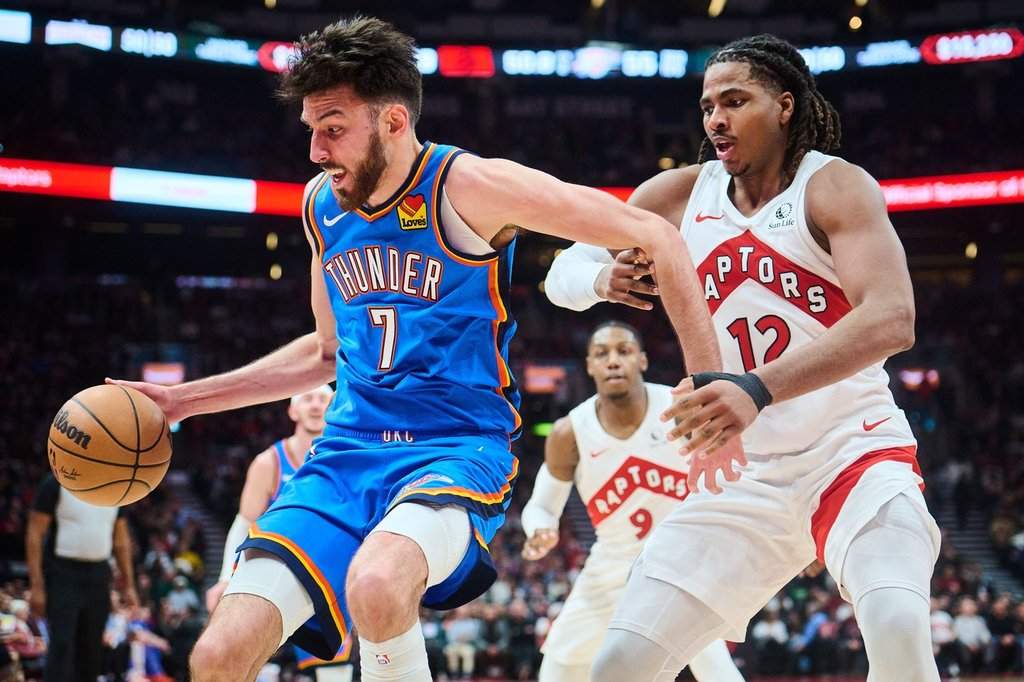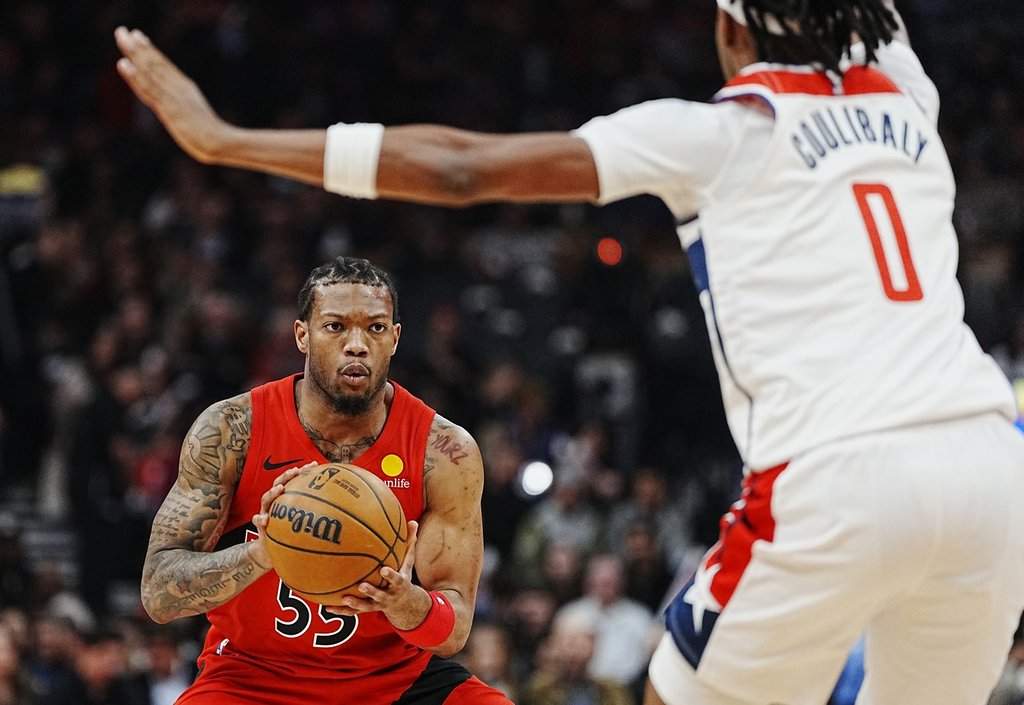
Efficiency is the quietest currency in basketball, and right now, it is buying serious rotation real estate in Toronto. As the Raptors grind through a season defined by developmental growing pains, injury reshuffling, and front-office evaluations, efficient Martin has forced his way into heavier minutes by doing the exact things rebuilding rosters usually struggle to master: making quick decisions, defending without fouling, and refusing to waste possessions. The competitor narrative stops at the surface observation that his playing time is ticking upward alongside solid shooting splits. The deeper truth is that his surge exposes a larger structural shift in how the Raptors value low-usage reliability over raw, chaotic upside.
Walk into any NBA film room after a twenty-game stretch and the coaching staff is rarely seduced by empty volume. Box scores lie easily when a player takes eighteen shots on a losing team to score twenty points. What coaches actually reward with fourth-quarter floor time is possession economy—the ability to keep an offense on schedule while surviving defensive switches against elite perimeter scorers. That is the exact lane where Martin has separated himself from the pack.
The Anatomy of Low-Usage Efficiency
To understand why a coaching staff suddenly trusts a fringe or middle-rotation player with twenty-five-plus minutes a night, you have to look past points per game and examine what happens when the ball touches his hands for less than two seconds. Most young rosters suffer from a predictable disease: everybody wants to eat, and nobody wants to set the table. Possessions die on the wing because a secondary handler holds the ball for four dribbles, allowing the weak-side defense to load up and strangle driving lanes.
Martin operates as an antidote to that stagnation. His value is rooted in connective tissue basketball—catching on the move, reading the closeout before the defender's heels hit the hardwood, and immediately choosing between a rhythm catch-and-shoot three, a hard baseline attack against an overplaying defender, or an extra swing pass to the corner.
Consider a hypothetical possession late in the third quarter when a primary initiator gets trapped thirty feet from the basket. A high-usage scorer might call for an isolation reset, burning twelve seconds off the shot clock. An efficient role player flashes to the nail, catches cleanly, draws the low-man help, and zips a one-touch pass to an open shooter before the defense can rotate. Nothing about that sequence shows up in a highlight reel, yet it alters the mathematical trajectory of a game.
When coaches talk about "trust," they are talking about variance reduction. High-variance players win you a Tuesday night in January by hitting seven contested jumpers and lose you three games in February by coughing up live-ball turnovers that turn directly into opponent transition dunks. Low-variance, high-efficiency players give a head coach a predictable floor. You know where he will be on weak-side tags. You know he will box out his assignment instead of leaking out early. You know he will take the open look without hesitation and pass up the bad one without sulking.
Why Toronto's Roster Math Forced the Hand
Playing time in the NBA is never distributed in a vacuum; it is a zero-sum battle governed by roster construction, injury attrition, and developmental timelines. In Toronto, the rotation ecosystem has been in constant flux as the franchise balances competitive pride with long-term asset evaluation. When primary creators miss time or high-draft-pick wings hit inevitable rookie and sophomore walls, a coaching staff faces a stark choice: lean into messy, turnover-prone lineups that teach bad habits, or anchor the floor with steady, high-efficiency connectors who make everyone else's job easier.
Toronto chose stability. And that decision reveals an uncomfortable truth about modern NBA player development.
For years, the prevailing wisdom around rebuilding teams was to hand unlimited reps to raw athletes and let them play through every mistake. The problem with that approach is collateral damage. When four players on the floor are simultaneously learning how to read NBA pick-and-roll coverages on the fly, nobody develops properly because the spacing collapses and the defensive shell breaks down every third trip. Inserting an efficient, disciplined wing or guard into those lineups acts as a stabilizer. Suddenly, the young franchise cornerstone gets cleaner driving lanes because defenders cannot cheat off the weak side. The backup center gets rewarded for rolling hard because the entry pass actually arrives on time and on target.
Efficiency, in this context, is not just an individual stat line. It is an ecosystem multiplier.
Defensive Versatility Is the Real Ticket to Fourth-Quarter Minutes
Offense gets players drafted, and shooting keeps them in the league, but defensive survivability is what unlocks closing lineups. In the modern NBA, hunting mismatches in the final five minutes is a science. If a player cannot guard at least two or three positions without requiring constant double-teams, opposing offenses will put him in a blender until the coach is forced to pull him off the floor.
What has quietly cemented Martin's expanded role is that his efficiency carries over to the less glamorous side of the ball. Defensive efficiency is harder to quantify than true shooting percentage, yet any veteran scout can spot it within six possessions:
- Screen navigation: Getting skinny over top of high ball-screens rather than dying on contact and forcing the big man to give up a layup.
- Closeout discipline: Chopping the feet under control so a shooter cannot blow past on a simple pump fake.
- Foul avoidance: Contesting vertically with active hands instead of reaching lazily when beaten by half a step.
- Rebounding commitment: Crashing down from the perimeter to secure long rebounds that ignite transition opportunities.
When a player combines low-turnover offense with mistake-free defense, his net impact on winning routinely outpaces players making four times his salary. Coaches notice immediately when a unit's defensive rating stabilizes the moment a specific player checks in at the six-minute mark of the first quarter. Once that pattern holds across ten or fifteen games, reducing his minutes becomes coaching malpractice.
The Hidden Trap of Rising Minutes
Still, veteran observers know better than to treat a hot stretch of efficiency as permanent gospel. There is a well-documented phenomenon in the NBA known as the scouting report tax.
When a player averages twelve to fifteen minutes off the bench, opposing teams barely mention him in pre-game walkthroughs. Defenses help off him freely, close out lazily, and let him operate in the shadows of primary stars. Once his minutes climb into the mid-twenties and his efficiency numbers start popping up on analytics dashboards, the coverage changes overnight.
Suddenly, defenders stay attached to his hip in the corners. Coaches instruct their wings to run him off the three-point line and force him to finish over length in traffic. Opposing point guards test his handle with full-court pressure to see if his low turnover rate holds up when he is asked to initiate secondary actions rather than simply finish plays.
This is the exact inflection point where promising rotation stories either solidify into legitimate long-term NBA careers or regress back toward the fringe. Sustaining high efficiency on six shot attempts a night is one skill; maintaining that same poise when usage ticks up and defensive attention tightens is an entirely different test.
What This Means for the Raptors Rotation Hierarchy
The ripple effects of Martin's surge extend straight into the front office and the locker room. Every minute awarded to an efficient, reliable contributor is a minute taken away from someone else—often a higher-pedigree prospect or a veteran on an expiring contract who expected a guaranteed role.
That tension is healthy, even when it is uncomfortable. Great organizations build internal meritocracies where draft position and salary figures stop mattering the moment the ball goes up for tip-off. When players see a teammate earn crunch-time minutes strictly through shot discipline, defensive effort, and unselfish ball movement, it sends an unmistakable message across the bench: if you want to play, stop hunting numbers and start winning possessions.
For Toronto, the immediate challenge is calibrating his workload so he stays within the sweet spot that made him valuable in the first place. Push a role player too far outside his natural usage band, and his efficiency inevitably cracks. Keep him empowered as a high-IQ connector who punishes over-helping defenses and locks down perimeter scorers, and he becomes one of the highest-value contracts on the roster.
The Raptors did not stumble into giving Martin more minutes out of charity or desperation. He took them the hardest way possible in professional basketball—by making it impossible for the coach to take him off the floor without watching the team get worse.