Energy giants do not just survive chaos. They price it. For TotalEnergies, the escalating fire across the Middle East represents a brutal duality where humanitarian catastrophe serves as a fundamental driver of balance sheet expansion. While the company publicly navigates the diplomatic minefield of "decarbonization" and "regional stability," its financial architecture is currently tuned to capture the massive risk premiums generated by every missile launch in the Levant and every disrupted tanker in the Red Sea. This is not a coincidence of timing. It is the result of a deliberate, decade-long pivot toward Liquefied Natural Gas (LNG) and a strategic bet on the very instability that now defines global energy markets.
The mechanics are straightforward but often ignored in polite corporate circles. War in the Middle East tightens supply chains and inflates the "fear premium" on Brent crude. More importantly, it creates a desperate, high-priced market for non-pipeline gas. As a primary architect of Qatar’s massive North Field expansion, TotalEnergies sits at the epicenter of the world’s most critical energy artery. They are not merely observers of the storm. They are the gatekeepers of the alternative.
The Qatar Connection and the LNG Shield
To understand why TotalEnergies remains insulated from the shocks that cripple other sectors, one must look at the map of the Persian Gulf. Specifically, the massive gas fields shared between Qatar and Iran. Patrick Pouyanné, the company’s CEO, has spent years doubling down on this geography despite the obvious geopolitical hazards. The rationale is cold and mathematical. In a world where Russian gas is toxic and American exports are subject to domestic political whims, Qatari LNG is the ultimate prize.
TotalEnergies was the first international partner to sign onto the North Field East project. This wasn't just a contract; it was a move to secure the lowest-cost production base on the planet. When regional tensions spike, the spot price for LNG in Europe and Asia follows suit. Because TotalEnergies controls the liquefaction and the shipping, they capture the spread at every stage of the journey. They have effectively turned regional volatility into a self-hedging mechanism. If oil prices drop due to a global slowdown, the supply constraints caused by Middle Eastern conflict keep gas prices artificially high.
Beyond the Green Curtain
The company’s marketing departments spend millions highlighting solar farms in Spain or wind projects in the North Sea. These are the visual distractions of a modern fossil fuel titan. The reality of the cash flow tells a different story. In the most recent fiscal cycles, the vast majority of the company's record-breaking profits flowed from traditional upstream operations and integrated LNG. The "green" transition is a long-term capital sink; the Middle East conflict is a short-term liquidity engine.
Critics often point to the ethical quagmire of profiting from regions in turmoil. This misses the structural reality of the industry. TotalEnergies operates with the mandate of an energy sovereign. They provide the fuel that keeps the lights on in Paris and the factories running in Munich. This creates a level of political leverage that few nations can ignore. When the French government speaks about Middle East diplomacy, the interests of its primary energy provider are never far from the negotiating table.
The Iraq Gamble and the Security Premium
Nothing illustrates the company's appetite for high-risk, high-reward environments better than its $27 billion deal in Iraq. This project, which includes gas recovery, seawater injection, and solar power, is located in a territory that most Western majors have spent years fleeing. Why stay? Because the "security premium" is where the most significant margins are hidden.
Iraq flares a staggering amount of gas—literally burning money into the atmosphere because it lacks the infrastructure to capture it. TotalEnergies stepped in to solve this, but the deal is structured with deep protections against political instability. They are effectively being paid to build the sovereign infrastructure of a nation while extracting the raw materials at a steep discount. The risk of local insurgencies or government collapse is high, but the contract terms are designed to ensure that even a partial success yields a massive internal rate of return.
Red Sea Disruptions and the Logistics Trap
The recent targeting of maritime trade in the Red Sea by Houthi rebels has forced a massive rerouting of global shipping. For many companies, this is a logistics nightmare of increased costs and delays. For an integrated major like TotalEnergies, it is a market-tightening event.
When tankers are forced to bypass the Suez Canal and sail around the Cape of Good Hope, the "ton-mile" demand increases. There are fewer ships available to move the same amount of product. This pushes up freight rates and, by extension, the price of the commodity at the destination. TotalEnergies owns or long-term leases its fleet. They are not paying these increased market rates to third parties; they are the ones benefiting from the increased value of the cargo they already own.
The Myth of Neutrality
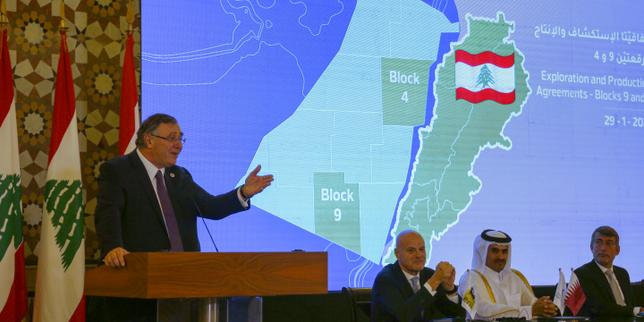
We often hear that corporations are apolitical entities focused solely on shareholder value. In the context of Middle Eastern energy, this is a fallacy. TotalEnergies is a political actor by necessity. Their presence in Lebanon, their massive footprint in the UAE, and their historical ties to North Africa make them a shadow diplomat.
This creates a peculiar feedback loop. The company needs enough stability to operate its platforms and pipelines, but enough tension to keep global prices from collapsing. It is a tightrope walk over a volcano. The "choc" mentioned by the French press is real—it creates operational headaches and safety risks for workers—but the "aubaine" (the godsend) is the undeniable boost to the bottom line that comes from a world in fear of a supply crunch.
The Hidden Cost of the Pivot
While the profits are undeniable, there is a mounting cost that doesn't appear on the quarterly earnings call. The company is becoming increasingly dependent on a "permancrisis" state of the world. By shifting so much of its weight into the LNG and Middle Eastern theater, TotalEnergies has tied its future to the continuation of global friction.
If the Middle East were to suddenly enter a period of sustained, peaceful cooperation, the risk premiums would vanish. The oversupply of gas would crash prices. The strategic advantage of holding Qatari and Iraqi assets would diminish relative to safer, lower-margin plays in the West. TotalEnergies has essentially shorted global peace.
The transition to renewables is often framed as a moral choice, but for this company, it is a diversification strategy against the eventual exhaustion of the conflict-driven profit model. They are using the massive windfalls from today’s wars to buy the infrastructure of tomorrow’s "clean" world. It is a transition funded by the very carbon they claim to be moving away from, accelerated by the very instability they claim to deplore.
Reality Check on the Balance Sheet
The numbers do not lie. When looking at the capital expenditure (CAPEX) distributions, the "integrated power" segment—which includes renewables—remains a fraction of the investment poured into new oil and gas frontiers. The company is doubling down on the Levant and the Gulf because that is where the 20% to 30% returns live. Renewables, by comparison, struggle to hit double digits without heavy government subsidies.
$Profit = (Volume \times (Market Price + Risk Premium)) - Production Cost$
In this equation, the production cost in the Middle East is among the lowest in the world. The volume is guaranteed by long-term state contracts. The only variable that can be maximized is the Risk Premium. Therefore, any event that increases perceived risk without physically destroying the extraction infrastructure is a net positive for the firm's valuation.
The Fragility of the Strategy
There is, however, a breaking point. The current strategy relies on "controlled instability." If a conflict escalates into a full-scale regional war that shuts down the Strait of Hormuz, no amount of price hedging can save a company that cannot move its product. TotalEnergies is betting that the world’s superpowers will never allow the tap to be turned off completely. They are banking on the idea that the world needs their gas more than it hates the chaos required to get it.
This is the gamble of the century. It requires navigating the interests of the Quai d'Orsay, the White House, and the various ruling families of the Gulf, all while maintaining a facade of corporate responsibility. It is a masterclass in Machiavellian business strategy, executed with the cold efficiency of a French engineering firm.
The next time a headline breaks about a strike on an oil facility or a breakdown in regional ceasefire talks, do not just look at the price of gas at the pump. Look at the stock ticker for the majors. The volatility isn't a bug in the system; for TotalEnergies, it is a feature of the business model.
Stop looking for the company to be a victim of the Middle East's history. They are its primary financiers and its most successful profiteers.