A Ticket to Visit, A Knock at the Door
He came with a piece of paper that said he was welcome to visit.
A standard United States tourist visa. It is a document millions hold—a small stamp representing vacation plans, family reunions, or brief escapes. But on a humid Florida afternoon, that paper meant nothing against the sudden weight of federal badges and drawn weapons. For an alternative look, read: this related article.
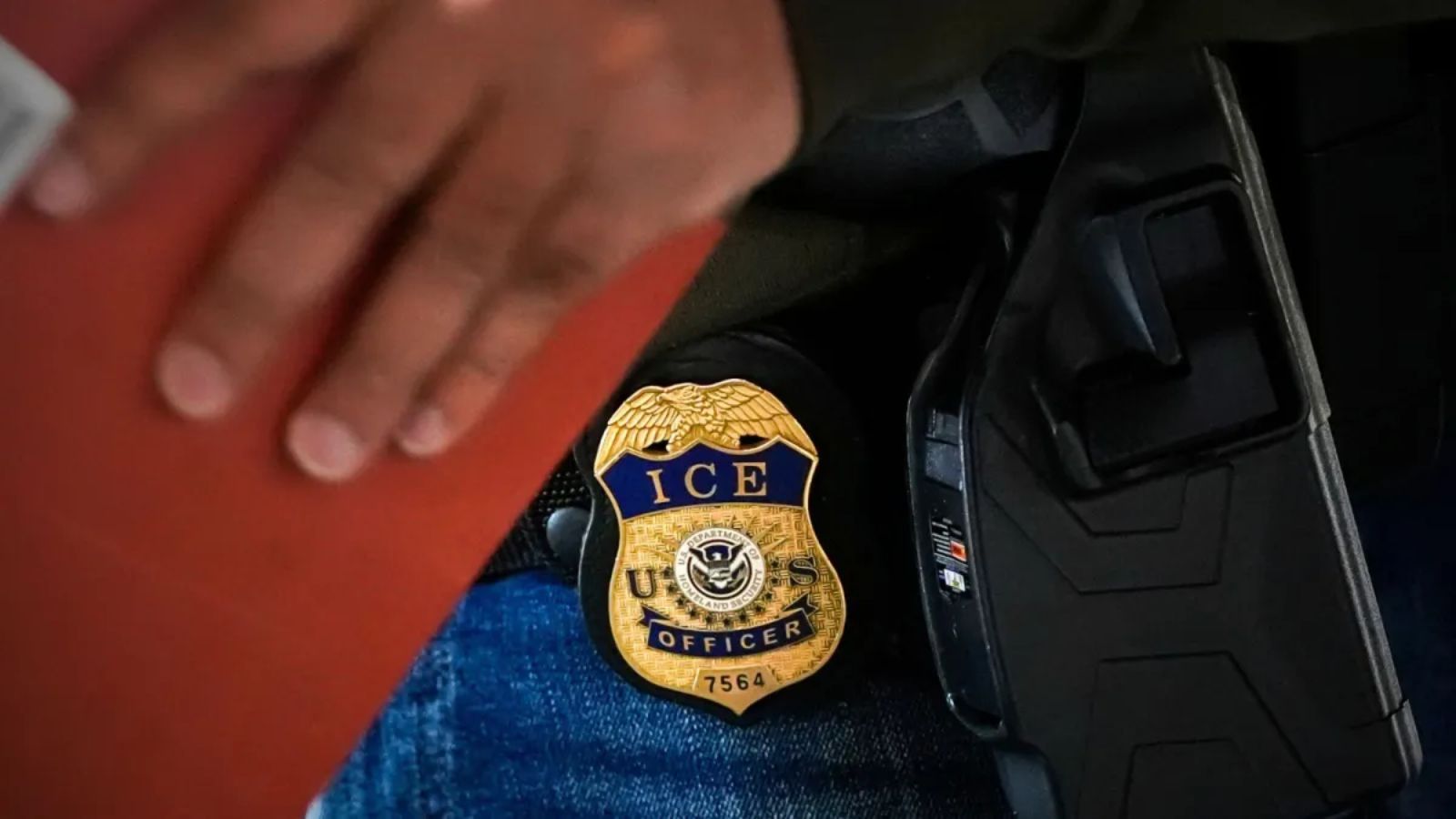
What began as an encounter involving law enforcement officers linked to Immigration and Customs Enforcement ended in a fatal shooting. A Mexican national, living through what was supposed to be a temporary stay, lost his life on American soil.
The official statements arrived swiftly. They contained the usual sterile vocabulary of officialdom: incident, suspect, law enforcement-involved, investigation pending. But behind those cold descriptors lies a human story, a family now staring at an empty chair, and a growing, urgent question about how routine immigration enforcement operates far from the actual southern border. Related reporting on the subject has been published by NBC News.
The Machine in the Sunshine State
To understand how a tourist ends up dead during an ICE-linked encounter, you have to look at the machinery operating underneath everyday life.
Florida has increasingly positioned itself at the forefront of local-federal immigration cooperation. Programs that allow state and local officers to partner with federal immigration authorities have expanded dramatically. On paper, these agreements are pitched as measures to enhance public safety. In reality, they create a hyper-vigilant environment where the line between a routine traffic stop and a life-or-death federal operation blurs instantly.
Consider a hypothetical traveler named Marco. Imagine him arriving at Miami International Airport, showing his valid passport, passing through customs, and stepping out into the thick tropical air. He rents a car. He buys a coffee. He drives down highway stretches lined with palm trees and billboards.
To Marco, he is a guest in a foreign country. To the complex web of license-plate readers, shared databases, and cross-jurisdictional task forces, he is a data point moving through a high-surveillance corridor.
When local police officers possess federal immigration authority, every interaction carries hidden stakes. A broken taillight or a minor lane departure is no longer just a potential ticket. It becomes a doorway to verification, detention, and, in catastrophic moments, escalation.
How Panic Replaces Protocol
Fear is an unpredictable force.
When heavy boots hit the pavement and voices start shouting commands, context collapses. Language barriers, even small ones, turn simple instructions into chaotic noise. For someone holding a valid tourist visa, the sudden appearance of armed officers demanding compliance creates instant cognitive dissonance. Why am I being targeted? Is this a robbery? Are these real officers?
Law enforcement officers are trained to maintain control of a scene through dominant force and authoritative commands. But when that dominance meets a human being paralyzed by fear or confusion, the situation can deteriorate in seconds.
The official reports in this case indicate that confrontation escalated quickly. Shots were fired. A man died.
Yet, the core facts raise troubling questions that simple police reports rarely answer. Why did an encounter involving an individual on a tourist visa require lethal force? What specific threat prompted the fatal decision?
When authorities conduct operations in residential neighborhoods or public streets, the margin for error is non-existent. A single misinterpretation—a sudden movement, a reach for an ID card, a step backward—can trigger a fatal reaction.
The Growing Reach of the Border
There was a time when immigration enforcement felt confined to border towns, dusty river crossings, and international ports of entry. That era is long gone.
Today, the border is invisible, digital, and mobile. It exists in suburban neighborhoods in Orlando, on turnpikes near Tampa, and in quiet apartment complexes across the country. Through jurisdictional expansions, federal agencies operate with wide latitude across entire states.
This geographic stretch alters the fundamental relationship between foreign visitors and the host country. Millions of tourists enter the United States every year, contributing billions to local economies. They come under the assumption that holding a valid visa protects them under the rule of law.
When an encounter turns deadly, that assumption shatters. It signals to international travelers and local communities alike that the presence of a visa does not guarantee safe passage or procedural immunity from high-stakes tactical operations.
The Silence Left Behind
In the aftermath of a fatal shooting, a predictable cycle begins.
Agencies release carefully worded statements designed to limit liability. Internal investigations are launched behind closed doors. News outlets publish brief, factual summaries listing the victim's nationality, the location, and the agencies involved.
Then the news cycle moves on.
But in a home thousands of miles away in Mexico, the news does not move on. Phone calls are made in hushed, desperate tones. Documents are translated. Questions are asked across international borders, met mostly with bureaucratic silence.
A passport with a valid U.S. visa sits on a kitchen table, alongside photos of a person who will never return home to explain what happened in those final, frantic seconds under the Florida sun.
The real tragedy of these encounters is not just the physical loss of life, but the systemic normalization of extreme outcomes during standard enforcement actions. Until the mechanisms driving these task forces are examined with total transparency, the invisible border will continue to claim lives quietly, one catastrophic encounter at a time.

/https://i.s3.glbimg.com/v1/AUTH_e84042ef78cb4708aeebdf1c68c6cbd6/internal_photos/bs/2026/g/B/3vpkvHQKizRKAfzDxjXA/vini-jr-antes-e-depois.jpg)