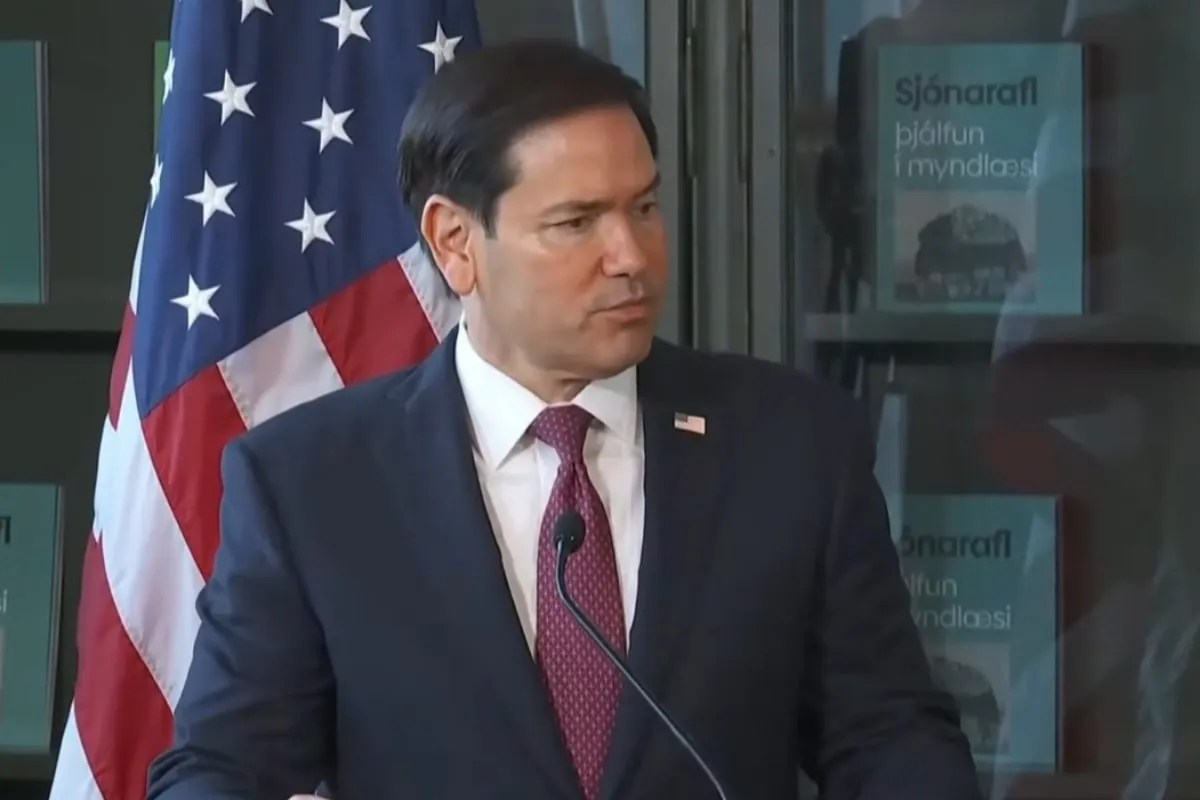
Diplomatic optimism about a bilateral trade pact between Washington and New Delhi cannot be separated from secondary sanctions, refining margins, and crude oil supply elasticities. When US Secretary of State Marco Rubio states that a trade agreement with India is close while explaining waivers on Russian oil sanctions, surface-level news coverage treats the two items as parallel headlines. Treating them as separate stories misses the underlying bargaining structure. Energy waivers act as a short-term pressure valve to keep global oil prices from spiking and to prevent tariff escalation from derailing trade talks before final terms are locked in.
Standard reporting on the headline "'भारत-अमेरिका समझौते के बेहद करीब', ट्रेड डील पर बोले मार्को रुबियो, रूसी तेल पर छूट की भी बताई वजह" usually relies on three simplified claims: first, that diplomatic proximity signals imminent execution; second, that oil waivers reflect Washington's recognition of India's energy needs and diversification efforts; and third, that tariff threats and waivers operate as straightforward rewards or penalties. That framing leaves out the hard constraints governing both capitals. Trade negotiations stall over domestic political sensitivities such as agriculture, legal and administrative friction over tariff authority, and physical refinery economics. Also making news recently: Why US Stocks Are Bouncing Back After the AI Selloff.
To analyze this dynamic rigorously, the negotiation can be mapped across four operational components: the tariff-waiver linkage, refinery and supply-chain rigidity, domestic political red lines, and the distinction between verified facts and analytical hypotheses.
The Tariff and Waiver Linkage
Secondary sanctions and punitive tariffs on Russian energy buyers function as a two-sided instrument in US trade diplomacy. When legislation such as the Sanctioning Russia and Iran Act of 2026 creates the prospect of steep tariffs—up to 100 percent on countries purchasing Russian oil—the threat increases Washington's nominal bargaining leverage. Yet imposing maximum tariffs immediately carries a steep cost for the United States itself: higher import prices, retaliatory friction, supply-chain disruption, and upward pressure on global crude prices. More insights into this topic are explored by Bloomberg.
Pausing or waiving those tariffs during active trade talks changes the negotiation payoff matrix. A waiver lowers immediate escalation risk so both negotiating teams can work through remaining commercial items without blowing up the broader talks. At the same time, keeping a statutory or executive tariff authority in the background preserves leverage until an agreement is formally signed.
The first cause-and-effect relationship overlooked in routine coverage involves price pass-through and inflation feedback. If Washington enforces heavy secondary tariffs on a major crude buyer like India while crude markets are already tight—with benchmark oil trading near elevated levels around $110 per barrel amid Middle East supply concerns—the resulting rerouting of tankers and tighter physical balances can push refined fuel costs higher globally. Granting a temporary window or waiver allows policymakers to assess market impact rather than triggering an immediate supply shock.
The second cause-and-effect relationship concerns legal durability and sequencing. A bilateral framework or interim understanding announced earlier in 2026 faced uncertainty after US judicial action struck down sweeping tariff measures, complicating how tariff concessions and enforcement mechanisms are structured. Because tariff authority is contested and politically sensitive, negotiators cannot treat every verbal assurance or temporary pause as a permanent settled rule.
Refinery Economics and Supply Rigidity
Rubio's remark that energy diversification is difficult to execute overnight—and his reference to India as a refining superpower with major facilities such as Jamnagar—points directly to industrial physics rather than mere diplomatic courtesy. India imports more than 85 percent of its crude oil needs, making crude sourcing a foundational macroeconomic variable rather than a discretionary purchasing choice.
Crude oil is not a single homogeneous commodity. Refineries are engineered around specific slate characteristics, including API gravity (density) and sulfur content. Heavy or medium sour grades behave differently in distillation towers, hydrotreaters, and cokers than light sweet crudes. Switching large volumes of feedstock rapidly requires:
- Crude assay compatibility: Matching the viscosity, sulfur content, and yield profile of replacement grades to existing refinery units so throughput and conversion efficiency do not drop.
- Contract and logistics lead times: Securing term or spot cargoes, arranging marine insurance and vessel availability, and managing transit times across maritime chokepoints.
- Margin protection: Balancing the landed cost of alternative crudes—including freight rates and insurance premiums—against refined product crack spreads in domestic and export markets.
When a country shifts away from discounted or sanctioned supply streams abruptly, refineries face either lower operating margins or costly blending adjustments. Gradual diversification reduces operational shock. Simultaneously, large export-oriented and domestic refining complexes create a commercial opening for US energy suppliers seeking buyers for American crude, liquefied natural gas, or related energy inputs as part of a wider trade package.
Consider a simplified refinery procurement example. Suppose a complex refinery runs a blend optimized for cost and product slate balance. If a low-cost supplier is cut off overnight, the plant must replace millions of barrels on short notice. Even if alternative barrels exist on the water, higher freight or less optimal slate yields compress refining margins and raise domestic fuel costs. Phased adjustments give procurement teams time to lock in replacement barrels without starving domestic demand or spiking wholesale fuel prices.
Domestic Red Lines and Negotiating Bottlenecks
Saying two sides are "very close" to a trade agreement describes momentum, not completion. In complex trade talks, the final handful of unresolved items is often the hardest to close because each remaining item sits on a domestic political fault line.
In US-India trade negotiations, agricultural market access stands out as a persistent friction point. Farming in India supports a large workforce with small average landholdings, meaning sudden import competition in sensitive farm or dairy categories carries acute political and livelihood risks. Indian negotiators routinely defend high protection or strict safeguards in agriculture even when willing to compromise on industrial goods, digital trade, or supply-chain rules.
On the American side, negotiators push for tangible commercial deliverables—such as expanded market access, reduced non-tariff barriers, and larger purchases of US energy and industrial goods—that can be presented as concrete wins at home. Currency pressure and trade balance sensitivities add another layer: if tariff threats weigh on export sentiment or currency stability, both sides have to calibrate concessions carefully so the agreement survives domestic scrutiny.
Negotiation friction also arises from differing definitions of strategic autonomy and alignment. New Delhi treats multi-alignment and energy security as core sovereign interests, while Washington links trade concessions, security cooperation, and sanctions enforcement into an integrated strategic calculus. A deal closes only when both capitals can claim that the package protects their core domestic constituencies without surrendering foundational autonomy.
Facts Versus Analytical Hypotheses
Separating confirmed developments from analytical interpretation prevents overreading diplomatic phrasing:
- Verified facts: US Secretary of State Marco Rubio stated during his diplomatic engagement and travel involving India in October 2026 that a trade deal with India is very close, noted that energy diversification cannot happen overnight, and pointed to tariff pauses and sanctions waivers taken amid trade negotiations and global supply considerations. India relies on imports for over 85 percent of its crude oil, and agriculture remains a sensitive issue in the talks.
- Educated hypotheses: Linking oil waivers to trade negotiations likely serves a dual purpose—preventing immediate global energy price spikes while keeping New Delhi constructive at the negotiating table. Furthermore, final agreement text will probably rely on phased commitments, carve-outs, or energy purchasing understandings rather than an immediate, wholesale overhaul of India's sensitive agricultural protections.
The primary limitation of any strategy built around temporary waivers is reversibility. Executive pauses and national security waivers can be narrowed, extended, or revoked if geopolitical conditions shift, crude prices move, or talks stall. Neither side has a risk-free lever: aggressive tariffs risk inflation and diplomatic rupture, while broad concessions risk domestic political backlash.
Strategic Play for Decision-Makers
For corporate treasuries, commodity traders, and policy teams tracking this negotiation, treat public statements of proximity as a signal to lock in conditional risk management rather than assuming tariff certainty. Map exposure across three concrete fronts—imported input costs sensitive to US or Indian tariff shifts, crude and refined product procurement flexibility, and currency hedging against headline-driven volatility—and structure commercial contracts with clear tariff-change and force-majeure clauses until a signed, legally binding agreement is published.


