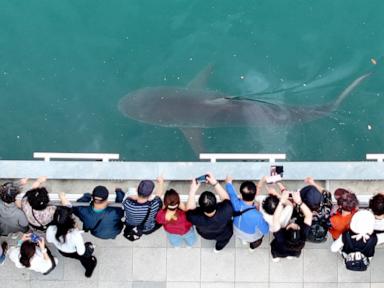
Most cities panic when a massive predator wanders into municipal waters. Busan did something completely different. When a large dusky shark slipped into a narrow canal at South Korea’s North Port Waterfront Park, the country didn't call for an emergency cull. They gave it a name, built an online fan club, and showed up by the hundreds of thousands.
Meet Bukangi. For over a month, this ten-foot marine animal turned a concrete city canal into its personal stage. While marine biologists worried about its health, the general public treated the stray visitor like a visiting headliner. It's a bizarre modern phenomenon that highlights how humans interact with urban wildlife when things get weird.
Why Everyone Fell for a Canal Shark
The whole spectacle kicked off on September 18. Tourists and locals strolling through Busan's bustling port district noticed a large fin slicing calmly through the shallow canal water. Word spread instantly.
Instead of fading away as a brief local curiosity, the shark drew staggering crowds. More than 1.6 million visitors packed the waterfront park over the following weeks. Half a million of those showed up during a single holiday stretch for Chuseok, the Korean Thanksgiving.
People weren't running away. They brought cameras, binoculars, and picnic baskets. Grandparents and toddlers lined the concrete edge just to watch the animal surface every few minutes. Local politicians leaned hard into the viral momentum. Busan's mayor publicly praised the animal's star quality, and an overwhelming 91 percent of respondents in a city Instagram poll voted to name the creature an honorary publicity ambassador, officially dubbing it a "Shafluencer".
The Reality Behind the Viral Sensation
Behind the cute nicknames and social media buzz, real logistical and biological problems were piling up. Dusky sharks are classified as endangered by the International Union for Conservation of Nature. Leaving a large pelagic predator trapped in a confined urban waterway is a recipe for disaster.
Marine experts from South Korea’s National Institute of Fisheries Science raised urgent concerns. The canal didn't offer a steady, natural food supply. Officials found no clear evidence that Bukangi was hunting or eating regularly during its extended stay. To complicate matters further, local autumn weather began to drop water temperatures, threatening the health of a species that prefers warmer environments.
Authorities faced a tough balancing act. They had to protect an endangered animal without dampening public enthusiasm or causing injury during rescue operations.
The Tricky Business of Evicting a Star
Getting a ten-foot shark out of a concrete trench sounds simple on paper. In practice, it turned into an absolute comedy of errors.
Initial attempts to herd the animal out involved coast guard boats spraying streams of water and setting up blockades. Bukangi wasn't having it. The shark easily bypassed the barrier nets and ignored the vessels.
By late October, a concerted effort finally seemed to work. Officials guided the animal out toward the open sea. Fans thought the saga was over. Young kids and local residents came down to wave goodbye.
Hours later, the shark swam right back through a barrier net and returned to its favorite canal spot.
That cheeky return forced maritime agencies to rethink everything. Instead of forced roundups, officials shifted strategy. They installed protective barriers to keep the shark from swimming further into dangerous industrial zones while leaving the outer sea route wide open. They decided to let the animal leave on its own terms when the water temperature and tides finally aligned.
What This Weird Moment Teaches Us
Urban wildlife encounters are on the rise globally. As coastal cities expand and ocean temperatures shift, marine life frequently ends up where it shouldn't be.
Usually, these stories end in immediate tranquilization or removal. Busan's approach shows a cultural shift toward coexistence, even if it borders on the absurd. People are tired of sterile concrete environments. Seeing a piece of wild, untamed nature right in the middle of a major shipping port tapped into a collective desire for surprise and wonder.
Keep an eye on local marine updates if you are visiting Busan's waterfront. Wildlife officials continue to monitor the area closely to ensure the animal transitions safely back into deeper waters as winter sets in.
If you ever find yourself staring down a massive marine predator in a downtown canal, take a cue from South Korea. Don't panic. Just check if it's photogenic enough to run for public office.