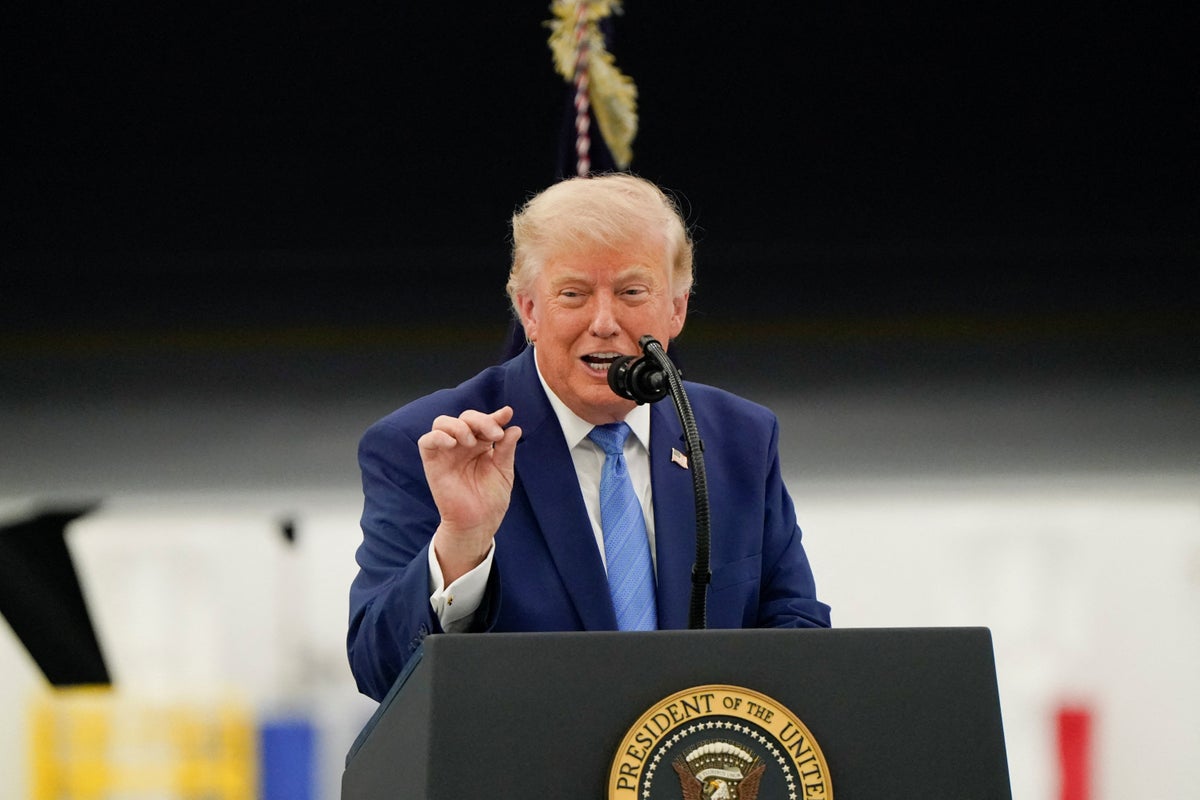
The political press loves a predictable script. When a headline flashes that a politician has accused a media outlet of "treason" for questioning the utility of a military campaign, the machine reacts on cue. Outraged pundits rush to defend the First Amendment. Editorial boards pen high-minded essays on the sacred duty of dissent. The opposition decries the authoritarian slide, while loyalists nod along to the rhetoric of national betrayal.
It is a comfortable, well-rehearsed theater. And it completely misses the point.
The lazy consensus dominating the coverage of these clashes assumes that the debate is actually about patriotism, constitutional rights, or the strategic success of an intervention. It isn't. The public hand-wringing over words like "treason" serves as a convenient smoke screen for both sides. For the politician, it wraps a transactional, high-stakes geopolitical gambit in the flag. For the media, it turns a complex analysis of institutional failure into a flattering narrative about their own bravery.
Let's strip away the moral posturing and look at the brutal mechanics of what is actually happening when the state and the press collide over foreign intervention. The real issue isn't whether questioning a conflict is treacherous. The real issue is that the metrics we use to judge whether a military action "achieved" anything are fundamentally broken.
The Flawed Metric of Victory
The standard critique of any recent intervention—whether the focus is Iran, the broader Middle East, or any proxy theater—usually sounds like this: What did we actually achieve? Did we establish a stable democracy? Did we lower the threat of regional instability?
When the answer to these questions is an obvious "no," the commentator concludes the operation was an unmitigated failure. But this analysis assumes the goal of modern statecraft is to achieve a neat, textbook victory. It hasn't been that way since 1945.
In the corridors of power where defense budgets are drawn and grand strategies are mapped, success is rarely defined by a signed peace treaty or a flourishing local parliament. It is defined by the management of risk and the denial of landscape to adversaries. I have sat in rooms where regional strategy is hashed out, and I can tell you that the metrics on the whiteboard are starkly transactional. They look at kinetic containment, maritime choke points, and the disruption of supply chains.
When a newspaper asks what a conflict achieved, it is often looking for a moral or civilian payoff. The executive branch, conversely, is looking at a ledger of balance-of-power dynamics.
Imagine a scenario where a state launches a series of targeted strikes or cyber operations against a regional rival. To the casual observer, nothing changes; the regime remains in power, rhetoric remains hot, and the threat persists. The critic declares the policy a failure. What the critic does not see is the counterfactual: the shipping lanes that stayed open because an adversary had to pivot their resources, or the enrichment cycle that was delayed by eighteen months, buying time for an entirely different diplomatic leverage point elsewhere.
To judge a modern conflict solely by its overt, messy outcomes is like judging an insurance policy by whether your house burned down. Sometimes, the premium is paid simply to keep the worst-case scenario at bay for another fiscal year.
The Utility of the Word Treason
Why, then, do political leaders reach for the nuclear option of political rhetoric? Why call a critical question "treason"?
It is not an emotional outburst. It is a calculated narrative defense mechanism.
+------------------------------------+--------------------------------------+
| Public Narrative Construction       | Underlying Geopolitical Reality      |
+------------------------------------+--------------------------------------+
| Conflict is a moral crusade       | Conflict is an exercise in risk      |
| against an existential evil        | management and resource containment  |
+------------------------------------+--------------------------------------+
| Dissent equals an attempt to       | Dissent exposes the high cost and    |
| undermine national security        | low probability of total resolution  |
+------------------------------------+--------------------------------------+
When an administration engages in long-term containment or low-intensity conflict, it requires public compliance. But compliance is incredibly difficult to maintain when the costs are visible and the benefits are abstract, classified, or preventative. If a leader admits the reality—that the nation is spending billions of dollars and risking escalation just to keep a volatile situation frozen in place—the public loses patience.
Therefore, the conflict must be sold as a moral crusade. And if the conflict is a moral crusade, then any intellectual autopsy of its effectiveness is not just a disagreement; it is a sabotage of the national will.
The word "treason" is deployed precisely to shift the focus from the utility of the policy to the loyalty of the questioner. It forces the critic to defend their right to speak rather than their analysis of the data. And judging by the reaction of most media outlets, the tactic works beautifully every single time. The press takes the bait, focuses the coverage on their own victimization, and stops digging into the intelligence failures or the economic trade-offs of the actual policy.
The Illusion of the Pure Press
The competitor's narrative paints a picture of a fearless, detached press corps simply asking the hard questions that power fears. This is a naive reading of how Washington actually works.
The media is an active participant in the ecosystem of foreign policy, not an outside observer. Information does not magically appear on an editor's desk. It is fed through a deliberate system of access journalism. Senior intelligence officials, disgruntled diplomats, and military contractors leak specific data points to shape public perception ahead of budget cycles or diplomatic summits.
When an outlet questions what a conflict achieved, it is rarely a spontaneous act of pure journalistic inquiry. More often, it reflects a deeper, internal rift within the national security apparatus itself. One faction wants escalation; another wants retrenchment. The press becomes the battleground where these bureaucratic tribes fight for dominance.
By pretending that these disputes are simple matters of "the truth vs. the state," the public is blinded to the actual policy debate happening under the surface. The question isn't whether the newspaper has the right to ask the question—of course it does. The question is: whose agenda does the question serve at that exact moment?
Redefining the Intellectual Architecture of Intervention
If we want to break out of this loop of cyclical outrage and superficial analysis, we have to change the questions we ask about international conflict. Stop asking if a intervention was "worth it" in the abstract. That language is too soft, too vulnerable to political spin.
Instead, execute a cold assessment based on three specific axes:
- The Opportunity Cost of Capital: What domestic or alternative strategic initiatives were starved of resources while this specific theatre was being subsidized?
- The Reactionary Vector: Did the action suppress the immediate threat at the cost of accelerating an asymmetric adversary's long-term modernization? For example, did conventional strikes simply drive a regime's offensive capabilities entirely into un-attributable cyber warfare?
- The Alliance Friction Coefficient: Did the unilateral nature of the strategic pivot degrade the foundational partnerships required for larger, structural global competition?
This approach has a significant downside for political commentators: it requires actual domain expertise and a willingness to wade through dry, classified white papers rather than writing fiery op-eds about the state of democracy. It doesn't generate quick clicks or viral tweets. But it is the only way to evaluate state action without becoming an accidental pawn in someone else's bureaucratic war.
The next time a political figure flings the accusation of treason at a headline, ignore the constitutional melodrama. Ignore the immediate temptation to join the chorus of performative outrage. Look past the rhetoric and demand to see the balance sheet of the containment strategy. The state wants you arguing about loyalty because they don't want you looking at the math.
Stop looking at the flag they are waving, and start looking at the ledger they are hiding.