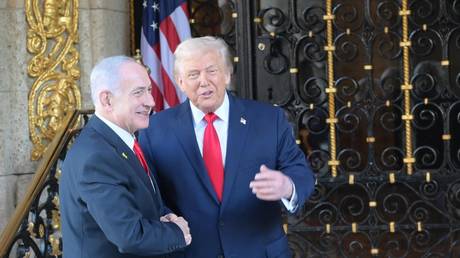
Donald Trump backs Benjamin Netanyahu for political and strategic reasons even as Washington condemns rising settler violence in the occupied West Bank. That contradiction looks like diplomatic whiplash on cable news. In reality, it is a deliberate division of labor inside American foreign policy.
One track handles macro-level alignment with an Israeli prime minister tied to broader regional calculations, including pressure on Iran and post-war negotiations. Another track tries to contain local blowback before it spirals into a wider West Bank crisis. If you liked this article, you should read: this related article.
I have covered Middle East diplomacy long enough to spot when a contradiction is actually a bargain. Officials rarely stumble into speaking out of both sides of their mouths by accident. They do it when two priorities collide and neither side wants to pay the political cost of choosing one over the other.
The Split Screen in Washington
Look at the gap between political endorsements and diplomatic warnings. Trump has openly backed Netanyahu's political standing and framed his endorsement as a boost for the Israeli leader. At the same time, senior U.S. officials have pushed back against West Bank attacks by extremist settlers, especially when assaults hit foreign diplomats, journalists, or communities that draw immediate international outrage. For another look on this story, check out the latest update from Reuters.
Secretary of State Marco Rubio called disturbing footage from the West Bank a "bad look" and urged Israeli authorities to crack down on violent groups. Ambassador Mike Huckabee likewise denounced assaults on media workers in sharp terms. Those statements are not empty theater, yet they fall short of the structural leverage critics say is required to stop the cycle.
Why does a president who wants calm in the West Bank still stand behind a prime minister whose governing coalition relies on far-right figures championing settlement expansion? Because Trump treats leadership alignment as a lever for bigger regional goals, while treating settler unrest as a tactical headache to manage around the edges.
Why Verbal Condemnation Hits a Wall
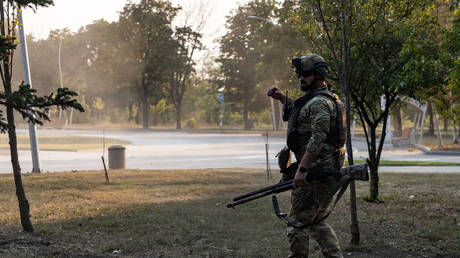
Statements from Washington rarely stop an ambush on a rural road or a raid during the olive harvest. Hundreds of attacks have been tracked across the territory during tense periods, often targeting Palestinian farmers, activists, and property. When masked assailants strike foreign officials or reporters, the diplomatic cost jumps overnight, forcing immediate damage control.
Even so, rhetoric runs into hard political math inside Israel. Netanyahu has governed alongside right-wing partners whose political base favors aggressive settlement growth and resists international pressure. When the prime minister condemns specific rioters after an egregious incident, critics point out that arrests and investigations often move slowly or unevenly compared with security operations elsewhere.
Public condemnation signals irritation in Washington, but without enforceable consequences, actors on the ground read the signal as room to maneuver.
Consider a hypothetical scenario to see how incentives work on the ground. Suppose a local outpost group clashes with villagers near a disputed hillside road. If enforcement is inconsistent and penalties feel remote, aggressive actors test boundaries again. If swift prosecutions and clear command accountability follow every time, the calculus shifts. In disputed terrain, habits form around what actually happens after the cameras leave.
Sanctions, Leverage, and the Credibility Gap
The sharpest argument against Washington's current posture centers on sanctions on settlers and accountability. Rescinding earlier sanctions and relying on diplomatic requests leaves Washington with fewer immediate financial tools against individuals accused of violence. Lawmakers in Congress and European governments have pressed harder on sanctions and investigations, arguing that rhetorical disapproval is not enough when civilians and foreign nationals are harmed.
Reports have also surfaced about U.S. officials weighing tougher scrutiny or restrictions tied to security units if violence goes unchecked. That kind of talk changes the tone in diplomatic rooms. It also creates friction with allies who view any restriction on Israeli security forces as crossing a sacred line in the bilateral relationship.
Here is the gray area that partisans on both sides tend to gloss over. Sanctions alone are not a magic wand. Some extremist networks operate in loose, decentralized cells or fringe outposts that already shrug off conventional norms. Still, abandoning financial pressure while asking for restraint weakens the very tool meant to raise the personal cost of lawlessness.
| Policy Lever | What It Signals | Practical Limit |
|---|---|---|
| Public condemnation | Immediate diplomatic displeasure and media damage control | Easy to issue, rarely alters ground behavior on its own |
| Endorsing Netanyahu | Alignment on broader regional strategy and personal rapport | Complicates pressure on coalition policies tied to settlements |
| Targeted sanctions | Direct financial and travel penalties on violent actors | Harder to enforce against decentralized or fringe groups |
| Security or aid scrutiny | Serious escalation of U.S. leverage over enforcement | High political friction with allies and defense establishments |
What Is Actually Driving Both Moves
Watch the bigger chessboard and the puzzle pieces fit together. Washington's leadership has focused heavily on regional confrontation with Iran, security architectures, and fragile post-conflict arrangements. From the White House's vantage point, backing a familiar Israeli counterpart keeps a central military and intelligence partner locked into a shared strategic track.
At the same time, uncontrolled West Bank escalation threatens to pull oxygen away from those priorities. A major flare-up there can complicate regional diplomacy, strain ties with Arab and European partners, and hand adversaries a propaganda gift. That is why Rubio can sound frustrated by violent footage while Trump continues to back Netanyahu politically.
It is a delicate balancing act built on competing instincts. One instinct seeks strength through loyalty and regional pressure; the other tries to put out fires before they spread. History shows that when local grievances fester unchecked, they rarely stay contained to the map lines diplomats draw.
How to Read the Next Phase
Do not judge Washington's posture by a single speech or a single press release. Watch what happens to enforcement, investigations, and official accountability after high-profile incidents fade from the headlines.
Pay close attention to whether diplomatic warnings turn into concrete mechanisms—such as restored financial penalties, transparent probes into attacks on foreign nationals and journalists, or tighter coordination on law enforcement in the West Bank. Until words match verifiable enforcement on the ground, the contradiction between backing Netanyahu and condemning settler violence will remain the defining tension of this policy.