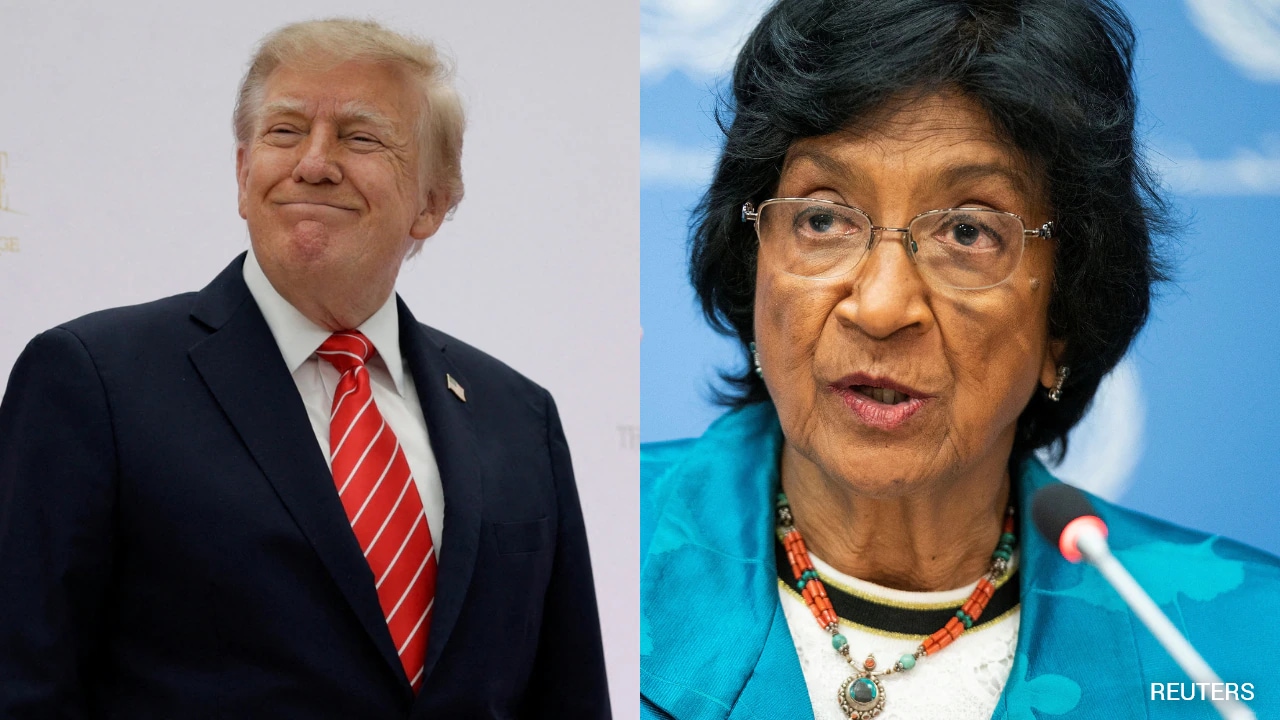
Donald Trump rarely holds back when he feels slighted on the world stage, yet his reaction to the Nobel Peace Prize announcement hit a different nerve entirely. Calling the Norwegian Nobel Committee's decision an "indelible stain" on the nation of Norway—and flatly labeling the pick "disgraceful"—wasn't just another passing political jab. It was the culmination of years of simmering resentment over how international prestige gets handed out, who actually brokers peace, and whether Oslo's five-member panel still lives in the real world.
If you've followed international diplomacy over the last decade, you already know this collision was inevitable. Trump spent years pointing to the Abraham Accords, his unprecedented face-to-face meetings with Kim Jong Un, and his vocal frustration over Barack Obama winning the exact same prize in 2009 just months into his presidency. When the committee passed him over again, the blowback wasn't merely about personal ego. It exposed a deep, structural divide between populist statecraft and the European diplomatic establishment. If you found value in this post, you should read: this related article.
The Backstory Behind Trump's Nobel Outburst
To understand why the phrase "indelible stain" landed so hard, you have to look at what Trump believes he earned versus what Oslo actually values.
For years, conservative lawmakers, foreign allies, and Trump himself argued that his administration achieved concrete breakthroughs where traditional diplomats had stalled for decades. Look at the 2020 Abraham Accords. Before those agreements were signed, conventional wisdom in Washington and Brussels insisted that normalizing relations between Israel and Arab nations—specifically the United Arab Emirates, Bahrain, Sudan, and Morocco—was impossible without first resolving the Israeli-Palestinian conflict. Trump bypassed that orthodoxy completely. He cut deals based on shared economic and security interests rather than endless multilateral summits. For another angle on this event, see the recent update from The Washington Post.
Then there were the nominations. Over multiple cycles, figures ranging from Norwegian parliamentarian Christian Tybring-Gjedde to Swedish lawmaker Magnus Jacobsson formally submitted Trump's name for the prize, citing everything from Middle East normalization to economic cooperation agreements between Serbia and Kosovo. Each time, betting markets surged. Each time, the committee went in a completely different direction.
So when the announcement dropped and Trump unloaded on Norway directly, he wasn't just critiquing a single winner. He was attacking the legitimacy of the institution itself. By tying the committee's choice to Norway as a whole, he deliberately blurred a line that Oslo works tirelessly to maintain.
Why Blaming Norway Hits a Diplomatic Nerve
Here's something most casual observers miss. The Norwegian government doesn't actually pick the Nobel Peace Prize winner.
Technically, the five members of the Norwegian Nobel Committee are appointed by the Storting, Norway's parliament, roughly reflecting the balance of political parties in the legislature. Once appointed, though, they operate independently. Sitting cabinet ministers are barred from serving on the committee, and Oslo's foreign ministry routinely reminds angry foreign capitals that the government has zero say over who wins.
Does that distinction matter when a major American political figure calls the result a stain on the entire country? Not really.
In real-world geopolitics, nuance rarely survives a viral headline. Norway knows this better than almost any small nation on earth. Back in 2010, when the committee awarded the Peace Prize to imprisoned Chinese dissident Liu Xiaobo, Beijing didn't send a polite letter to the committee's secretary. China froze diplomatic relations with the Norwegian government, slapped trade restrictions on Norwegian salmon imports, and kept Oslo in the diplomatic deep freeze for six full years until a normalization statement was finally signed in December 2016.
Trump's rhetoric taps into that exact vulnerability. Even when the Norwegian prime minister insists the committee acts alone, foreign leaders treat the prize as a reflection of Norway's national values. Calling the pick "disgraceful" puts Oslo in an awkward defensive crouch—forced either to stay silent and absorb the reputational hit, or publicly distance itself from a committee that carries its nation's name around the globe.
What the Nobel Committee Actually Looks For
People constantly misunderstand the criteria behind the Nobel Peace Prize because they assume it rewards the biggest geopolitical splash. It doesn't.
Alfred Nobel's 1895 will specified that the prize should go to the person who has done the most or the best work for "fraternity between nations, for the abolition or reduction of standing armies and for the holding and promotion of peace congresses." Over the past century, the committee has interpreted that mandate through a distinctly Scandinavian lens. They favor multilateral institutions, human rights advocacy, nuclear non-proliferation, climate activism, and grassroots civil society movements.
Notice what's missing from that list. Transactional dealmaking.
When you watch how the committee operates from year to year, a clear pattern emerges. They love symbolic moral pressure. Giving the prize to an activist, a journalist, or an international watchdog group sends a message to authoritarian regimes without endorsing the messy compromises of actual statecraft. By contrast, rewarding a polarizing head of state carries massive political risk—especially if their diplomatic achievements later unravel.
The committee learned that lesson the hard way. They gave the prize to Ethiopian Prime Minister Abiy Ahmed in 2019 for making peace with neighboring Eritrea, only to watch Ethiopia descend into a brutal civil war in the Tigray region barely a year later. They gave it to Aung San Suu Kyi in 1991, and decades later faced global demands to strip it back after her government defended military crackdowns against the Rohingya minority. And then there's Barack Obama in 2009—a decision even former Nobel Committee secretary Geir Lundestad later admitted in his 2015 memoir didn't achieve what the committee had hoped.
Given that track record, Oslo has grown allergic to awarding sitting or recent American presidents. Trump's combative style—pulling out of the Paris climate accord, questioning NATO's funding structure, and openly mocking multilateral bodies—runs counter to every institutional instinct the committee holds dear.
The Double Standard Debate That Won't Go Away
Still, you don't have to be a die-hard Trump supporter to see why his "disgraceful" label resonated with millions of people. The hypocrisy argument has teeth.
Compare the tangible outcomes. In 2009, Obama received the prize largely on the strength of speeches about nuclear disarmament and a desire to reset global diplomacy—before his administration had negotiated a single major peace treaty, and while American troops remained fighting two wars. In 1994, Yasser Arafat shared the prize alongside Yitzhak Rabin and Shimon Peres despite decades of militant violence associated with his leadership. Henry Kissinger won it in 1973 for the Paris Peace Accords while bombing campaigns in Southeast Asia were still fresh in global memory, prompting two committee members to resign in protest.
When voters look at that history alongside four historic Middle East normalization deals—agreements that opened direct commercial flights, embassies, trade corridors, and cultural exchanges between Israel and Arab states—the snub looks less like principled restraint and more like ideological gatekeeping.
That's the core nerve Trump hit. His supporters don't view the Nobel Committee as a neutral arbiter of global harmony. They see an insulated European elite that rewards progressive rhetoric over hard-won, messy results. When Trump calls the pick an "indelible stain," he's speaking directly to that frustration.
How This Clash Reshapes the Prize's Global Credibility
Every time a major political leader attacks the Nobel Peace Prize, defenders argue that the controversy only proves the committee's independence. That sounds nice in a press release, yet the reality is more complicated.
A peace prize only carries moral authority if the broader world believes its standards are consistent. Right now, trust in legacy international institutions is already fragile. Across the United States and much of the developing world, skepticism toward European-led panels, global governance forums, and diplomatic consensus is at a generational high.
When the committee's choices appear predictable—consistently bypassing conservative or nationalist leaders regardless of their diplomatic record while elevating causes aligned with Western progressive consensus—it reinforces the perception that the prize is just another partisan trophy. You can't claim to represent universal fraternity between nations while alienating half the political spectrum in the world's most powerful democracy.
At the same time, Trump's scorched-earth response carries its own risks. Attacking an entire country over the vote of five committee members turns a legitimate debate about diplomatic merit into a bilateral diplomatic headache. Allies pay attention to how Washington talks about smaller partners like Norway, a staunch NATO member that shares a sensitive Arctic border with Russia and relies heavily on transatlantic trust.
What to Watch When the Next Nobel Cycle Begins
If you want to cut through the noise the next time Nobel season rolls around, stop listening to political surrogates and look at how the process actually works behind closed doors.
First, ignore nomination headlines. Literally thousands of people worldwide—including any member of a national parliament, university professors in history or law, and former laureates—can submit a nomination. Being nominated doesn't mean the committee is seriously considering a candidate; it just means someone filled out a form before the January 31 deadline.
Second, pay attention to the composition of the five-member committee itself. Their six-year terms are staggered, and shifts in Norway's parliamentary elections gradually reshape the ideological leanings of the panel. Reading the background of the current chair tells you far more about their priorities than any betting market ever will.
Finally, look at the gap between symbolic peace and transactional peace. Until the Nobel Committee reconciles how it weighs hard geopolitical dealmaking against grassroots advocacy, the accusations of bias aren't going anywhere—and every October will bring another round of fury over who Oslo chose to ignore.