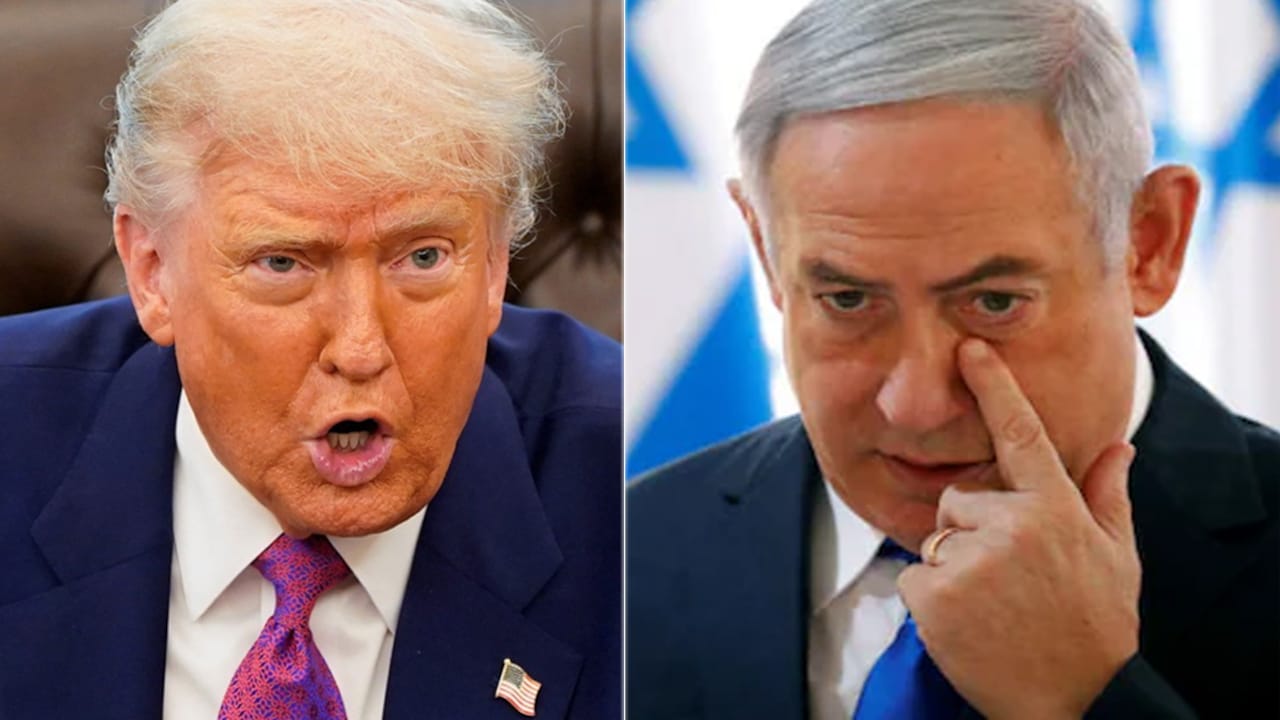
Donald Trump doesn't hide his feelings behind diplomatic pleasantries. When a private phone call leaked revealing he called Israeli Prime Minister Benjamin Netanyahu "fucking crazy," nobody was truly shocked. But the real story isn't just the profanity. It's the massive strategic collision happening behind closed doors.
Trump openly confirmed the blowout during an interview on the New York Post's Pod Force One podcast. He downplayed his anger, claiming he was just "a little bit perturbed" by Netanyahu's constant military escalations in Lebanon. Let's look past the spin. This clash signals a profound shift in how Washington manages its most complicated alliance in the Middle East.
The Exploding Friction Over Lebanon and Iran
The explosive conversation happened because Israel planned massive, devastating strikes against Hezbollah targets in Beirut. Trump was convinced Netanyahu was spinning out of control. He worried the strikes would kill too many civilians and completely derail fragile US-led diplomatic tracks with Iran.
Iran explicitly warned it won't agree to any regional settlement with Washington unless the ceasefire terms apply directly to Lebanon too. Tehran even suspended indirect talks with the US to protest the Israeli military campaign. Trump is trying to navigate parallel crises, balancing active regional warfare with delicate nuclear negotiations. Netanyahu's aggressive strategy threatens to blow up that entire board.
According to Axios reporting that Trump didn't deny, the US President yelled, "What the fuck are you doing?" He reminded Netanyahu that global sentiment is shifting rapidly, reportedly telling him that "everybody hates Israel because of this."
Leverage and Personal Grievances
The tension isn't just about troop movements on a map. It is deeply personal. Trump loves to remind people who is in charge, and he openly complained about Netanyahu's lack of gratitude during the call.
Leaked summaries show Trump throwing his political weight around, reportedly shouting to Netanyahu, "You'd be in prison if it weren't for me. I'm saving your ass." This points directly to Trump's public demands that Israeli President Isaac Herzog grant Netanyahu a pardon in his ongoing, years-long corruption trial. Trump views himself as Israel's ultimate protector. He explicitly stated during his podcast appearance that without him, "there would be no Israel right now."
When a US president believes an ally owes them their literal survival, diplomatic politeness evaporates. The relationship turns transactional. It becomes a raw exercise of leverage.
Netanyahu Damage Control Campaign
Netanyahu immediately went on CNBC to minimize the damage. He tried to brush off the "fucking crazy" comment as a minor family squall. He noted that even the best families experience tactical disagreements. He claimed they can disagree in the morning and take joint action by the afternoon.
Netanyahu insists his relationship with Trump remains rock solid. He calls him the greatest friend Israel has ever had in the White House. He even revealed they talk nearly every other day.
Behind the polite public posture, Netanyahu is trapped. He faces immense pressure from right-wing coalition partners at home to destroy Hezbollah completely. Yet he can't afford a total break with a volatile US administration that provides vital military assistance and diplomatic cover.
The Broader Cost of a Prolonged War
This political theater happens against a backdrop of severe economic and human costs. The fighting in Lebanon has killed thousands of people and displaced well over a million. It is also hitting home for American voters.
The regional war has choked shipping lanes, leaving the crucial Strait of Hormuz vulnerable to prolonged blockades. Trump acknowledged that the strait might remain closed through the Labor Day holiday on September 7. These disruptions cause spikes in energy prices and feed economic uncertainty. That's a massive political liability for Republicans running in upcoming midterm elections.
Domestic political pressure in Washington is mounting. The US House just passed a war powers resolution aimed at halting US military actions against Iran. While Trump will almost certainly reject any congressional effort to curb his commander-in-chief authority, the vote shows that political patience for an endless conflict is wearing thin.
The immediate path forward requires watching the actual military footprint rather than the public rhetoric. Watch whether Israel continues to hold back from launching devastating strikes inside Beirut's city limits. Look at whether the pilot security zones along the Litani River actually hold up under Lebanese army control. The true status of the US-Israel alliance will be measured by line-item defense agreements and real-time military restraint, not by how smoothly politicians patch over explicit phone calls.


