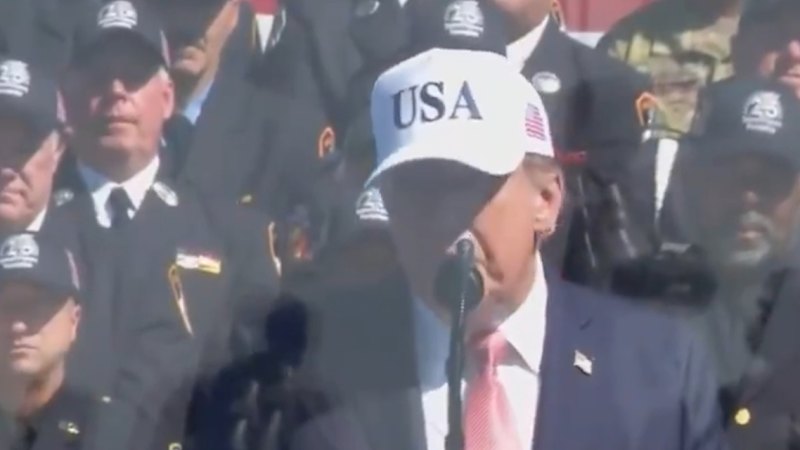
Memory is a strange thing, but political myth-making is usually much more calculated. Donald Trump has spent years reshaping his personal biography regarding the September 11 terrorist attacks, transforming a day of national tragedy into a recurring narrative about his own physical bravery. During a remembrance event hosted by the Tunnel to Towers Foundation, Trump rolled out a brand-new, highly specific detail that immediately set fact-checkers and first responders scrambling. He claimed that two massive firefighters literally hoisted him under the arms and sprinted away with him near One Liberty Plaza because they feared the building was about to collapse.
It is a striking visual. It is also almost certainly fiction.
If you track how Trump's personal 9/11 lore has evolved over the past two decades, a clear pattern emerges. He didn't just watch the towers fall from his Midtown Manhattan office four miles away; in his retellings, he claims he rushed down to Ground Zero with a massive crew of his own construction workers. He has repeatedly insisted that he helped clear rubble and spent significant time working on-site. Yet archival footage, contemporary news reports, and firsthand accounts from actual emergency personnel tell a drastically different story. Former FDNY battalion chief Richard Alles has stated flatly that there was no record of Trump or any crew of workers operating under emergency command structures at the site.
The Anatomy of a Growing Myth
Why escalate the storytelling now? On the 2016 campaign trail, Trump's claims centered around watching thousands of people cheering in New Jersey or boasting that his downtown building at 40 Wall Street was now the tallest. Over the years, however, those boasts have morphed into active participation.
The latest tale about being physically carried away by panicked firefighters introduces a strange psychological twist. It inserts him directly into the mortal terror experienced by those who were actually on the ground. Real rescue workers spent months inhaling toxic dust, digging through smoldering steel, and pulling victims from the wreckage. By casting himself as an endangered protagonist who needed evacuation, the narrative shifts from an onlooker to a survivor.
Journalists and historians quickly pointed out the absurdity of the logistics. Photographic evidence from September 13, 2001, places Trump near the perimeter of Ground Zero, wearing a clean suit and talking to cameras. Eyewitness reports from that day describe him giving high-fives or briefly surveying the perimeter, but nobody remembers him being scooped up by firefighters or deploying hundreds of construction workers. Furthermore, financial investigations by the New York City comptroller's office in the aftermath of the tragedy found no record of a pledged $10,000 donation he promised to the Twin Towers Fund.
The Cost of Rewriting History
When public figures invent personal valor during major historical catastrophes, the backlash is swift. Critics label these fabrications as stolen valor, arguing that manufacturing a heroic personal role demeans the sacrifices of those who actually died or gave their health trying to save others. Thousands of first responders developed chronic illnesses and cancers from their exposure at Ground Zero. Claiming a fictional brush with death trivializes the real trauma of that day.
Yet, these stories persist because they serve a specific rhetorical purpose. They place the speaker at the center of American trauma and resilience simultaneously. When a narrative is repeated often enough, the line between actual memory and psychological projection starts to blur for the teller.
We are left with a stark reminder of how historical memory gets hijacked for political branding. The facts of September 11 are meticulously documented through thousands of hours of audio, video, and official archives. No amount of retrospective storytelling can change who was actually holding a hose, carrying a stretcher, or breathing the toxic air.