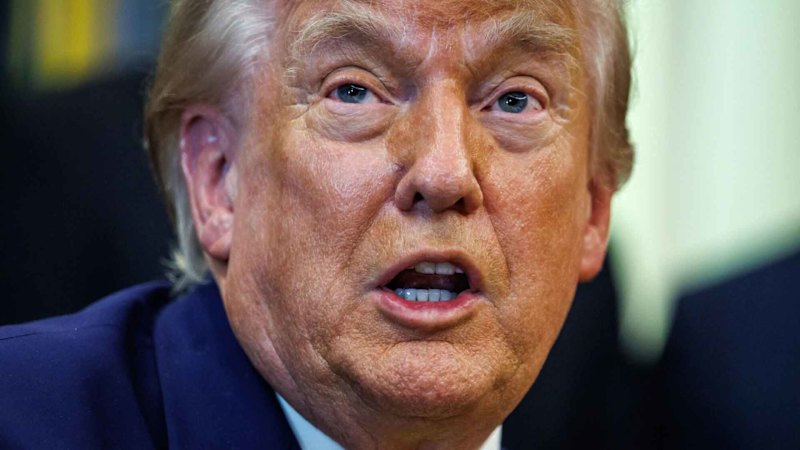
Donald Trump just did it again. During a standard Oval Office briefing, he completely derailed a policy discussion to unleash a highly personal attack on CNN chief White House correspondent Kaitlan Collins.
The exchange didn't just happen out of nowhere. It fits a pattern he has used for years to control the media narrative, fire up his political base, and avoid answering hard questions about his administration's policies. If you want to understand how modern political theater works, you have to look at the mechanics of these specific blowups.
The Oval Office Meltdown
The June 3 briefing started normally. Another reporter asked Trump about his controversial decision to drop a $1.8 billion "anti-weaponization" fund. This Department of Justice fund was designed to funnel taxpayer money to individuals indicted for actions related to the January 6 Capitol riot.
Instead of defending the policy with budget numbers or legal arguments, Trump turned his attention to Collins, who was simply standing in the room. He didn't even wait for her to ask a question before launching into a bizarre, highly personal tirade.
"CNN's a very corrupt organization, with a corrupt reporter standing right there," Trump said, pointing at Collins. "Never smiles. She's a young, beautiful woman, never smiles. I never see a smile on her face. I see her standing with such hatred in her eyes."
Trump claimed her alleged lack of smiles was due to hatred over his policies on borders, the military, and tax cuts. He asserted she should be happy with him for "saving" the country.
The interaction escalated fifteen minutes later when Collins finally got the microphone to pull the conversation back to the actual topic: the anti-weaponization fund. Trump quickly grew irate, accusing CNN and The New York Times of abusing his supporters. When Collins tried to interject and correct the record, Trump snapped.
"Be quiet," Trump told her. "You should be ashamed of yourself. She used to be a conservative from Alabama, can you believe it?"
The "Smile" Tactic as Political Diversion
This isn't the first time Trump has targeted Collins using this exact language. Back in February, she pressed him in the Oval Office regarding unsealed files related to Jeffrey Epstein and the concerns of survivors. Trump used the same defense mechanism then, telling her she never smiles because she knows she isn't telling the truth. Collins later pointed out on her broadcast that the Epstein scandal is nothing to smile about.
By focusing on a female reporter's facial expressions, Trump accomplishes two distinct political goals.
First, he shifts the focus away from a policy vulnerability. Defending a multi-billion-dollar fund for criminal defendants is a difficult political sell, even to a friendly audience. Turning the moment into a battle against a major media network instantly changes the headline from policy mismanagement to a culture war fight.
Second, it satisfies his base's distrust of mainstream media. Calling Collins "corrupt" and bringing up her past work for the conservative website The Daily Caller frames her as a defector to the establishment. It changes the dynamic from a public official being held accountable by a journalist to an elite outsider attacking an elected leader.
How the Media Handles the Playbook
Reporters face a tough choice in these moments. Responding with anger gives the politician the exact fight they want, which can then be clipped for campaign ads. Walking away looks like a retreat, signaling that tough questions can easily shut down the press corps.
Collins chose to keep her composure, a tactic she has used across multiple administrations. During the June 3 exchange, she waited out the personal comments and immediately steered her follow-up question back to the mechanics of the Department of Justice fund.
While this approach keeps the focus on the facts, it rarely stops the immediate political damage. The soundbite of the attack is what goes viral on social media, while the nuanced policy discussion that follows gets buried.
Moving Past the Theater
Dealing with this type of political strategy requires changing how we consume news from these briefings.
- Ignore the personal bait: The comments about smiles and personal backgrounds are deliberate distractions. Focus strictly on the underlying policy question that triggered the outburst.
- Check the policy outcomes: In this case, the real story is the sudden cancellation of a massive federal fund meant for legal defense. Look into the official Department of Justice filings to see where those billions are actually being reallocated.
- Watch the full exchange: Avoid relying on short video clips on social media. Watching the full, unedited briefing reveals exactly when and why a politician decides to shift from a factual answer to a personal attack.
The theater will continue as long as it successfully buries the lead. The only way to counter the strategy is to refuse to let the distraction work.