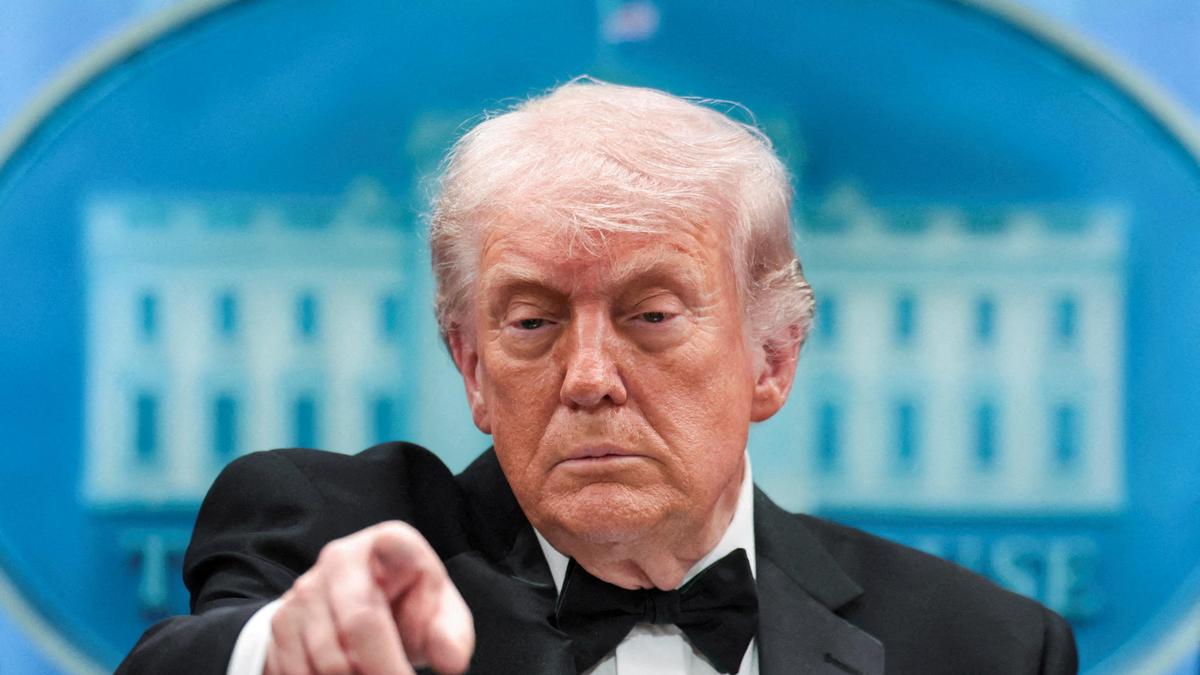
The media is choking on its own pearl-clutching again. The headlines scream about Donald Trump’s "arrogance" for suggesting he represents the United Kingdom’s interests more effectively than Prince Harry. The pundits call it a delusion of grandeur. They call it an insult to the Crown. They are wrong.
They are missing the fundamental shift in global populist mechanics. Expanding on this topic, you can find more in: The Ledger of Cold Silence.
Prince Harry has spent the last five years auditioning for a role in a California wellness retreat, trading his heritage for a "brand" built on grievance and high-end therapy speak. Trump, meanwhile, tap-dances directly onto the raw, unpolished nerves of the British working class—the very people the modern Monarchy has spent a decade trying to avoid at garden parties.
When Trump claims he speaks for the UK, he isn't talking about the sipping-claret-in-Mayfair set. He’s talking about the forgotten voters in the North of England who delivered Brexit while the BBC wept. He’s talking about the silent majority that still values national sovereignty over the globalist homogenization Harry now represents. Analysts at The New York Times have also weighed in on this matter.
The Sovereignty Gap
The fundamental error in the mainstream critique is the belief that "representation" is about bloodlines. In the 21st century, representation is about resonance.
Prince Harry has systematically deconstructed his own authority. You cannot spend years trashing the institution that gives you your platform and then expect to be viewed as its champion. He has become an expatriate influencer. By contrast, Trump’s "America First" rhetoric is a mirror image of the "Britain First" sentiment that fueled the 2016 referendum.
The data supports this psychological alignment. Look at the demographic overlap between Trump supporters and the pro-Brexit constituencies. These are people who feel their culture is being diluted and their voices muffled by a distant, lecturing elite. When Harry speaks from a $14 million mansion in Montecito about "structural racism" in the UK, he sounds like the elite they despise. When Trump rants about border security and national pride, he sounds like the guy they wish was running Whitehall.
The Death of the Neutral Crown
The British Monarchy survives on the myth of neutrality. They are the "firm" that stays above the fray. Harry broke that contract. By wading into partisan American politics and social justice crusades, he vacated the seat of the "unifier."
Trump didn’t steal the microphone; Harry dropped it.
The contrarian truth here is that a foreign former president can often articulate a nation's internal anxieties better than its own royals because he isn't bound by the stifling etiquette of the Palace. Trump is a wrecking ball. Many in the UK, exhausted by decades of managed decline and bureaucratic stagnation, find the sound of a wrecking ball far more comforting than the sound of a therapeutic podcast.
The Industry of Grievance vs. The Industry of Strength
Let's dismantle the "victimhood" economy.
Harry’s brand is built on vulnerability. In the modern attention economy, that’s a valuable currency, but it’s a terrible foundation for national representation. A nation doesn't want to be represented by its wounds; it wants to be represented by its will.
Trump understands the optics of strength. Even his most vocal detractors in the UK admit he project a sense of consequence. When he meets with UK leaders, the air changes. When Harry releases a Netflix documentary, the only thing that changes is the stock price of a streaming giant.
The British public—specifically the segment that actually pays the taxes and keeps the gears turning—is notoriously skeptical of self-pity. The "stiff upper lip" isn't just a cliché; it’s a cultural defense mechanism. By leaning into the "Californianization" of his public persona, Harry has alienated the very people he claims to understand. Trump, with his brash, unapologetic nationalism, is actually more "British" in his stubbornness than Harry is in his new-age sensitivity.
The Mirage of Royal Influence
What does Harry actually do for the UK now?
He holds no official role. He has no diplomatic standing. He is a private citizen with a famous last name. The idea that he "speaks" for Britain is a legacy thought—a ghost of an idea that died the moment he stepped off that plane in Vancouver.
Trump, regardless of his current office, remains the standard-bearer for a global movement. When he talks about the UK, he talks about trade, defense, and the "Special Relationship." He treats the UK as a powerhouse, whereas Harry’s narrative treats the UK as a source of childhood trauma.
If you are a British business owner or a soldier in the SAS, which narrative serves you better? The one that views your country as a world-shaping force, or the one that views it as a toxic family dynamic?
The Counter-Intuitive Reality of Populism
The "lazy consensus" says that a US politician can't possibly represent a foreign electorate. This ignores the reality of the Transatlantic Populist Axis.
Ideas no longer stop at the Atlantic. The same frustrations that lead to the "Make America Great Again" hat lead to the "Take Back Control" slogan. Trump isn't speaking for the British government; he’s speaking to the British soul. He is tapping into a vein of unapologetic patriotism that the current Royal Family—and certainly the Duke of Sussex—is too terrified to touch for fear of being "cancelled" by the international press.
I’ve watched political brands rise and fall for twenty years. The ones that survive are those that provide a sense of belonging. Harry offers a sense of exclusion—he is "out," he is "away," he is "other." Trump offers a sense of inclusion in a global struggle for national identity.
The Institutional Suicide of Montecito
Imagine a scenario where the British Monarchy actually tried to fight back against the populist surge by becoming even more "progressive." They would disappear within a generation. The Crown exists because of tradition, hierarchy, and a refusal to blow with the wind.
Harry tried to modernize by exiting. In doing so, he became a cautionary tale, not a leader. He is the prince who traded a kingdom for a brand deal. Trump is the mogul who traded a brand for a movement.
The irony is thick enough to cut with a silver cake knife. The American billionaire is more protective of the idea of Great Britain than the British prince who was born to defend it. Trump defends the statues; Harry questions them. Trump defends the history; Harry deconstructs it.
The British public isn't stupid. They see the difference between a man who wants to lead a nation and a man who wants to sell a memoir.
Trump isn't being arrogant. He's being observant. He has recognized a leadership vacuum in the British cultural landscape and he’s stepped into it with his usual lack of subtlety. While the Palace worries about optics and Harry worries about his "truth," the actual people of the UK are looking for someone who doesn't apologize for their existence.
Stop asking if Trump has the "right" to speak for the UK. Start asking why the people actually born to do it are so bad at it that an orange-haired New Yorker can beat them at their own game.
The Crown is a symbol. But symbols without conviction are just jewelry. Trump has conviction. Harry has a content strategy.
Pick your side. The British public already has.