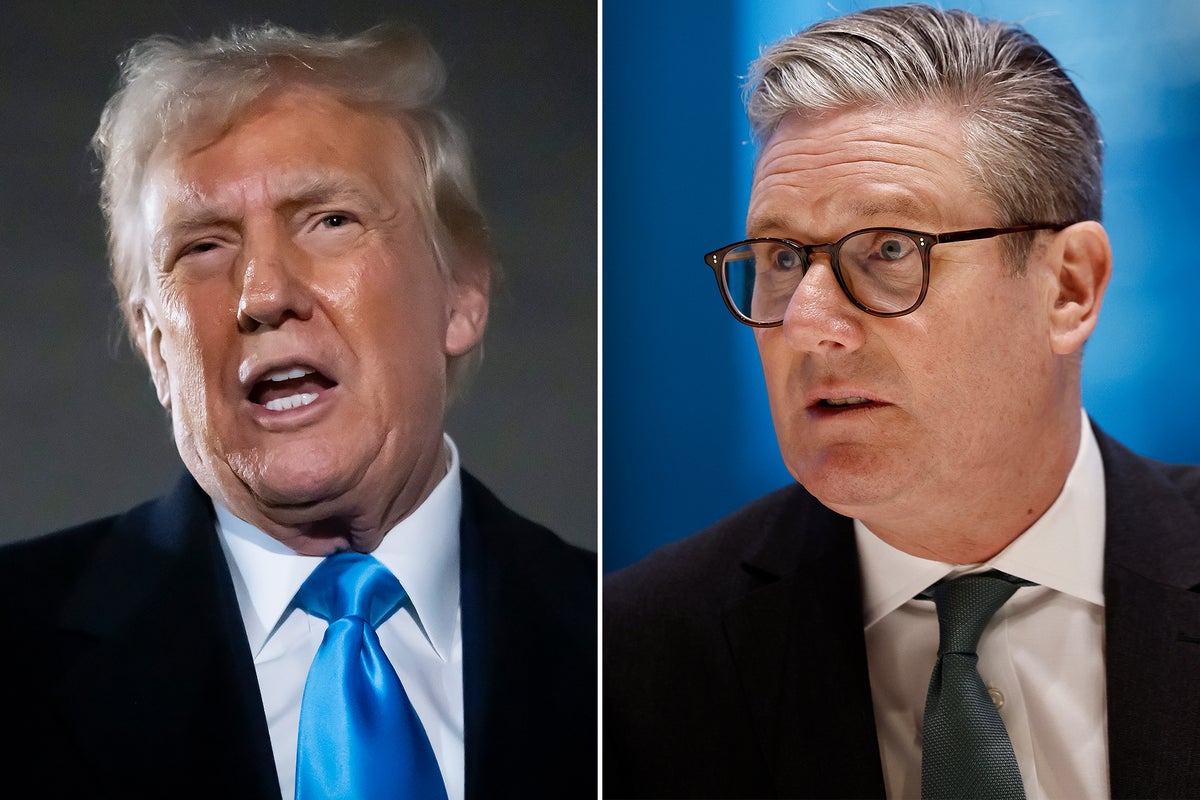
The "Special Relationship" has always been a bit of a polite fiction, a diplomatic security blanket we wrap around the Atlantic to stay warm. But this week, the blanket didn't just slip; it was set on fire. Donald Trump, never one for the subtle arts of diplomacy, just took a sledgehammer to 10 Downing Street's front door.
"This is not Winston Churchill that we’re dealing with," Trump told reporters in the Oval Office on Tuesday. He was sitting next to German Chancellor Friedrich Merz, but his mind—and his vitriol—was clearly across the pond. The reason? Prime Minister Keir Starmer’s refusal to jump headfirst into the U.S.-Israeli offensive against Iran.
If you’re looking for the moment the bromance died, this is it. Trump is furious that the UK sat out the initial wave of strikes that reportedly killed Iranian Supreme Leader Ayatollah Ali Khamenei. Starmer, meanwhile, is trying to play the role of the "adult in the room," citing international law and the haunting ghost of the Iraq War. It’s a classic case of an unstoppable force hitting a very cautious, legalistic object.
The rift that stalled a war
The tension isn't just about hurt feelings or mean nicknames. It’s about hardware and geography. The U.S. needed British bases—specifically Diego Garcia in the Indian Ocean and RAF Fairford in Gloucestershire—to launch the heavy hitters.
According to Trump, the UK dragged its feet for three or four days before finally granting access. In the world of high-speed aerial warfare, four days is an eternity. Trump’s frustration boiled over, claiming it took far too long to "work out where we can land." He didn't just call Starmer unhelpful; he called the UK "uncooperative" and even took a swipe at the Chagos Islands deal, mocking the "stupid island" (Diego Garcia) that the UK recently moved to hand back to Mauritius while keeping a 99-year lease.
Why Starmer said no (at first)
Starmer isn't just being difficult for the sake of it. He’s a former human rights lawyer, and his DNA is coded with a deep suspicion of "regime change from the skies."
- The Iraq Shadow: No Labour Prime Minister wants to be the next Tony Blair. The 2003 invasion of Iraq is still a pulsating wound in British politics. Starmer knows that joining an unprovoked offensive without a "clear plan" or a rock-solid legal basis is political suicide.
- Defensive vs. Offensive: Starmer eventually relented, but only for "defensive" purposes. He’s allowing the U.S. to use UK bases to intercept retaliatory strikes from Iran, not to launch the initial bombs. It’s a nuance that Trump clearly finds pathetic.
- Domestic Pressure: A YouGov poll shows roughly 49% of the British public opposes these strikes. Starmer is looking at his base, and his base doesn't want another Middle Eastern quagmire.
Not your grandfather's Churchill
Trump’s "Not Churchill" comment is the ultimate insult in British-American relations. Churchill represents the gold standard of the "Special Relationship"—the cigar-chomping, defiant leader who stood shoulder-to-shoulder with FDR. By invoking him, Trump is essentially calling Starmer a coward.
But let’s be real. The world of 2026 isn't 1940. Starmer is dealing with a fractured Europe where even France’s Emmanuel Macron has called the strikes a violation of international law. Trump, on the other hand, is operating on a "Maximum Pressure 2.0" strategy, claiming the U.S. has a "virtually unlimited" supply of munitions and is ready to keep the pressure on Iran "forever."
The Diego Garcia complication
The dispute has reignited the fire under the Chagos Islands controversy. Trump and his allies have long criticized the Starmer government’s decision to surrender sovereignty of the archipelago to Mauritius. In the Oval Office, Trump mocked the deal, suggesting the UK gave away its most important asset to satisfy "indigenous people."
For the U.S., Diego Garcia is the "unsinkable aircraft carrier." It’s the staging ground for B-2 bombers. If the UK’s sovereignty over the island is in question, the U.S. feels its strategic grip on the region is slipping. Trump sees Starmer’s hesitation as a symptom of a broader "weakness" that threatens American security interests.
What this means for the Special Relationship
The "Special Relationship" is currently on life support. Trump has already threatened to cut off trade with Spain over similar base-access issues. While he hasn't gone that far with the UK yet, the rhetoric is heading in a dark direction.
- Trade Deals: Forget about a post-Brexit free trade agreement with the U.S. anytime soon. If Trump feels snubbed on the military front, he'll use trade as a weapon.
- Intelligence Sharing: The Five Eyes alliance is the backbone of Western security. If the political heads aren't talking, the bureaucratic friction could start to affect how data is shared.
- European Alignment: Starmer is increasingly looking toward Berlin and Paris rather than Washington. If Trump continues to alienate his oldest ally, the UK might decide its future lies in a more independent European defense identity.
If you're following this, don't expect a quick apology from either side. Starmer is dug in on his "national interest" defense, and Trump is already moving on to his next target. The gap between "The Atlanticist" and "America First" has never been wider.
Keep an eye on the Royal Navy’s movements in the eastern Mediterranean. The deployment of a destroyer to protect RAF Akrotiri in Cyprus shows the UK is worried about the blowback from a war it didn't want to start, but can't fully escape.