Donald Trump trusted Katie Zacharia because she combined visible MAGA loyalty, conservative television familiarity, and a willingness to defend him without hesitation—even after she was fired following a record-setting five-day stint as White House press secretary in October 2026. For Trump, trust has rarely been a polite diplomatic term. It is a transactional calculation built on loyalty, screen presence, and perceived grit under fire.
Yet the story of Katie Zacharia exposes the sharp gap between how Trump judges trustworthiness from a distance and how a high-pressure institutional role actually tests a person. Appointed on October 12, 2026, to succeed Karoline Leavitt—who stepped down in August—Zacharia lasted less than a week in the briefing room. Her single formal press briefing on October 13 ran roughly 15 minutes, drew sharp criticism across political lines, and coincided with scrutiny over her legal credentials that triggered a complaint to the State Bar of California. By October 16, she was out. For an alternative look, read: this related article.
Understanding why Trump placed confidence in her requires looking past the five-day headline. Washington loves a quick punchline about brief tenures, comparing Zacharia to Anthony Scaramucci's 11-day run as communications director in 2017. A serious look at the record shows something more revealing about modern political hiring, television-driven vetting, and what happens when loyalty substitutes for readiness.
How Trump Measures Trust Inside His Orbit
Ask ten political operatives in Washington how Donald Trump decides who gets close to him, and you will hear variations of the same rule. Competence on paper means little if an aide hesitates, lectures, or seems embarrassed by his style. Further reporting regarding this has been provided by Al Jazeera.
Trump looks for unfiltered allegiance. When Communications Director Steven Cheung defended Zacharia's appointment in October 2026, he pointed directly to her "unblemished record of support" and called her a "devoted fan and member of MAGA". That phrasing is not accidental. In Trump's worldview, someone who already shares your grievances and roots for your wins is far safer than a seasoned bureaucrat whose instincts might drift toward institutional caution.
There is also the television factor. Over years in business and politics, Trump has consistently evaluated people the way a television producer casts a segment. Zacharia had worked as a communications advisor for Truth Social and the Trump Media and Technology Group starting in June 2026, spent time earlier in the year as a deputy assistant secretary for public affairs at the Department of Homeland Security, and appeared as a commentator on conservative networks including Newsmax and Fox News between 2024 and 2026.
When a president watches someone argue his case on cable news or social media platforms tied to his own company, familiarity breeds confidence. He sees a fighter on a screen. He assumes that energy transfers cleanly to the podium.
Sometimes it does not.
The Paper Resume Versus The Briefing Room Reality
On paper, Zacharia had recognizable conservative touchpoints. She earned an undergraduate degree from Pepperdine University in 2007, interned in the George W. Bush White House during his second term, and graduated from Pepperdine Caruso School of Law in 2011. Her resume also included work with legal and advocacy groups, fundraising roles, and board service with the anti-abortion group White Rose Resistance.
To an outsider scanning a bio quickly, a law degree and cable news hits can look like polish. Yet the White House press briefing room is not a cable panel where hosts ask softball questions or let guests talk over each other. It is a daily crucible where dozens of reporters—friendly, skeptical, and hostile alike—test every word against policy details, legal facts, and prior statements.
| Dimension | What Trump Valued | How It Played Out in October 2026 |
|---|---|---|
| Political Alignment | Vocal MAGA support and public defense of the president | Strong personal devotion remained intact, even after her exit |
| Media Familiarity | Cable appearances on Fox News and Newsmax plus Trump Media work | Her 15-minute October 13 briefing and follow-up interviews drew heavy criticism |
| Legal Framing | A Pepperdine law degree and being described as an attorney | Scrutiny over not passing the California bar sparked a State Bar complaint |
| Crisis Endurance | Willingness to step into the spotlight quickly after Leavitt's departure | She struggled with the sudden intensity and was pushed out after five days |
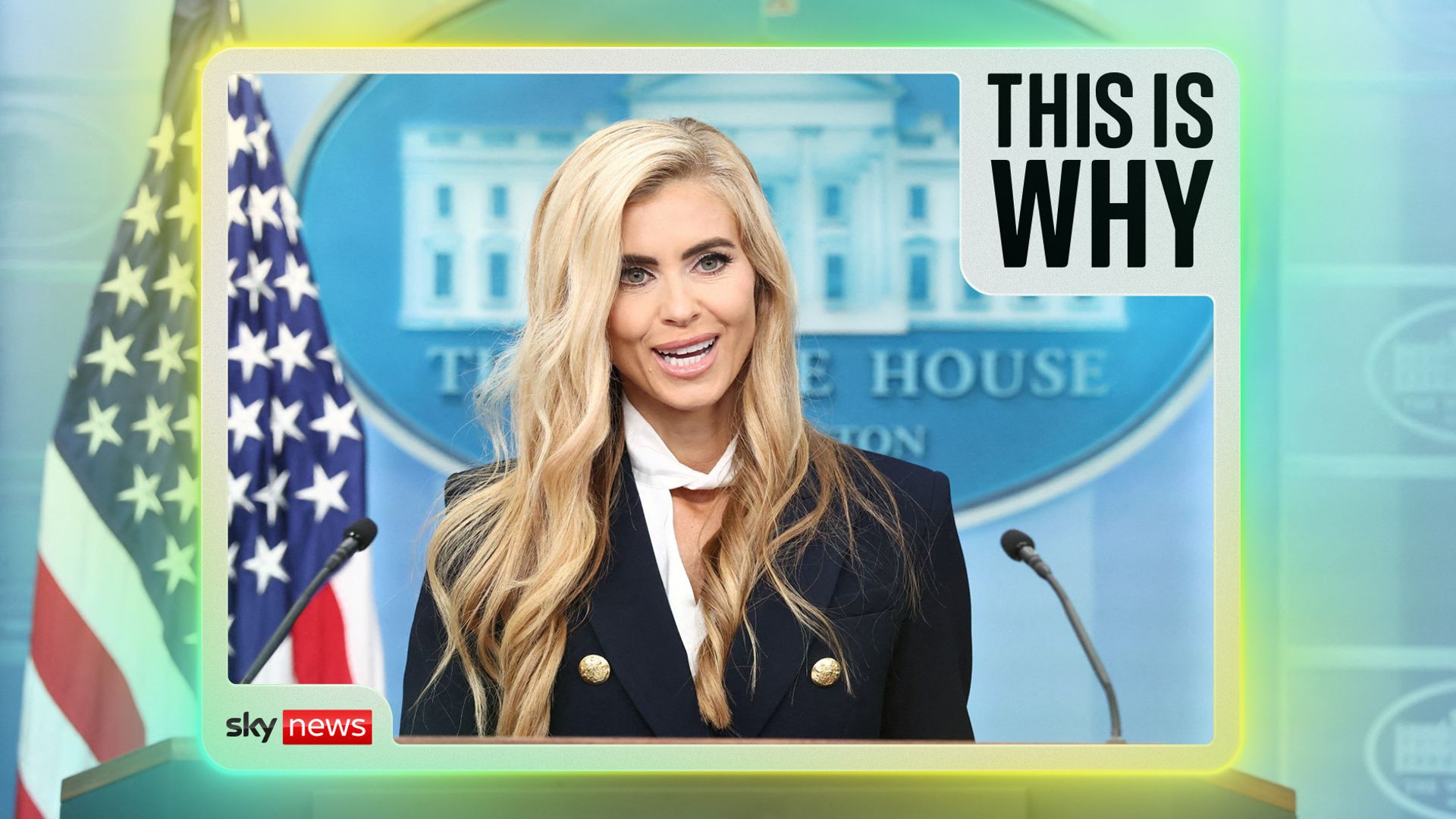
Her October 13 briefing exposed how thin that preparation was. Rather than commanding the room with sharp rebuttals or crisp command of administration talking points, she spent much of her short time reading prepared remarks, made a jarring slip by referring to her husband as "the president," and took questions from only three outlets—mostly conservative—before stepping away.
Watching that unfold from the outside, even sympathetic observers could see the mismatch. A press secretary needs command of facts and composure under rapid-fire follow-ups. Enthusiasm alone cannot carry a briefing when reporters smell uncertainty.
The Lawyer Controversy That Eroded Credibility
No single stumble hurt Zacharia more than the scrutiny over how she described her legal background. A law degree—a Juris Doctor—means you graduated from law school. Passing a state bar exam and holding an active license is what authorizes someone to practice law as a licensed attorney in that jurisdiction.
Zacharia earned her J.D. in 2011, yet she did not pass the California bar exam when she took it that year. Despite that, she had repeatedly referred to herself as a lawyer in media appearances, including on The Greg Kelly Show on October 5, 2026, and Trump had described her as "an attorney" when announcing her selection.
When reporters pressed her on her bar status and the watchdog group Campaign for Accountability filed a complaint with the State Bar of California on October 14 alleging she violated state law by presenting herself as a lawyer without a license, the story shifted from a rough debut to a credibility crisis. Under California law, holding oneself out as a practicing attorney without authorization is a serious regulatory issue, even if a person holds a law degree or worked in legal-adjacent roles earlier in their career.
Credentials in Washington work like structural steel: if the foundation is overstated, every new layer of pressure magnifies the crack.
It is worth noting a gray area that partisan coverage often blurs. A person with a J.D. who worked as a law clerk, research assistant, or associate on an international practice team may view themselves informally through the lens of their legal education, especially if they never went to court in California. Still, in public office—and especially at the White House podium—loose language around professional titles invites immediate verification. Once reporters checked bar rolls, the narrative turned unforgiving.
Why Loyalty Survived Even After The Firing
Here is the twist that surprises people who assume political loyalty is a one-way street. Even after Trump told reporters on October 16 that he had urged Zacharia to "reconsider" staying in the job because she was suffering at the hands of the press, and even after she was ousted after five days, Zacharia did not turn on him.
Instead, she took to social media and a New York Post op-ed to praise Trump as kind, hardworking, and unfairly maligned by critics suffering from what she called "Trump Derangement Syndrome". In November 2026, during a contentious Newsnight appearance on the BBC, she continued defending administration figures and pushing back hard against interviewers, even as she remained out of the press secretary chair.
That loyalty helps explain why Trump trusted her in the first place. He bets on people who will absorb blows without flipping on him when the heat rises. In his calculus, a loyalist who stumbles is still more aligned with his instincts than a polished operator who might hedge or second-guess him.
At the same time, Trump's own remarks on October 16 revealed the limits of that trust when a pick becomes a liability. Saying "if I were you, I'd reconsider" while framing her exit as a "transition" into an unannounced future role was a classic Trump move: softening the blow personally while cutting the political bleeding fast.
What Vetting Failures Reveal About Modern Politics
The Zacharia episode is not an isolated quirk. It is a symptom of a broader shift in how modern political campaigns and administrations recruit communicators.
Traditional vetting looks for three things:
- Track record under pressure: Prior roles where the candidate handled hostile questioning or complex policy crises without needing rescue.
- Credential precision: Every title, degree, license, and past role verified before a public rollout.
- Institutional fluency: Familiarity with how agencies, policy teams, and press pools interact so the spokesperson does not create fresh fires.
Modern media-first politics frequently shortcuts all three. When a candidate is already inside the circle—working at Truth Social or DHS, showing up on friendly broadcasts, and speaking the movement's language fluently—leaders often treat past proximity as proof of future readiness.
That shortcut carries steep costs. A rushed appointment forces a newcomer onto a global stage before they know the terrain, turning a five-day stint into a permanent line in history books. Worse, when a credential dispute hits on day two or three, the White House spends its energy defending basic facts instead of advancing its agenda.
For anyone watching how power operates in Washington, the lesson is straightforward: loyalty earns a chance, but preparation keeps the job. When a leader confuses television loyalty with institutional readiness, the person sent to the podium pays the price first.
Katie Zacharia's Five Days as Trump's Press Secretary offers a concise visual recap of her brief October 2026 tenure and rapid exit from the White House press role.