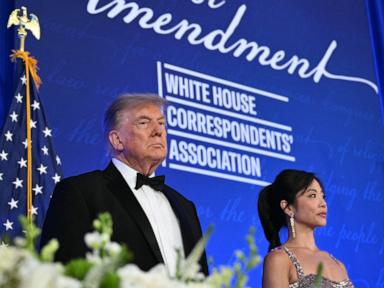
Politics is theater. Nobody understood that better than Donald Trump. When presidents historically stood at the podium of the White House Correspondents Dinner and traded lighthearted jabs with comedians, Trump chose a different path entirely. He skipped the room. Instead, he hosted his own competing rallies, talking directly to his base while the media establishment roasted him from afar.
You're looking at a dynamic that changed political communication forever. The annual Washington ritual used to be an inside joke shared between politicians and the press corps. Now it's a proxy war. When people talk about a unifying yet vicious speech or approach regarding these events, they miss the entire point. Trump doesn't want unity with the Washington press pool. He wants conflict. It drives ratings, builds loyalty, and dominates the news cycle. You might also find this similar coverage useful: The Geopolitical Standoff in the Himalayas India Confronts China Over Illegal Territorial Claims.
Let's break down why this strategy works and why the old playbook is completely dead.
The Death of the Presidential Roast
Washington loves tradition. For decades, the White House Correspondents Dinner operated on a strict unwritten contract. The president would show up, poke fun at themselves, make a few self-deprecating jokes about their hair or poll numbers, and then laugh along as a hired comedian skewered everyone in the room. It was cozy. It was chummy. As extensively documented in detailed coverage by BBC News, the effects are worth noting.
Voters hated it.
Nothing alienates working-class Americans faster than watching politicians and journalists drink champagne together and laugh at inside jokes. Trump saw that disconnect immediately. By treating the press corps as an adversary rather than a dinner date, he tapped into deep-seated public resentment toward mainstream media institutions.
- Traditional approach: Schmooze the reporters, pretend to be thick-skinned, laugh it off.
- The Trump blueprint: Denounce fake news, skip the dinner, hold a massive rally instead.
When you look at the mechanics of modern political survival, skipping the black-tie gala wasn't a blunder. It was a masterclass in counter-programming. Why walk into a room where everyone dislikes you when you can broadcast live to millions of energized supporters who think the entire establishment is corrupt?
The Mechanics of Vicious Rhetoric
Let's be honest about the language. Modern political discourse isn't about policy details anymore. It's about emotional resonance. When a politician attacks journalists, they aren't just insulting individuals. They are discrediting the entire referee system.
If the referee is biased, you can never lose fairly.
This approach creates a protective bubble. Any negative reporting gets immediately dismissed as a partisan hit job. It's brilliant, highly effective, and entirely destructive to shared civic facts. Trump mastered the art of turning a news organization's criticisms into badges of honor. If CNN or The New York Times attacks a speech, his base takes it as proof that the speech hit its target.
You have to look at the numbers. Every time media outlets spend twenty-four hours analyzing whether a speech was too vicious or unpresidential, they hand over free airtime. They fall into the trap every single time. They want a polite debate. They get a street fight.
Why the Press Keeps Walking Into the Trap
Journalists still believe in the power of institutional norms. They think if they point out hypocrisy hard enough, voters will care. They won't.
When reporters act shocked that a political figure refuses to play by the polite rules of Washington, they reveal their own provincial mindset. Most Americans don't care about decorum. They care about inflation, grocery prices, border security, and whether the system is working for them.
Watch what happens every time a major political speech drops. The media focuses on tone. The public focuses on message. That disconnect is why traditional media guardrails stopped working a decade ago.
If you want to understand how modern political campaigns operate, stop reading the editorial pages. Look at the engagement metrics. Look at the clip distribution on short-form video platforms. A thirty-second clip of a politician insulting a prominent anchor travels faster and farther than a three-thousand-word policy paper on federal budgeting.
Moving Past the Washington Bubble
The era of bipartisan consensus at a hotel ballroom buffet is over. Politicians realized that fighting the media is often more popular than working with them.
You don't need the White House Correspondents Dinner to reach voters anymore. You need a smartphone, a direct feed, and an audience ready to cheer. Until the press corps figures out how to cover this dynamic without becoming part of the spectacle, the cycle will repeat itself, louder and more viciously every single year. Stop expecting a return to normalcy. This is the new normal.