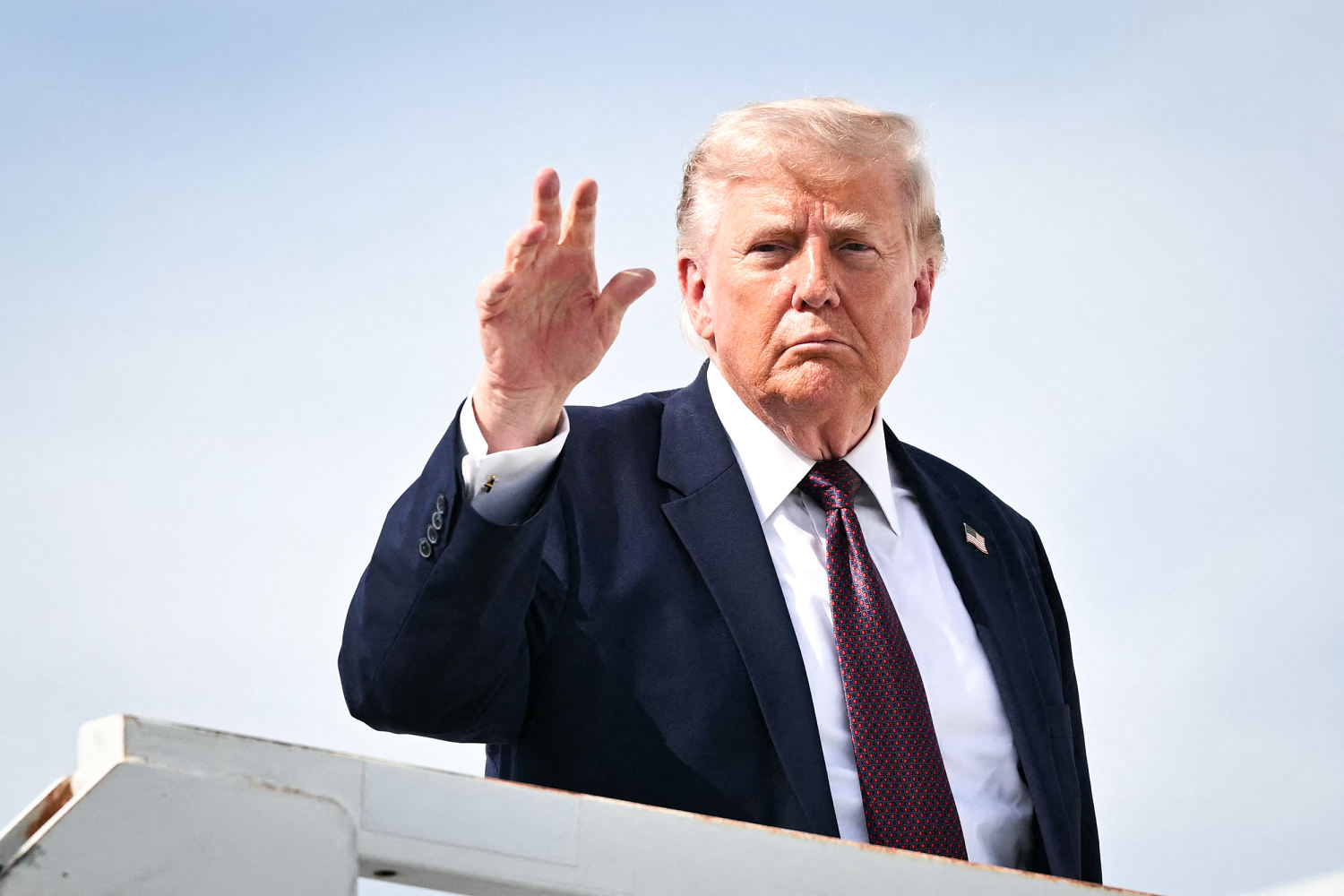
Donald Trump thought he could rewrite American election rules with the stroke of a pen. He was wrong. Over the last few months, a wave of legal challenges and legislative deadlocks has completely stalled his administration's aggressive push to restrict mail-in voting and impose strict new registration requirements.
The biggest blow came straight from the top. In a surprising 5-4 decision in Watson v. RNC, the Supreme Court flatly rejected a Trump-backed effort to throw out late-arriving mail ballots. For an administration that counted on a conservative judicial supermajority to clear its path, this ruling was a massive reality check.
Trump's attempt to clamp down on the ballot box isn't just failing in the courts. It's also dead on arrival in Congress. If you want to understand why the administration's voting restrictions are hitting a concrete wall, you have to look at the massive gap between executive ambition and constitutional reality.
The Supreme Court Defies Trump on Mail Ballots
The executive branch does not run American elections. States do. That fundamental constitutional truth is exactly why the Supreme Court just handed the Trump administration a stinging defeat.
The case centered on a Mississippi law allowing mail-in ballots to be counted up to five days after Election Day, as long as they are postmarked by Election Day. Trump and the Republican National Committee sued, arguing that federal law mandates a single, definitive Election Day. They wanted those ballots thrown out.
They lost. Justice Amy Coney Barrett wrote the majority opinion, joining Chief Justice John Roberts and the court's three liberal justices. Barrett made it clear that federal laws setting Election Day leave open exactly when those votes must be received. If the rules need a national overhaul, she wrote, that job belongs to Congress, not the courts.
This ruling saves election officials from total chaos right before the 2026 midterm elections. More than a dozen states have similar grace periods for mail-in ballots. Striking down these laws would have instantly disenfranchised thousands of voters, especially military members and overseas citizens who rely on the postal service to make their voices heard.
Trump didn't take the loss well. He quickly took to Truth Social to call the ruling a "tremendous loss" and blamed the outcome on cheating. But the reality is much simpler. The court's conservative majority simply refused to stretch the law to fit a partisan agenda.
Executive Orders Fail the Constitutional Test
Trump's setbacks didn't start or end at the Supreme Court. For over a year, his administration has tried to bypass Congress entirely by using sweeping executive orders to reshape how Americans register and vote. Federal judges are systematically tearing those orders apart.
In March 2025, Trump signed an executive order trying to force a "show your papers" policy on national voter registration forms, demanding a passport or birth certificate to prove citizenship. Then, in March 2026, he followed up with another order directing the U.S. Postal Service to create a list of "approved" mail voters and refuse to deliver ballots to anyone else.
The courts saw right through it. Just days ago, U.S. District Judge Denise Casper issued a permanent injunction blocking the proof-of-citizenship mandate. She joins federal judges in Washington, D.C., and Washington state who have already neutralized key pieces of these executive orders.
The legal flaw in Trump's strategy is glaringly obvious. The Constitution gives the power to manage federal elections to individual states and Congress. The president has zero authority to dictate what goes on a voter registration form or to turn the post office into an election gatekeeper.
Civil rights organizations like the ACLU and the Brennan Center for Justice have successfully argued that these mandates would block millions of eligible American citizens from voting. Research consistently shows that non-citizen voting is incredibly rare. Forcing voters to produce hard-copy citizenship papers mostly hurts low-income citizens, students, and rural voters who don't have easy access to these documents.
The Legislative Standoff in Congress
With the courts blocking his executive actions, Trump has shifted his focus to Capitol Hill. He is publicly demanding that Congress pass the SAVE America Act. This bill would codify his strict proof-of-citizenship requirements and severely limit who can access a mail-in ballot.
The bill easily cleared the Republican-controlled House of Representatives. But it is stuck in the Senate.
Democrats retain enough power in the upper chamber to use the filibuster, effectively killing the bill. Senate leadership has shown zero interest in bringing the legislation to the floor, creating a permanent legislative stalemate. Trump even tried to force the issue by abruptly canceling a high-profile signing ceremony for a bipartisan housing bill, urging senators to prioritize election security instead. The political stunt fell flat.
Because Congress is gridlocked, Trump cannot get the legislative cover he needs to override the courts. He is trapped in a loop of issuing unconstitutional executive orders, watching judges strike them down, and begging a split Congress for help that isn't coming.
What This Means for the 2026 Midterms
If you're wondering how this affects your ability to vote in the upcoming 2026 midterm elections, the short answer is that the status quo holds. The rules you used in the last election cycle are largely still in place.
Do not let headlines about proposed restrictions scare you away from participating. Here is how you can protect your vote and navigate the current system effectively.
- Verify your registration early. Don't assume your name is still on the rolls. States routinely purge voter lists. Check your status through your state's official election website at least two months before the election.
- Know your state's mail-in rules. The Supreme Court protected postmark grace periods, but those rules vary wildly by state. Some states require ballots to arrive by Election Day regardless of postmarks. Look up your local deadlines and mail your ballot back the day you get it.
- Get your ID sorted now. Even though Trump's federal proof-of-citizenship mandate failed, many individual states have passed their own strict voter ID laws. Make sure you have an accepted form of government-issued photo identification well before you head to the polls.
The legal battles over how we vote aren't ending anytime soon. But for now, the system of checks and balances is doing exactly what it was designed to do. It is stopping the executive branch from making up its own rules.