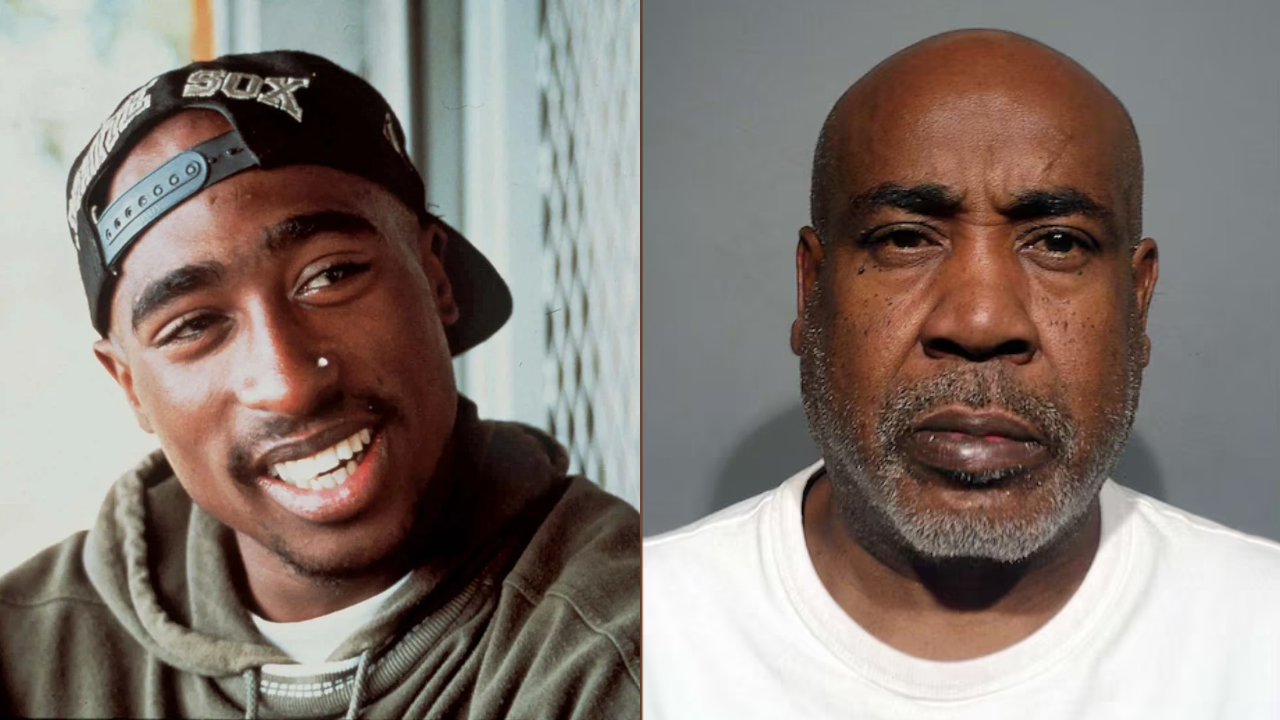
The media circus surrounding the opening statements of Tupac Shakur's long-delayed murder trial is operating exactly as intended: as a multi-million-dollar smoke screen.
Every legal analyst on cable news is dissecting the courtroom theater, pretending that a gavel banging in a modern courtroom fixes a rot that metastasized three decades ago. They want you to stare at the defendants, listen to the breathless recounting of gang politics in Las Vegas, and believe that justice is an inevitable mechanical output if we just watch the transcript closely enough. Learn more on a related topic: this related article.
It is a comforting illusion. It is also completely wrong.
Focusing on the courtroom mechanics misses the structural decomposition of the entire investigation. The lazy consensus says that arresting Duane "Keefe D" Davis and hauling him in for opening statements is proof that the system eventually corrects itself. I call bullshit. If it takes twenty-seven years to bring an opening statement for a crime that was an open secret in three different major metropolitan cities before the millennium turned, you do not have a justice system. You have a bureaucratic holding pattern that only wakes up when the documentary rights become too lucrative to ignore. Additional reporting by Entertainment Weekly highlights related views on this issue.
Let us look at the actual anatomy of how this case was botched from minute zero.
The Myth Of The Cold Case Breakthrough
For years, the public narrative pushed by lazy journalism has been that law enforcement simply lacked the physical evidence to move forward until Keefe D started talking on podcasts and in his self-published memoirs.
This is a structural lie designed to protect institutional incompetence.
I have watched agencies drop millions of dollars pursuing dead ends while ignoring the blinking neon signs sitting right in front of their precinct doors. Police departments do not fail to solve high-profile homicides because clues are hidden; they fail because of institutional triage, jurisdictional turf wars, and a profound disinterest in the victims when those victims happen to inhabit specific cultural or racial brackets.
When Shakur was gunned down on the Las Vegas Strip in September 1996, the Las Vegas Metropolitan Police Department had a car full of eyewitnesses, a bleeding victim who was a global icon, and a fleeing Cadillac containing known associates. The failure to secure an immediate, air-tight prosecution in the autumn of 1996 was not a mystery of missing forensic science. It was a failure of will.
To buy into the current trial narrative as a triumph of modern detective work, you have to ignore two and a half decades of administrative cowardice. The opening statements happening today are not a heroic climax. They are a statute-of-limitations Hail Mary executed by prosecutors who realized history was about to write a much harsher verdict on their department's legacy than any jury ever could.
The Anatomy Of A Distraction Economy
Why now? Why roll out the theater of opening statements after a quarter-century of institutional amnesia?
Follow the attention economy.
True crime is not a public service anymore; it is an asset class. The legal proceedings surrounding hip-hop royalty have been commodified into serialized entertainment. When an industry becomes entirely dependent on recycling its own trauma for streaming revenue, the justice system starts taking cues from the production schedules of cable networks and podcast networks.
The trial is not being staged to bring closure to a grieving family or to restore civic order. It is being executed because the narrative debt has finally come due, and the state needed a clean way to close the ledger before public cynicism turned into structural liability.
Look at the way witnesses are handled. Key figures who could have blown the lid off this conspiracy in the late nineties have either passed away or been insulated by decades of deliberate inaction. By the time an opening statement actually lands in front of a judge, the primary architects of the violence have lived full lives of relative notoriety, capitalizing on the very mythos built around the tragedy.
Waiting twenty-seven years to deliver an opening statement is not accountability. It is a historical farce.
The Institutional Cowardice No One Wants To Name
Let us talk about the foundational rot of modern homicide investigations involving urban cultural icons.
When a multi-platinum artist gets killed in a major tourism corridor surrounded by security cameras and witnesses, solving it requires confronting uncomfortable intersections of street politics, police informants, and municipal PR. In 1996, Las Vegas was terrified of harming its family-friendly rebrand. Admitting that a localized gang war involving national music conglomerates could turn the Strip into a literal drive-by shooting gallery was bad for the slot machine metrics.
So, the investigation was gently nudged into a corner. Tips were filed away. Leads crossing state lines between Compton and Las Vegas hit bureaucratic walls of silence.
To pretend that today’s trial represents a clean slate is to forgive a generation of investigators who looked the other way because solving the murder of Tupac Shakur required disrupting the very power dynamics that kept the local tourism engine humming.
When you hear the prosecution deliver their grand opening arguments, remember what they are leaving out. They are leaving out the institutional memos gathering dust. They are leaving out the informants who were protected because their utility to local narcotics squads outweighed their value in a murder probe. They are leaving out the simple, unvarnished reality that the state had everything it needed to move forward in 1996, 2000, and 2010, and chose silence instead.
The Real Lesson Of The Shakur Trial
If you are looking at this trial for lessons on how modern criminal justice works, you are learning the wrong curriculum.
The real takeaway is that accountability in high-profile cases is entirely elastic. It bends to fit political timelines, media cycles, and the pressure of public embarrassment. If a crime happens to someone famous enough, long enough, and loudly enough, the system will eventually spend millions of taxpayer dollars to stage a courtroom drama just to prove it exists.
Meanwhile, thousands of unresolved cases sit in filing cabinets across every major city in America, generating zero opening statements, zero documentary deals, and zero courtroom theater.
The trial starting today is not a victory for truth. It is a monument to how late, how hollow, and how performative justice can be when the state finally decides to clean up its own mess decades after everyone stopped caring.
Stop waiting for the verdict to tell you what happened. The truth was written twenty-seven years ago in the tire tracks on Flamingo Road, and no opening statement can rewrite the decades of cowardice that let those tracks fade into the pavement.