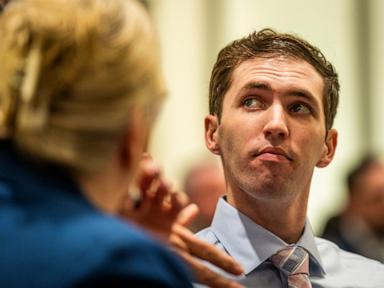
The upcoming five-day preliminary hearing in Utah is about to pull back the curtain on one of the most polarizing criminal cases in recent American history. Tyler Robinson, the 23-year-old accused of assassinating conservative activist Charlie Kirk, faces a judge starting Monday. It's the first time Kirk's widow, Erika, and his parents will sit in the same room as the man who allegedly pulled the trigger. Don't expect a typical dry legal proceeding. This hearing functions like a minitrial, and the evidence prosecutors are bringing to the table looks incredibly tough to beat.
Public interest in the September 10, 2025 shooting at Utah Valley University remains sky-high. When a high-profile political figure gets killed in front of 3,000 people, the legal system moves under a massive microscope. State District Judge Tony Graf already ruled that cameras are allowed in the courtroom, meaning the world will watch the prosecution lay out its cards.
Understanding the legal mechanism at play here is vital. Prosecutors don't need to prove Robinson's guilt beyond a reasonable doubt this week. That massive hurdle is reserved for the actual trial. Right now, the state only needs to clear a much lower bar, demonstrating there are reasonable grounds to believe Robinson committed the crime. Legal experts, including former federal judge Paul Cassell, look at the public filings and see a virtual slam dunk for the prosecution.
The Mountain of Physical and Digital Evidence
Prosecutors aren't just relying on eyewitness accounts from the chaotic scene at the open-air amphitheater. The state's case relies heavily on hard, physical forensics combined with a devastating paper trail left by the defendant himself.
First, look at the forensics. Investigators recovered the suspected murder weapon, a Mauser Model 98 bolt-action rifle, in the woods near the Orem campus shortly after the shooting. The state plans to introduce DNA evidence that directly ties Robinson to that rifle. To make matters worse for the defense, the weapon matches a gun that Robinson's own father had previously given to him.
Then comes the digital footprint. Robinson basically handed the state a written confession. Before the shooting, he reportedly left a note for his live-in romantic partner, Luna Twiggs, stating he had an opportunity to take out Charlie Kirk and was going to take it. When Twiggs later demanded an explanation via text, Robinson responded directly. He stated he had enough of Kirk's hatred and that some hate can't be negotiated out. Add in the fact that Robinson allegedly logged onto Discord after the event and messaged friends, apologizing and admitting he was the one at the university, and you have a prosecutor's dream scenario.
The Battle Over the Death Penalty
Robinson faces a charge of aggravated murder. In Utah, capital punishment isn't on the table for just any homicide. The state must prove specific aggravating circumstances to keep the death penalty active.
Prosecutors are angling to show that the sniper attack on Kirk wasn't just a targeted hit, it actively endangered the thousands of college students and spectators in attendance. Firing a high-powered rifle into a dense crowd of 3,000 people naturally creates a zone of lethal danger. Robinson's defense team tried desperately to get the death penalty thrown out before this hearing, but Judge Graf kept it firmly on the table.
Because Utah law allows prosecutors to use hearsay and secondhand information during preliminary hearings, the state can move fast. They will weave together investigator testimony, autopsy findings, and the graphic video footage of the assassination itself to paint a picture of a calculated, politically motivated execution.
What Happens After the Gavel Falls
Once the five-day hearing wraps up, Judge Graf will decide if the state met its burden to push the case to an official trial. Given the confession texts, the Discord logs, the DNA on the rifle, and the fact that Robinson turned himself in 33 hours after the murder, a dismissal is virtually impossible.
You can expect Robinson to finally enter a formal plea once the judge signs off on the trial order. For Kirk's family and the broader public, this week offers the first real look at the mechanics of a prosecution seeking the ultimate penalty. The defense has remained completely silent on Robinson's guilt or innocence, but their quiet stance will have to change very soon once the trial date gets locked into the calendar.