Your portfolio probably feels like a coin toss right now. One afternoon, Nvidia surges 31.5% and the Dow jumps over 1,400 points. The very next session, Nvidia drops 5.9%, Anthropic breaks below its $83 IPO price, and the entire market slumps right back down.
U.S. stocks fall again as AI companies keep swinging because the S&P 500 and Nasdaq have quietly become single-sector bets disguised as diversified indexes. When a handful of chipmakers, foundation model labs, and data center operators carry an outsized share of market capitalization, their violent mood swings drag every passive index fund down with them. You might also find this similar story interesting: Nvidia Doubles Revenue While the Board Keeps Jensen Huang Out of the Building.
Most financial headlines treat these daily whipsaws like random noise. They aren't. Wall Street is repricing artificial intelligence in real time, and the math behind the volatility explains why even healthy parts of the economy can't keep the major benchmarks green when AI stumbles.
The Math Behind the November 2026 AI Whipsaw
Look at what happened during the final weeks of November 2026. After hitting a record on October 6, the S&P 500 shed roughly 8% while the Nasdaq Composite dropped more than 14%. Meanwhile, the Cboe Volatility Index climbed near 28, sitting way above its historical median of 17.6. As extensively documented in latest coverage by Harvard Business Review, the effects are worth noting.
The trigger wasn't a sudden collapse in consumer spending. In fact, broader American consumer confidence improved while non-tech sectors frequently traded higher.
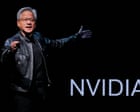
Instead, the turbulence centered directly on artificial intelligence. First came the leadership shock at Nvidia when Jensen Huang stepped down in mid-November, sending panic through semiconductor stocks. When he returned on November 23, Nvidia exploded 31.5% higher—its biggest single-day jump in over two decades—and lifted the Nasdaq 6%.
Then Tuesday hit. Dip buyers vanished, Nvidia fell 5.9%, CoreWeave tumbled 11.8%, and GE Vernova dropped 4.8%. Even Anthropic, fresh off a heavily oversubscribed debut that briefly pushed shares past $115, sank 6.5% to slip under its $83 listing reference price before bouncing back later in the week.
When 65 tracked AI stocks sit an average of 40.2% below their 2026 highs—and specialized neoclouds sit nearly 69% below theirs—you aren't looking at a normal pullback. You're watching a massive valuation reset.
Why Non-AI Stocks Can't Save the Index
If you check under the hood of a typical trading day right now, you'll notice something weird. Plenty of traditional companies are doing fine. Industrial firms, consumer staples, and even legacy names like Apple and ADP managed to notch fresh annual highs during the same week AI stocks bled out.
So why do U.S. stocks keep finishing in the red?
Capitalization weighting. Pure and simple.
Because Nvidia and the major cloud hyperscalers grew so massive over the past three years, their market values dwarf entire sectors of the economy. A 6% drop in a multi-trillion-dollar chipmaker erases more index points than a 2% rally across dozens of regional banks, retailers, and manufacturers combined.
If you own a standard S&P 500 index fund or a target-date retirement account, you aren't shielded from AI volatility. You're riding shotgun with it.
Three Real Reasons AI Companies Keep Swinging
Blaming traders for being "emotional" misses the actual structural pressures hitting AI balance sheets right now. Three specific forces are driving these violent daily reversals.
1. Massive Capex Meets Debt Markets
For years, Big Tech funded AI data centers out of huge cash piles. That era is ending. According to the Federal Reserve's October 2026 FOMC minutes, hyperscalers have rolled out capital spending plans requiring far more external financing than Wall Street expected.
High-yield bonds issued to finance data center construction have seen credit spreads widen noticeably. Investors love growth, but they hate seeing tech giants take on heavy debt before proving the software revenue will actually pay back the hardware bills.
2. Revenue Growth Isn't Matching the Hype
The same FOMC report noted that risk sentiment soured right after two leading AI firms posted revenue growth below investor expectations. Hardware orders can't stay at peak levels forever if the companies buying those GPUs struggle to turn chatbot subscriptions and enterprise API calls into fat profit margins.
Research from London Business School and the University of Cambridge even put the probability that AI stocks were in a bubble back in September at up to 97%. When expectations are priced for perfection, an "okay" earnings report triggers a 10% sell-off.
3. Supply Floods and Macro Headwinds
Look closely at Anthropic's wild post-IPO swings. Unlike traditional tech listings that lock up insider shares for six months, Anthropic relaxed restrictions so venture backers and employees could sell immediately. When demand softened after day one, that extra supply pushed the stock straight through its $83 floor.
At the same time, macro pressures haven't gone away. Ten-year Treasury yields hovering near 4.93% make future tech profits worth less today, while Brent crude oil bouncing around $88.78 keeps inflation fears alive.
What Most Retail Investors Get Wrong About This Sell-Off
When markets swing 1,000 points in a single afternoon, retail investors usually make one of two terrible mistakes.
Mistake number one is panic-selling at the bottom of a red week. History shows that sharp tech corrections—like the April 2025 tariff sell-off or the 2022 inflation drop—tend to punish anyone who locks in losses right before a relief bounce. Just look at Black Friday 2026, when 64 out of 65 AI stocks surged simultaneously and handed the S&P 500 its best week in 19 months.
Mistake number two is treating every AI ticker like a guaranteed bounce-back play. Not every company down 50% from its peak will recover. There's a massive difference between a profitable chipmaker with deep cash reserves and a leveraged neocloud operator renting out GPU clusters on thin margins.
Honestly, chasing 20% single-day rallies in speculative infrastructure names is closer to sports betting than investing.
How to Protect Your Portfolio Without Going to Cash
You don't need to liquidate your retirement account and hide under a mattress. You just need to stop letting one crowded trade dictate your entire net worth.
Start by checking your actual overlap. Pull up your brokerage account and look at the top ten holdings inside your mutual funds or ETFs. If your "diversified" growth fund has 35% of its assets parked in Nvidia, Microsoft, Alphabet, and Amazon, you're heavily overexposed to the exact same capital-spending cycle.
From there, take three concrete steps before the next Federal Reserve meeting and jobs report hit the tape:
- Trim oversized winners back to target weights. If an AI position grew from 5% of your portfolio to 15% over the past two years, sell the excess and lock in those gains.
- Rebalance into equal-weight or value funds. Equal-weight S&P 500 funds give the same influence to a healthcare company or industrial manufacturer as they do to Nvidia, smoothing out the tech whipsaws.
- Keep dry powder in short-term Treasuries or quality defensive assets. Bank of America strategist Michael Hartnett specifically flags government bonds, real estate, top-rated quality stocks, and gold as practical hedges while credit spreads and jobless claims remain under pressure.
Set limit orders instead of market orders if you decide to buy any dips, keep single-stock positions capped at a percentage you can stomach losing half of, and let the institutional algorithms fight over the daily headlines.