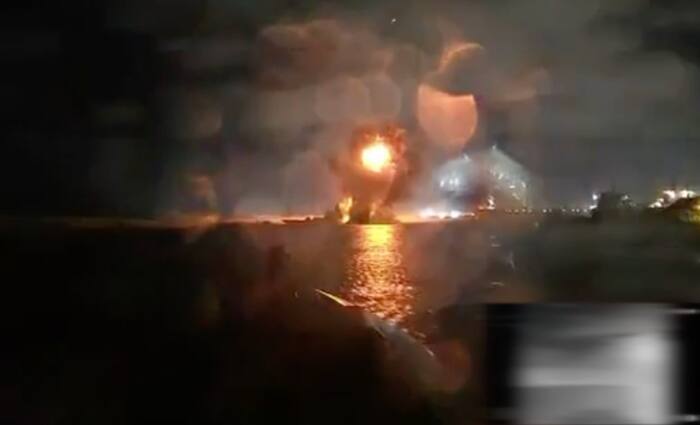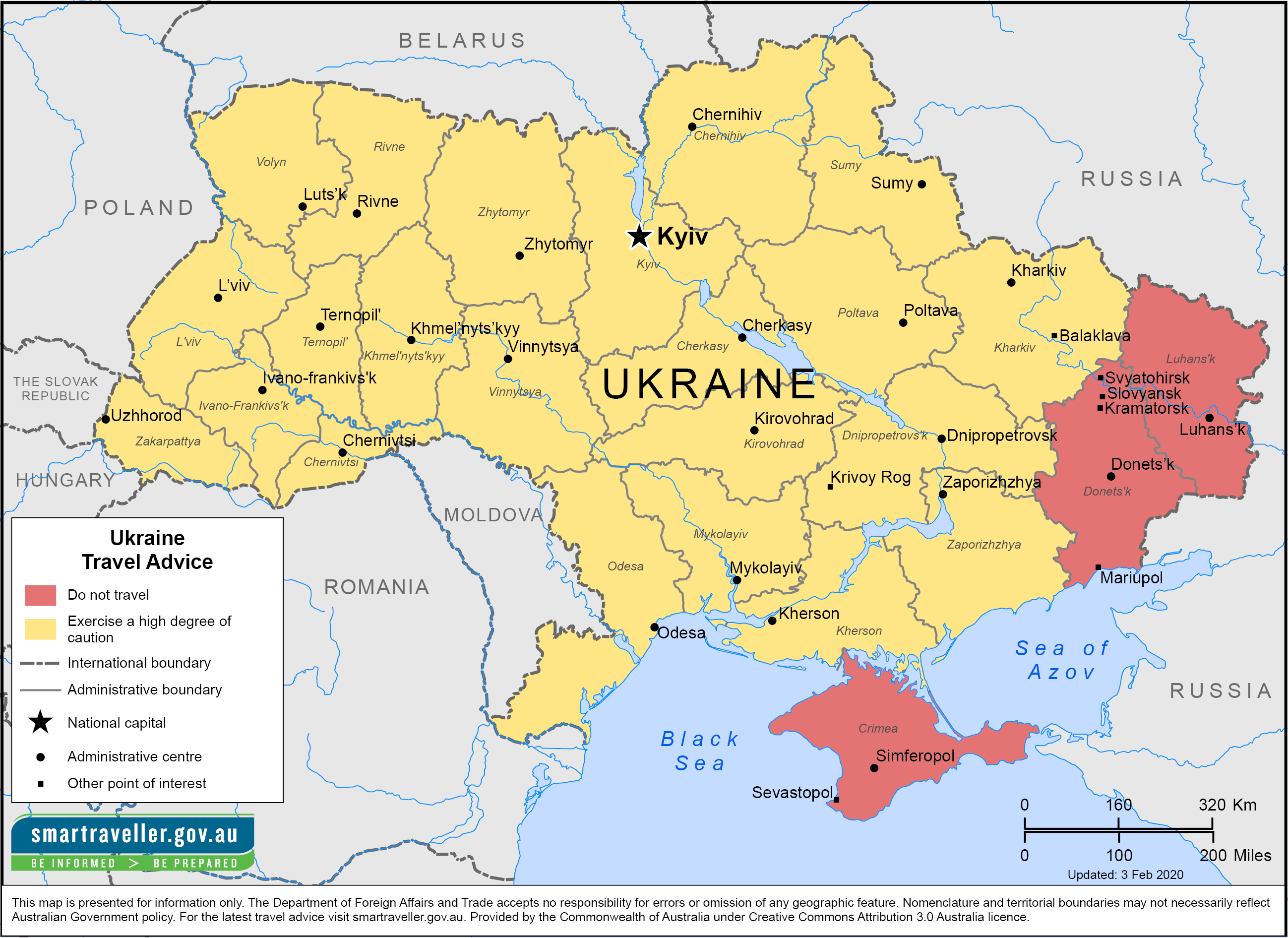
Ukrainian naval drones have officially broken out of the Black Sea, sinking the Russian Project 20380 corvette Merkury and striking a Russian-linked cargo vessel in the Mediterranean waters off Libya. Confirmed directly by President Volodymyr Zelenskyy, this dual operation marks the first time Kyiv’s unmanned surface vessels (USVs) have successfully executed kinetic strikes thousands of kilometers from their home ports. By extending its asymmetric maritime reach into the central Mediterranean, Ukraine has effectively stripped the Russian Navy and its shadow logistics network of safe harbors anywhere near European waters.
The surface-level headline is dramatic enough on its own. A country without a traditional blue-water navy just took out a modern guided-missile corvette and crippled a logistics artery on the doorstep of North Africa. Yet treating this merely as another tactical victory misses the seismic strategic shift happening beneath the waves. For over two years, military analysts assumed Ukraine’s drone fleet—platforms like the Magura V5 and Sea Baby—was geographically tethered to the enclosed basin of the Black Sea, reliant on coastal launch points and relatively short line-of-sight or regional satellite relays.
That assumption is now dead.
Anatomy of a Long-Range Maritime Ambush
To understand how a low-profile, explosive-laden drone boat reaches the coast of Libya, you have to discard the image of a vessel motoring all the way from Odesa through the Bosphorus Strait. Turkey strictly enforces the Montreux Convention, keeping the Turkish Straits closed to belligerent warships and military vessels. Ukraine did not sail a fleet of drones past Istanbul.
Instead, the operation points directly to expeditionary, covert deployment. Mothership logistics—the use of modified commercial vessels, sympathetic merchant hulls, or covert forward staging areas—allows small teams of operators to transport compact unmanned craft into international waters completely undetected. Once released near the target corridor, these drones rely on multi-constellation satellite communications to receive terminal guidance from command centers sitting thousands of miles away in Kyiv.
Consider the sheer operational complexity required to pull this off. Operators had to track two distinct targets moving through one of the busiest shipping lanes in the world, avoid collateral damage to neutral commercial traffic, bypass electronic warfare suites, and detonate warheads with surgical precision.
The targets themselves tell a very clear story about Ukrainian intelligence priorities.
- The Corvette Merkury represents one of Russia’s newer, more capable surface combatants. Commissioned in 2023 as part of the Steregushchiy-class (Project 20380), it was built with stealth-reducing hull geometry, modern radar arrays, and Kalibr or Uran missile capabilities. It was never supposed to be vulnerable to a fiberglass boat packed with high explosives.
- The Cargo Vessel off Libya represents the lifeblood of Moscow’s sanctions-evasion and expeditionary network. Russian-affiliated freighters routinely shuttle weapons, armored vehicles, and plundered resources between Tartus in Syria, ports in eastern Libya controlled by Kremlin-backed factions, and Black Sea terminals.
By hitting both a frontline warship and a logistics freighter in the same operational window, Ukrainian intelligence demonstrated it isn't just hunting trophies. It is systematically dismantling Russia's ability to project power into Africa and the Middle East.
Why the Russian Navy Was Caught Flat-Footed
Moscow’s naval leadership has spent the last two years learning painful lessons in Sevastopol and Novorossiysk. They installed heavy machine gun nests on decks, deployed boom defenses at harbor entrances, and increased helicopter patrols. Those measures forced Russia to pull the bulk of its Black Sea Fleet away from occupied Crimea.
None of those adaptations translated to the open Mediterranean.
In the central Mediterranean, Russian commanders operated under a lingering peacetime mindset. They assumed the distance from Ukrainian territory acted as an impenetrable shield. Lookouts on ships like the Merkury were watching for NATO reconnaissance aircraft, American destroyers, or submarine periscopes—not a five-meter-long drone riding low in the Mediterranean swell at night.
Electronic warfare (EW) suites aboard modern Russian corvettes are designed primarily to spoof incoming anti-ship missiles or disrupt high-altitude aerial drones. Against low-angle surface threats utilizing hardened, frequency-hopping satellite uplinks, traditional shipboard jammers often fail to sever the connection before terminal impact. Once a swarm of USVs closes within a few hundred meters, the warship’s primary air-defense systems cannot depress their firing angles low enough to engage targets skimming the waterline.
At that point, survival comes down to sailors firing heavy machine guns in the dark at a target moving at forty knots. History shows how badly that ends.
The Strategic Chokehold on Russia's African Ambitions
Why Libya? To an outsider, the North African coast looks like a bizarre distraction from the trench warfare grinding on in eastern Ukraine. In reality, Libya is the logistical keystone of the Kremlin’s entire African strategy.
Following the restructuring of the Wagner Group into the Kremlin-controlled Africa Corps, Moscow intensified its use of eastern Libyan ports—specifically Tobruk—as a transshipment hub. Weapons, heavy equipment, and mercenaries flow into Libya before moving south into Mali, Burkina Faso, Niger, and the Central African Republic. In return, gold and strategic minerals flow north to fund Russia’s war economy.
For years, this Mediterranean pipeline operated with total impunity. Western nations monitored the ships, tracked their transponders when they bothered to turn them on, and issued sanctions that Moscow largely ignored. Nobody was willing to physically interdict Russian vessels in international waters for fear of triggering a direct military confrontation with a nuclear-armed state.
Ukraine has no such hesitation. Kyiv is already in an existential war with Russia. By bringing the fight to the Libyan coast, Zelenskyy has transformed the Mediterranean from a safe transit zone into an active combat theater for any vessel flying the Russian flag or carrying Russian military cargo.
The ripple effects across global maritime logistics will be immediate and severe.
The Insurance and Shipping Fallout
Commercial shipping runs on risk calculation, not ideology. When a cargo ship takes a direct hit off the coast of Libya, maritime insurance underwriters in London immediately reprice war-risk premiums for the entire region.
Shell companies and shadowy maritime operators who previously leased vessels to move Russian cargo will suddenly demand exorbitant hazard pay—or refuse the contracts altogether. Even if Ukraine never launches another drone in the Mediterranean this year, the psychological and financial deterrence has already been achieved. Every Russian captain transiting the Strait of Gibraltar or the Suez Canal now has to stare at empty dark water and wonder if a shadow in the waves is a fishing boat or a warhead.
The Gray Areas and Unanswered Questions
Veteran journalists know better than to take wartime battle damage assessments entirely at face value without examining the friction points. While Zelenskyy’s confirmation carries massive weight, operations of this nature inherently operate inside a thick fog of intelligence secrecy and geopolitical sensitivity.
First, there is the question of third-party complicity. Launching USVs off the coast of Libya requires a staging mechanism. Did Ukrainian special forces utilize a civilian freighter operating under a flag of convenience? Did they establish a covert shore base in a region of Libya fractured by rival militias? Neither Kyiv nor its Western partners will answer that question publicly, because doing so would expose operational tradecraft and potentially implicate regional actors who prefer to remain invisible.
Second, international maritime law gets murky fast when covert commercial vessels are used as drone carriers. Western militaries have spent decades enforcing strict distinctions between civilian merchant shipping and military combatants to protect global trade. If covert mothership tactics become normalized, every merchant vessel in a contested zone becomes a legitimate target of suspicion. That is a precedent that cuts both ways, and Western naval planners are undoubtedly watching Ukraine’s ingenuity with a mix of admiration and quiet anxiety.
Third, we have to consider Russian retaliation. Moscow rarely absorbs a public humiliation of this magnitude without attempting a symmetric or asymmetric response. With its conventional naval assets increasingly pinned down, Russia may look to target commercial shipping linked to Ukraine’s partners, or accelerate the transfer of advanced anti-ship missiles to hostile non-state actors in the Red Sea and Mediterranean basins.
A New Era of Asymmetric Sea Power
For over a century, naval supremacy belonged exclusively to nations capable of spending tens of billions of dollars on aircraft carriers, nuclear submarines, and destroyers. Small nations could defend their immediate coastlines with mines and shore batteries, but projecting power across open oceans was the exclusive club of global superpowers.
That monopoly just expired.
What Ukraine executed off the coast of Libya is a blueprint that every mid-tier military and non-state actor on earth is currently studying. You do not need a shipyard, a dry dock, or a fleet of battleships to contest a major sea lane. You need commercial off-the-shelf propulsion, encrypted satellite links, ruggedized explosives, and the audacity to deploy them from unexpected platforms.
Russia’s surface fleet was built to fight the Cold War against NATO carrier strike groups. Instead, it is being systematically dismantled by remote-controlled speedboats operated by engineers sitting in bunkers thousands of miles away. Until naval architects figure out how to reliably detect and destroy low-profile unmanned swarms in open ocean conditions, no warship on earth is truly safe from the horizon.