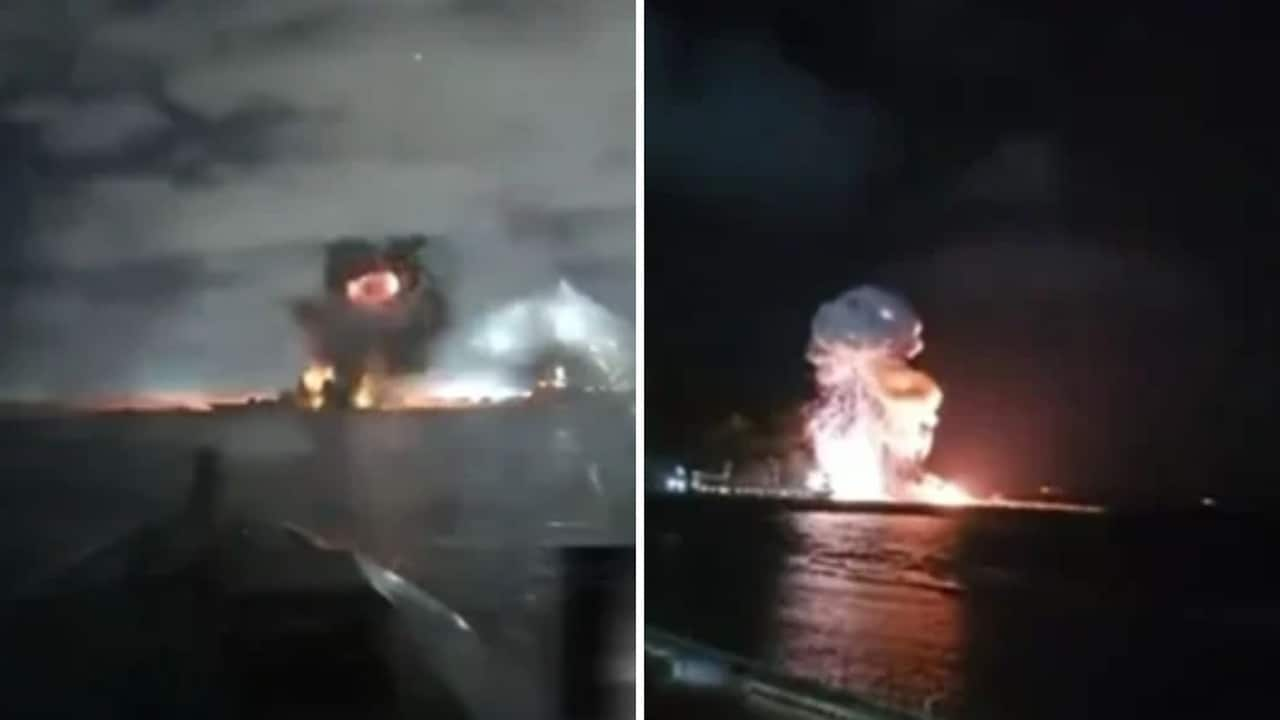
Everyone is cheering the viral footage of Ukrainian naval drones turning a Russian vessel into scrap metal off the coast of Libya. Volodymyr Zelensky called the operation exemplary, and defense commentators are tripping over themselves to crown Kyiv the undisputed master of asymmetric maritime warfare.
They are looking at the explosion and missing the fire spreading behind them.
When a regional land war suddenly spills across the Mediterranean onto the doorstep of North Africa, celebrating a single tactical hull loss is dangerous myopia. The lazy consensus treats every sunken Russian hull as an automatic step toward Ukrainian victory. In reality, extending kinetic strikes thousands of miles from the Black Sea introduces strategic liabilities, diplomatic blowback, and logistical traps that could cost Kyiv far more than one aging warship is worth to Moscow.
The Illusion Of Asymmetric Invincibility
Defense analysts love a good David-versus-Goliath narrative. Cheap unmanned surface vehicles (USVs) packed with high explosives taking out multi-million-dollar naval assets makes for incredible television and even better fundraising.
I have watched defense ministries and private contractors burn through hundreds of millions of dollars chasing the high of viral tactical wins while their overarching strategic position deteriorated. You cannot win a war of attrition purely through highlight reels. Every drone boat launched into the Mediterranean requires months of covert logistics, diplomatic maneuvering, intelligence sharing, and specialized operators who are no longer focused on the primary front lines in Donetsk or Zaporizhzhia.
Let us define the actual military principle at play here. What Ukraine executed off Libya is a deep-strike commerce and logistics interdiction, not a decisive fleet action. Sea control—the ability to use the ocean freely while denying it to an enemy—requires persistent presence. Sea denial, which is what Ukraine actually possesses, simply makes a body of water hazardous. Turning the Black Sea into a no-go zone for the Russian Black Sea Fleet was a strategic masterstroke because it reopened Ukraine’s grain corridor and protected Odesa.
Replicating that tactic off the coast of Libya achieves none of those core economic or territorial objectives.
Why Expanding The Battlespace Hurts The Underdog
In classical military strategy, Carl von Clausewitz warned extensively about the culminating point of victory—the exact moment when an attacker overextends their reach, diluting their strength until the offensive becomes a liability. Maritime theorists like Julian Corbett emphasized that naval power only matters insofar as it influences events on land.
Ask yourself a simple question. How does a burning Russian ship near Tobruk or Benghazi push a single Russian infantryman out of trenches in eastern Ukraine?
It does not. Instead, it triggers three severe consequences that mainstream coverage completely ignores:
- Logistical Dilution: Maintaining a clandestine maritime strike cell in the Mediterranean demands immense resources. Operators, satellite bandwidth, launch platforms, and explosive payloads are finite. Every resource diverted to hunting Russian auxiliaries near North Africa is a resource stripped from defending Ukrainian airspace or holding ground in the Donbas.
- Escalation Management Friction: Western backers—particularly in Washington, Berlin, and Rome—are already skittish about the conflict bleeding into global shipping lanes. The Mediterranean is not a closed pond like the Black Sea; it is the commercial artery of Southern Europe. Conducting kinetic strikes near international maritime chokepoints invites intense pressure from European allies who depend on stable Mediterranean trade and energy transit.
- Blowback in Africa: Russia’s presence in Libya is tied directly to its broader African footprint, including the Africa Corps (formerly Wagner) operations across the Sahel. By striking Russian assets in Libya, Ukraine is wading directly into a fractured, multi-sided civil conflict involving eastern Libyan strongman Khalifa Haftar, Turkish-backed factions in Tripoli, and various European intelligence services.
Dismantling The "Globalizing The War" Fallacy
If you search online right now, the dominant questions surrounding this strike boil down to the same flawed premise: "How did Ukraine pull this off?" and "Where will Ukraine strike Russia next?"
Those are the wrong questions. The right question is: What is the return on investment for horizontal escalation?
When a smaller military power fighting an existential war chooses to expand the geographic scope of the conflict—a strategy known as horizontal escalation—it is betting that forcing the larger power to defend everywhere will weaken it everywhere. Historically, that bet rarely pays off for the smaller state.
Russia possesses a massive, if aging, global naval footprint and an entrenched mercenary infrastructure across Africa. Losing a single auxiliary or warship in the Mediterranean is an embarrassment for the Kremlin, not an operational crisis. Moscow absorbs losses with a callousness that Western democracies—and resource-constrained defenders—cannot match. Meanwhile, Ukraine’s margin for error is razor-thin.
Imagine a scenario where a Ukrainian maritime drone operating in the congested waters off Libya malfunctions, loses its satellite link due to electronic warfare, and slams into a Maltese-flagged oil tanker or a Turkish cargo vessel. Overnight, the narrative shifts from "exemplary tactical brilliance" to reckless endangerment of global commerce. European nations that have quietly tolerated or enabled Ukrainian special operations would be forced to shut down transit routes, choke off intelligence sharing, and publicly distance themselves from Kyiv.
The Hidden Cost Of The "Exemplary" Strike
Calling this operation "exemplary" is great domestic morale-boosting, and Zelensky is doing his job as a wartime leader by projecting strength. Morale matters. Showing the Ukrainian public that Russian forces are not safe anywhere on the globe provides a psychological boost during grueling periods of defensive warfare.
However, strategists cannot afford to drink their own propaganda.
The honest truth—and the downside that even contrarian analysts have to admit—is that inaction also carries a cost. If Ukraine allows Russia to use Libyan ports like Tobruk unhindered to funnel weapons, gold, and personnel between Syria, Ukraine, and sub-Saharan Africa, Moscow strengthens its sanctions-busting network. Disrupting that logistics chain has real value.
Yet, there is a massive difference between covertly disrupting a supply chain and turning it into a public spectacle. Intelligence agencies have sabotaged enemy shipping for centuries without releasing high-definition drone footage to the international press. By turning a covert interdiction into a public victory lap, Kyiv forces Moscow to respond, alerts every coastal state in the region to tighten maritime surveillance, and burns the very operational security that made the strike possible in the first place.
What Smart Asymmetric Warfare Actually Looks Like
If Kyiv wants to bleed Russia’s global logistics without inviting diplomatic blowback or overextending its own special forces, the playbook needs a radical overhaul. Loud, cinematic explosions in neutral waters are a trap. Silent, deniable attrition is the weapon that actually works.
- Prioritize Non-Kinetic Sabotage Over Viral Explosions: Mechanical failures, contaminated fuel bunkers, cyber-induced navigation errors, and mysteriously flooded engine rooms achieve the exact same mission kill as a naval drone without leaving forensic wreckage or triggering international maritime incidents. Nobody calls an emergency UN Security Council meeting over a seized crankshaft.
- Weaponize Financial and Maritime Law: Instead of blowing up ships in the Mediterranean, target the shadow fleet’s insurance, flag registrations, and port access. Pressuring flag-of-convenience registries and sanctioning specific port operators in the Mediterranean starves Russian vessels of fuel, repairs, and legal cover far more permanently than a single drone strike ever could.
- Keep Kinetic Mass Concentrated Where Territory Is Decided: Naval drones have proven beyond doubt that they can paralyze a fleet in confined waters. Keep that industrial capacity laser-focused on the Black Sea, the Sea of Azov, and the Kerch Strait—the only waterways where naval denial directly translates into liberated Ukrainian land.
War is not a content creation exercise, and tactical brilliance is worthless when detached from strategic reality. Cheering a burning ship off the coast of Libya feels good today, right up until the bill for overextension comes due tomorrow.