The air in Maturín smells of old sulfur and wet rust. If you stand long enough by the banks of the Orinoco River, the humidity feels less like weather and more like a physical weight, pressing against your chest until you remember how to force your lungs to work. Down here, beneath the cracked asphalt of eastern Venezuela, rests an ocean of heavy crude. It is not the sweet, golden liquid that shoots from the sands of Arabia, easily coaxed into a barrel. This stuff is molasses. It is thick, asphalt-like bitumen that has rested in the dark for millions of years, waiting for someone with enough patience—or enough desperation—to drag it into the light.
Carlos knows that weight. For twenty-two years, he worked the valves at a pumping station outside of Anaco, turning heavy steel wheels that rusted faster than they could be painted. He remembers the hum of the turbines when the revenue was flowing, the brief years when oil checks built brick homes and filled empty pharmacies. He also remembers the quiet. He remembers the morning the generators sputtered and died for lack of spare parts, the copper wiring stripped from the walls by men who had nothing left to sell, and the steady, endless line of neighbors walking toward the Colombian border with plastic bags tied to their wrists.
When people in Washington talk about Venezuelan reserves, they talk in numbers that numb the brain. Three hundred billion barrels. The largest proven deposits on earth. More than Saudi Arabia. More than Iran.
To a desk analyst in a glass tower, those numbers are assets on a spreadsheet. To Carlos, they were a ghost story. They were the reason his daughter left for Santiago, and the reason his wife boils water over an open wood fire in a yard where the hibiscus refuse to bloom.
Then came the deal.
The announcement hit the wire like a lightning strike in a dry season. A political maneuver engineered by Donald Trump’s orbit, centered on securing access to those massive petroleum vaults, bypassing the diplomatic deep freeze that had locked Caracas out of Western markets for years. The mechanics of the agreement were drafted in dry legalese: waivers for specific extraction rights, joint ventures with battered state-run entities, and promises of security guarantees for foreign engineers willing to brave the broken infrastructure.
To understand why this matters, you have to look past the cable news shouting matches and examine the physics of global energy. The world is addicted to heavy crude. For decades, refineries along the Texas and Louisiana Gulf Coast were specifically engineered to process the sludgy, high-sulfur oil that comes out of the Orinoco Belt. When sanctions choked off that supply, those massive coastal refineries starved. They had to retool, or they had to import lighter, more expensive crude from halfway across the globe, driving up the cost of gasoline for a commuter in Ohio or a trucker in Nebraska.
The deal was not built on altruism. It was built on the cold, hard calculus of energy independence and refinery optimization.
Consider what happens next when you unlock the vaults.
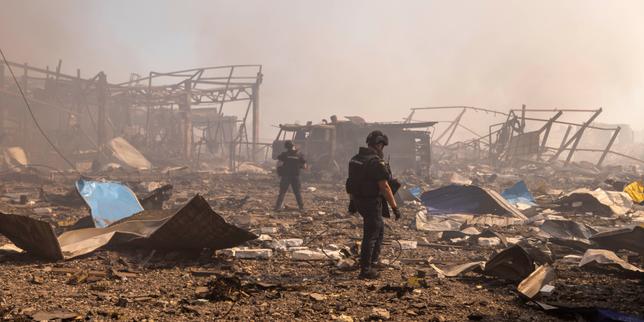
The physical reality of extracting Venezuelan oil is a nightmare of decay. You cannot simply drop a straw into the ground and watch the dollars pour out. The infrastructure is a graveyard of half-burned compressors, flooded drilling pads, and cracked pipelines leaking black ribbons through the savanna. To bring production back from its current hollowed-out state requires billions of dollars in upfront capital. It requires specialized diluents—lighter hydrocarbons imported from abroad—just to thin the heavy bitumen enough so it can actually move through a pipe without clogging it solid like cholesterol in a hardened artery.
This is where the political narrative collides with the muddy, complicated truth on the ground.
Critics argue that cutting deals with an entrenched regime legitimizes authoritarian power, throwing a financial lifeline to leaders who have driven one of South America's wealthiest nations into absolute destitution. They ask how a democratic superpower can justify shaking hands with the architects of a humanitarian crisis. It is a fair, heavy question. The moral cost of oil has always been stained with blood and compromise.
Yet, the counter-argument, whispered in the back rooms of energy firms and geopolitical think tanks, is equally stark. Isolation did not work. Years of maximum pressure campaigns failed to dislodge the regime, but they succeeded in plunging millions of ordinary citizens into starvation while leaving the ruling elite insulated by illicit gold mining and smuggling networks. The logic of the new arrangement suggests that economic gravity is more powerful than ideological purity. If the oil flows, money enters the system. If money enters the system, the physical conditions of everyday life might—just might—begin to crawl back from the edge of total collapse.
Carlos does not care about the geopolitical chess match. When I spoke with him last autumn, sitting on a plastic crate outside his shuttered garage, he pointed a calloused finger toward the southern horizon.
"They can sign all the papers they want in Washington or Caracas," he told me, his voice raspy from decades of breathing sulfur fumes. "Until a valve turns and a paycheck clears, it is just wind blowing through the palms."
The stakes extend far beyond the borders of Venezuela or the political fortunes of American leaders. Global oil markets are a delicate, interconnected web. A sudden infusion of hundreds of thousands—potentially millions—of barrels of heavy crude from a neighbor just a few days' tanker ride from the US mainland changes the mathematics of fuel prices across the Western Hemisphere. It reduces reliance on volatile shipping lanes in the Middle East. It alters the leverage of OPEC. It provides a financial cushion for an American economy constantly jittery about inflation at the pump.
But every barrel extracted carries a generational debt.
The Orinoco Belt is not an empty desert. It is a fragile ecosystem of wetlands, savannas, and indigenous lands that have already suffered decades of environmental neglect. Spills from decaying pipelines are rarely cleaned up; they simply soak into the water table, turning drinking wells the color of ink and killing the fish that local families rely on for protein. When politicians promise a boom, they rarely mention the cleanup bill that arrives thirty years later, long after the foreign executives have flown home and the local wells have run dry.
The agreement engineered under Trump’s framework represents a gamble. It bets that corporate self-interest can succeed where diplomacy failed, that the irresistible pull of cheap, accessible crude will force pragmatic compromises on both sides of the ideological divide. It assumes that the infrastructure can be patched together before the social fabric tears completely apart.
The sun is setting over Maturín now, painting the oil-stained clouds in violent shades of violet and burnt orange. The heat lingers, heavy and suffocating. In the distance, a solitary flare stack burns on the horizon, a tiny tongue of blue and yellow fire licking against the dark, burning off gas that no one has bothered to capture. Beneath that flame, miles of pipe stretch out into the emptiness, cold and silent, waiting for the signal to breathe again.