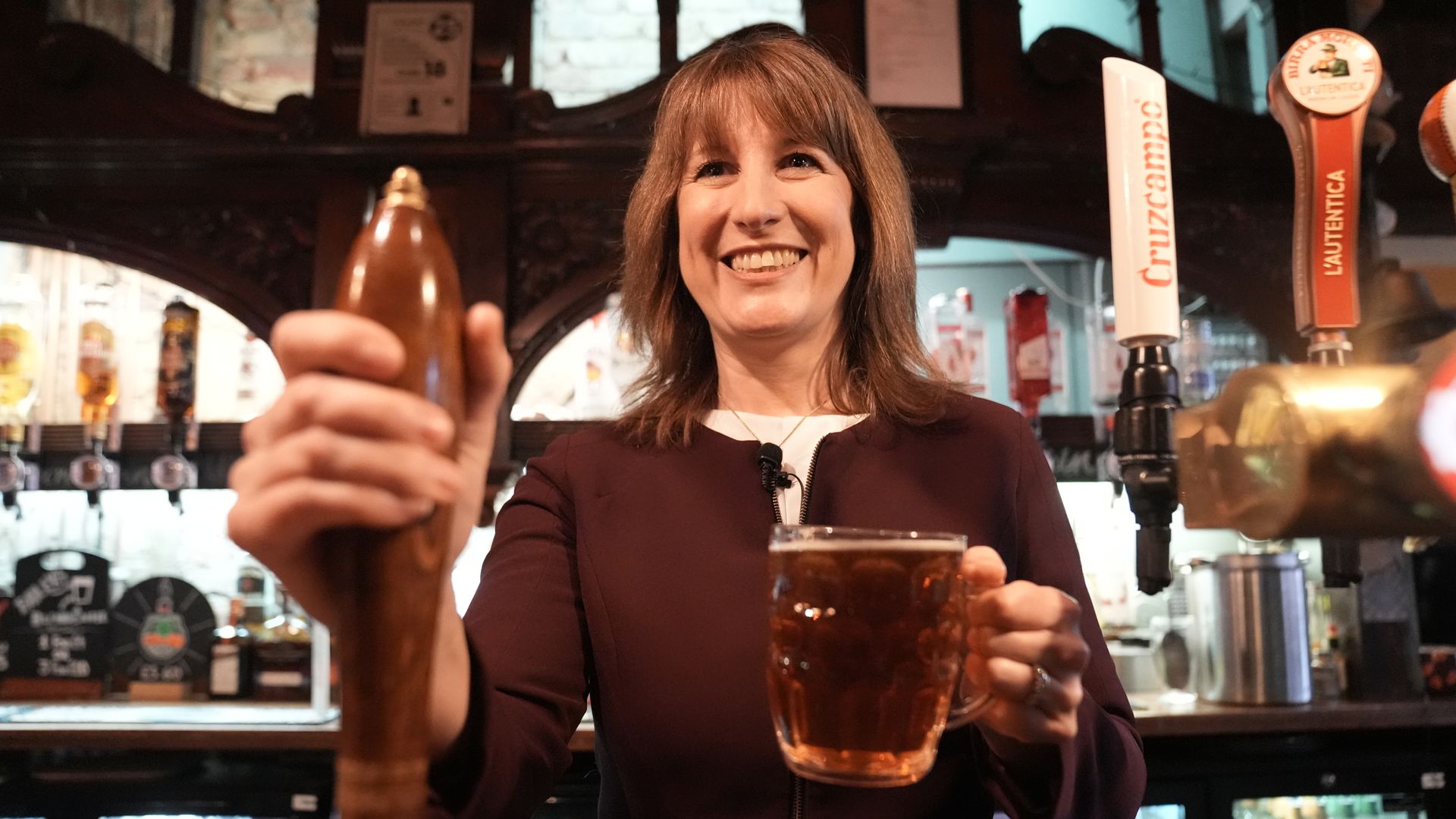
The current closure rate of two British pubs per day is not a result of fluctuating consumer sentiment or a transient downturn in footfall; it is a systemic failure of the sector's unit economics driven by a four-pronged compression of the margin profile. When the "sheer weight" of tax rises is cited, it refers specifically to the erosion of the EBIT (Earnings Before Interest and Taxes) margin to a point where the Weighted Average Cost of Capital (WACC) exceeds the Return on Invested Capital (ROIC). For thousands of independent operators, the business model has shifted from a value-creation engine to a wealth-extraction trap.
The Quadrant of Margin Compression
To understand why the sector is shedding 700+ units annually, we must categorize the cost pressures into a logical framework. The "Four Horsemen" of the current hospitality crisis are: If you liked this article, you might want to read: this related article.
- Labor Inflation and The Productivity Gap: The statutory increases in the National Living Wage (NLW) represent a direct hike in variable costs. Unlike manufacturing, hospitality has a low "productivity ceiling"—a bartender can only serve a finite number of pints per hour regardless of technology. When wages rise by 9.8%, and throughput remains static, the unit labor cost per transaction scales linearly, eating directly into the gross margin.
- The Non-Discretionary Fiscal Burden: Business rates and VAT act as a "revenue tax" rather than a "profit tax." Because these are calculated based on property value or gross sales, they do not scale down during periods of low profitability. This creates a high operating leverage environment where a 5% drop in revenue can lead to a 50% drop in net income.
- The Commodity Price Floor: While headline inflation may stabilize, the floor for energy and COGS (Cost of Goods Sold) has reset at a higher plateau. Long-term energy contracts negotiated during the 2022-2023 spike have locked in high fixed costs, while the supply chain for perishables remains sensitive to global logistics volatility.
- Debt Servicing and The Liquidity Trap: Many pubs survived the 2020-2021 period by taking on government-backed loans or private debt. As interest rates rose to combat inflation, the cost of servicing this debt skyrocketed. For an industry that historically operates on 3% to 5% net margins, an interest rate hike of 400 basis points can render the entire enterprise cash-flow negative.
The Business Rates Paradox
The fundamental flaw in the UK’s physical retail and hospitality strategy is the disconnect between property-based taxation and economic output. Business rates are a tax on occupation, not performance. In an era of digital-first consumption, the pub remains one of the few high-street entities that requires significant physical square footage to generate revenue.
This creates a disproportionate tax burden relative to turnover. A tech company or an e-commerce giant can generate millions in revenue from a modest warehouse or office space. A pub, restricted by fire codes and physical capacity, faces a hard cap on its "Revenue Per Square Foot." When business rate reliefs expire, the effective tax rate on a pub’s physical footprint becomes a primary driver of insolvency. For another look on this development, check out the latest coverage from The Motley Fool.
Mapping the Insolvency Delta
The transition from a "Struggling Entity" to a "Closed Unit" follows a predictable decay curve:
- Phase 1: Maintenance Deferral. The operator stops reinvesting in the physical asset (e.g., HVAC repairs, interior refurbishments) to preserve cash flow.
- Phase 2: Product Dilution. The operator switches to lower-quality suppliers or reduces operating hours to cut variable labor costs, inadvertently triggering a decline in customer lifetime value (CLV).
- Phase 3: The VAT/PAYE Arrears. The operator begins using tax set-asides to fund daily operations. This is the "Point of No Return," as it creates a mounting liability to HMRC that cannot be discharged through normal trading.
- Phase 4: Asset Liquidation. The site is sold, often for alternative use (residential conversion), as the land value exceeds the Net Present Value (NPV) of the future hospitality cash flows.
Fiscal Policy as a Market Distorter
The argument that tax rises are "necessary for public services" ignores the Laffer Curve implications within the hospitality sector. When the tax burden on a specific industry crosses a certain threshold, the total tax take actually decreases due to the mass exit of taxpayers.
The sunsetting of business rate relief and the increase in employers' National Insurance contributions act as a double-sided pincer movement. The first increases the cost of existing, while the second increases the cost of operating. This creates a "deadweight loss" where the price required to maintain a sustainable margin exceeds what the consumer is willing to pay.
In economic terms, the price elasticity of a pint of beer is not infinite. While "premiumization" has allowed some high-end venues to pass costs onto consumers, the average community pub serves a demographic with stagnating real wages. When the cost of a pint exceeds the perceived utility, volume drops. Because of the high fixed costs mentioned earlier, a 10% drop in volume is often enough to wipe out 100% of the profit.
The Myth of the "Inefficient Operator"
A common critique is that closures represent a "market correction" where inefficient businesses are weeded out. Data suggests otherwise. The closures are increasingly affecting well-managed, high-turnover establishments. The issue is not "inefficiency" in the traditional sense, but "structural unprofitability."
The Cost Function of a Standard Pint
If we deconstruct the price of a £5.00 pint in a standard UK pub, the distribution of value is starkly skewed:
- Tax (Duty + VAT): Approximately £1.50 - £1.80.
- COGS (The liquid, glass, and logistics): £0.90 - £1.20.
- Labor: £1.20 - £1.50.
- Fixed Costs (Rent, Rates, Utilities): £0.70 - £1.00.
- Residual Profit: Often less than £0.20.
Under this model, a 5% increase in any one cost pillar (Tax, Labor, or Utilities) without a corresponding price hike completely eliminates the residual profit. Since the consumer is already at "peak price" sensitivity, the operator is trapped.
Structural Redirect: The Pivot to "Non-Alcoholic" Revenue
The venues surviving this culling are those successfully decoupling their revenue from the traditional "wet-led" (alcohol-only) model. The diversification into food, co-working spaces during daylight hours, and experience-based entertainment is an attempt to increase the "Capture Rate" of the physical space.
However, this pivot requires significant capital expenditure (CAPEX). This brings us back to the WACC/ROIC problem. If a pub owner cannot secure a loan at a reasonable rate because the sector is flagged as "High Risk" by lenders, they cannot fund the pivot required to survive. This creates a "Zombification" effect where pubs stay open only until their next major bill or equipment failure occurs.
The Real Estate Arbitrage
We must also consider the role of property values. In many UK regions, the value of a pub building for residential conversion is higher than its value as a trading entity. For "PubCos" (Large pub-owning companies) and private landlords, the rational economic move is to allow the business to fail, secure a "change of use" permit, and sell the asset for a 20-30% premium over its hospitality valuation.
This is an "extraction" model rather than a "growth" model. The tax system inadvertently incentivizes this by making the "operating" path increasingly difficult compared to the "liquidating" path.
Strategic Recommendation: The Resilience Blueprint
For the remaining operators, the path forward is not "working harder," but a radical restructuring of the business's financial architecture.
- Aggressive Variable-Cost Mapping: Move away from fixed-term labor contracts toward a demand-based scheduling model that utilizes real-time footfall data to minimize "dead hours" where labor costs exceed revenue.
- Direct-to-Source Supply Chains: Bypassing traditional wholesalers to negotiate directly with local producers can reclaim 5-8% of the gross margin, though this increases operational complexity.
- Energy Autonomy: Investing in solar, heat pumps, and high-efficiency cellar cooling is no longer an "environmental" choice but a core survival strategy to flatten the utility cost curve.
- Lobbying for "Sector-Specific VAT": The industry must move away from asking for general "handouts" and instead present a data-driven case for a permanent lower VAT rate on hospitality services—a model successfully utilized in many European jurisdictions to maintain high-street vitality.
The "two pubs a day" statistic is a lagging indicator. The leading indicator is the current negative cash flow of the 30% of the industry currently in "Phase 2" of the decay curve. Without a fundamental shift in the fiscal treatment of physical hospitality spaces, the sector will continue to contract until only the ultra-premium and the highly-automated chains remain. The independent "community" pub, as a mid-market entity, is currently being taxed out of existence.