Diplomacy is notoriously stiff. If you have ever sat through an international summit, you know the drill. Hours of heavily sanitized corporate language, circular phrasing, and endless acronyms. Speakers drone on about frameworks and strategic alignments. Everyone nods. Nobody remembers a single sentence five minutes later.
Except when someone drops a quote that completely blindsides the room. Learn more on a similar subject: this related article.
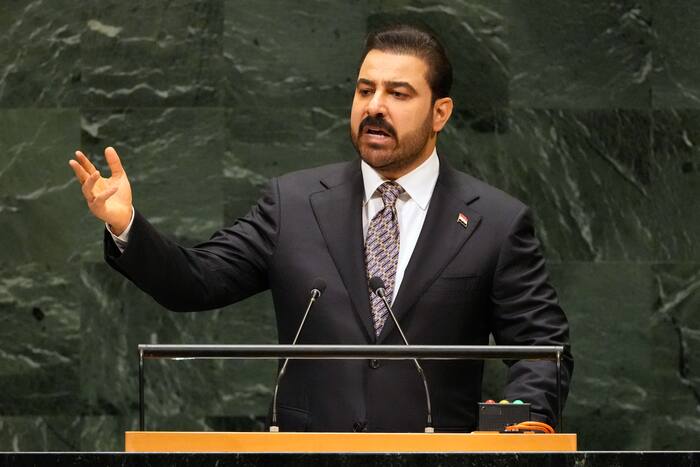
When a seasoned diplomat at the United Nations steps up to the podium and pivots from international trade law to quote an ancient Chinese philosopher, a nineteenth-century poet, or David Byrne from the band Talking Heads, the atmosphere shifts instantly. Phones go face down. Translators lean closer into their booths. The room actually wakes up.
There is a distinct science to why certain rhetorical choices slice through the diplomatic fog while others just add to the noise. If you want to understand how global communication actually works behind closed doors, you have to look at the texts these speakers reach for when the stakes are highest. More journalism by The Washington Post delves into comparable perspectives on the subject.
The Weaponization of Ancient Wisdom
History is full of battle-tested arguments, which is why UN speeches lean heavily on antiquity. But the trick isn't just quoting Aristotle or the Tao Te Ching to sound smart. Anyone can pull a generic proverb off a motivational poster.
Effective speakers use ancient texts as a shortcut to universal human experience. When dealing with modern geopolitical gridlock, citing a twentieth-century treaty feels dry and partisan. Citing a text written two thousand years ago about human stubbornness or environmental stewardship shifts the frame. It stops being a fight between two current member states and becomes a recurring human flaw.
Take environmental debates. Speakers addressing climate crises often bypass scientific data sheets for the first sixty seconds. They might reference ancient agricultural codes or indigenous oral histories about land stewardship. This grounds abstract metrics like carbon parts per million into something visceral. It tells the audience that the crisis isn't a new administrative hurdle. It is an ancient broken promise.
The danger, of course, is posturing. When a speaker drops a classical reference just to pad their rhetorical resume, it falls flat. Translators can tell. Audiences can feel it. The best use of ancient text is surgical. You use it when modern vocabulary fails to capture the sheer scale of a catastrophe or the stubbornness of a stalemate.
Modern Greats and the Power of Uncomfortable Truths
Moving past antiquity, UN podiums see a massive rotation of modern literary and political figures. Nelson Mandela, James Baldwin, Rachel Carson, and Václav Havel appear with high frequency.
Yet, the most compelling speakers avoid the most predictable choices. Quoting Martin Luther King Jr. is standard practice, but citing his lesser-known critiques of economic policy or international indifference carries real weight. It forces the audience to confront the uncomfortable parts of a legacy, rather than just the sanitized, plaque-ready soundbites.
Writers and poets hold a special place in diplomatic weaponry. Poets deal in compression. They take a massive geopolitical tragedy and compress it into two devastating lines. Diplomats spend weeks trying to negotiate a ceasefire resolution that doesn't offend anyone. A poet walks up and names the grief in thirty seconds.
When a speaker quotes a modern writer, they are usually smuggling emotional truth past the perimeter guards of bureaucratic language. Bureaucracies protect institutions. Poetry protects people. Blending the two creates a jarring, effective contrast.
The Talking Heads Factor and Cultural Subversion
Then, you get the outliers. The speakers who decide that quoting a punk-adjacent new wave band from the late seventies is the exact tool needed for a speech on global economics or urban infrastructure.
It sounds jarring on paper, but it works brilliantly in practice. Pop culture references serve as a leveller. They puncture the inflated self-importance of global summits. When someone references lyrics like "same as it ever was" from Talking Heads during a session on systemic inertia, they are doing something clever. They are acknowledging that global institutions often get trapped in repetitive loops, completely paralyzed by their own bureaucracy.
Pop culture works in diplomacy because it is democratic. Ancient texts carry the weight of authority. Modern political quotes carry the weight of ideology. But a line from a song, a film, or a novel carries shared cultural currency. It bypasses the formal titles and credentials in the room. It reminds everyone that beneath the tailored suits and country nameplates, people are listening as human beings who grew up watching the same movies and listening to the same records.
Of course, timing is everything. A poorly timed pop culture reference in a speech about famine or active conflict reads as tone-deaf or flippant. But when used to skewer bureaucratic absurdity or systemic inertia, it acts as a pressure valve for a tense room.
Crafting a Message That Survives the Translation Booth
Writing a speech for an international audience is an exercise in brutal editing. Every idiom, every cultural nuance, and every obscure historical reference has to survive simultaneous translation into Arabic, Chinese, English, French, Russian, and Spanish.
This is why complex puns and hyper-local jokes fail miserably at the UN. But sharp, powerful quotes often translate remarkably well, provided they rely on fundamental human truths.
If you are trying to persuade an audience, whether in a UN General Assembly hall or a boardroom presentation, take a lesson from the podium veterans. Stop front-loading your arguments with jargon. Strip away the corporate qualifiers. Find the human core of your point, and anchor it with a voice that isn't your own.
The next time you need to make a room full of skeptical people care about what you are saying, don't invent a new buzzword. Reach back a thousand years, or cue up a track from 1980. Say it plainly. Then sit down.