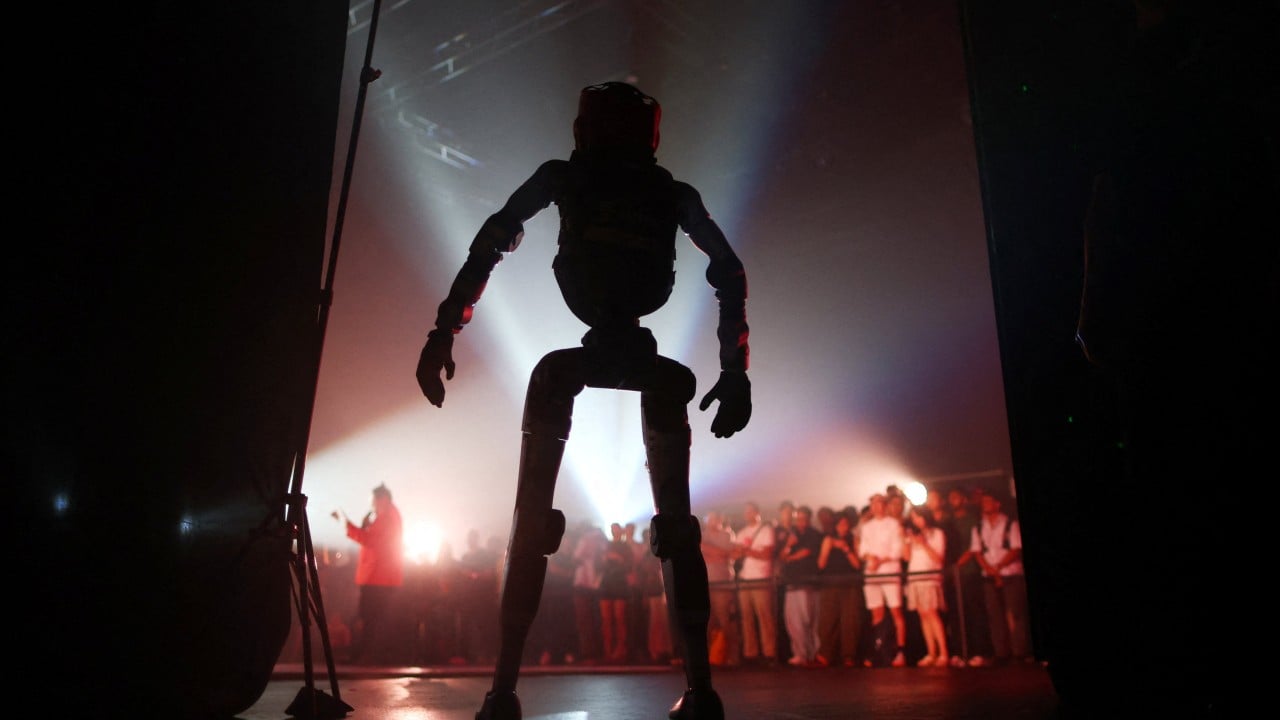
Unitree Robotics just posted a 55.71 percent jump in revenue for the first nine months of the year, hauling in 1.817 billion yuan. On paper, the company looks like the undisputed victor of the commercial humanoid hardware race. Wall Street and public markets cheered the top-line acceleration, pushing valuations into dizzying territory following the company's STAR Market debut.
Look beneath the headline figures, however, and a different narrative emerges. If you liked this post, you might want to check out: this related article.
Net profit attributable to shareholders skyrocketed by over 270 percent during the same period, touching 387 million yuan. Yet, this number is a statistical illusion driven by prior-year share-based payments and non-recurring items. When you strip away the accounting noise and examine recurring net profit, the picture flips. Recurring earnings dropped nearly 19 percent.
The market wants to believe that humanoid robotics has reached a clean, self-sustaining commercial escape velocity. The financial reality is far messier. Unitree is spending aggressively on computational infrastructure, embodied large models, and engineering talent to maintain its technological lead, causing research and development expenditures to spike nearly 200 percent. For another look on this event, check out the recent update from Reuters Business.
Hardware is a notoriously unforgiving business. For decades, investors watched consumer hardware companies burn through mountains of cash trying to scale manufacturing while hardware margins eroded under pricing pressure. Robotics inherits every single one of those old industrial curses, layered with the immense computing costs of modern machine learning.
When Unitree dropped the price of its flagship hardware to capture market share, skeptics warned that commoditization would arrive long before mass adoption. That prediction is playing out in real time. Gross margins are tightening as the company fights off a growing pack of domestic and international rivals. Every percentage point of margin lost on the hardware side must be recovered through software, services, or sheer volume.
The problem is that volume today is heavily concentrated in research institutions, university labs, and state-backed training centers rather than high-margin commercial factories. Nearly three-quarters of early humanoid shipments historically flowed into environments designed to teach machines basic manipulation through teleoperation. While these buyers provide a reliable early revenue floor, they do not represent the autonomous industrial deployment that justifies multi-billion-dollar market caps.
Operating cash flow tells the quietest, most brutal story. Unitree's net operating cash flow dropped significantly over the past year, down more than 50 percent, while inventory levels swelled by triple digits. Capital is getting trapped in warehouses, raw components, and unfinished assemblies. Building advanced bipedal hardware requires massive upfront investments in custom actuators, precision gearboxes, and specialized sensors. Until those units leave the warehouse and begin generating continuous service revenue in real-world commercial deployments, cash will remain tight.
The company's management understands this pressure better than anyone. Wang Xingxing and his engineering teams are racing against the clock to bridge the gap between impressive hardware demos and genuine robotic autonomy. Right now, humanoid robots still lack the robust generalization capabilities required to operate reliably in unstructured domestic or messy industrial environments without human oversight.
Solving that generalization bottleneck requires massive clusters of compute and relentless algorithmic iteration. That is precisely where the missing profit is going. The R&D burn rate is not a symptom of corporate bloat; it is the mandatory toll for staying in the race. Companies that try to optimize for short-term net profit in embodied artificial intelligence today will find themselves technologically obsolete tomorrow.
Yet, public markets are notoriously impatient. Equity analysts are already beginning to question whether a hardware manufacturer can sustain a massive valuation multiple when its recurring earnings are moving in the opposite direction of its revenue. If industrial adoption slows down or macroeconomic headwinds constrain enterprise capital expenditures, the cushion provided by high-growth revenue numbers will evaporate very quickly.
The broader robotics sector is watching Unitree closely because it serves as the ultimate test case for the entire industry. If the market leader cannot translate a 55 percent revenue increase into expanding bottom-line profits, smaller competitors operating on thinner margins face an uphill battle.
The next phase of the robotics boom will not be won by the company that ships the most units at a loss. It will be won by the organization that successfully transitions its revenue base from subsidized research labs to grueling, high-uptime commercial environments. Until that transition is complete, every surge in revenue will carry a hidden tax paid out of operating margins.