The sharp clink of porcelain echoes through a modest dining room in Stuttgart. Dieter, a logistics coordinator for a mid-sized German automotive supplier, stares at a spreadsheet on his laptop while his coffee cools. For three generations, his family has built a stable life on the predictable rhythm of European manufacturing. But lately, the numbers aren’t adding up. The raw components his factory relies on—lithium-ion cells, processed rare earths, precision electronics—are delayed. Prices are climbing.
Thousands of miles away in Ningbo, a factory manager named Lin walks a floor humming with automated guided vehicles. Her facility produces the very components Dieter’s company needs to assemble next-generation electric drivetrains. She is not a geopolitical strategist. She worries about shipping container availability and local energy costs. Yet, an invisible thread binds Dieter and Lin together.
That thread is a global supply chain built over forty years of economic integration. Today, European policymakers in Brussels are threatening to snap it.
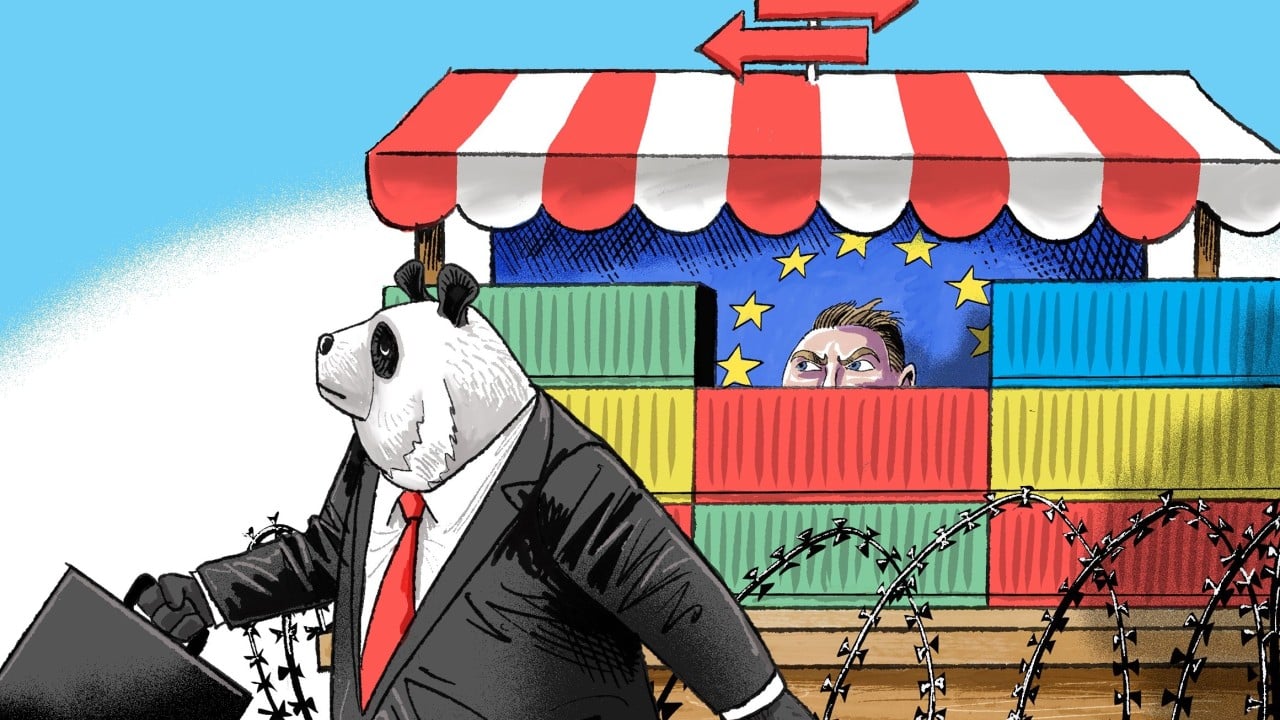
As the European Union increasingly looks to weaponize its massive consumer market against Beijing through tariffs, anti-subsidy probes, and trade restrictions, the rhetoric from politicians sounds decisive and protective. They speak of strategic autonomy and defending domestic industry. But on the ground, away from the wood-paneled halls of parliament, the reality looks vastly different. The weapons being forged in Brussels are double-edged swords. If swung too recklessly, they risk cutting deepest into the very fabric of European economic life.
The Illusion of the Insulated Market
It is easy to view global trade as a scoreboard where one country wins and another loses. Under this framework, erecting trade barriers seems like a straightforward defensive maneuver. If foreign competitors offer goods at prices that undercut local factories, simply levy a tax at the border to level the playing field.
But modern industry does not function like a medieval kingdom behind stone walls. It operates as an interconnected ecosystem.
Consider a single television or an electric vehicle battery. It is not purely "Made in China" or "Made in Europe." The raw minerals might be mined in South America, refined in Ningbo, engineered in Munich, and assembled in Hungary. When the EU imposes sweeping penalties on Chinese imports, it is not just targeting a foreign entity. It is placing a tax on the supply chains of its own companies.
The assumption behind aggressive market decoupling is that Europe can simply substitute Chinese suppliers with domestic alternatives or friendlier trading partners overnight. This is a profound misunderstanding of industrial scale. Over decades, Chinese manufacturers have built an unparalleled infrastructure of specialized factories, skilled labor pools, and logistics hubs. To replicate this infrastructure within Europe would require hundreds of billions of euros and, more importantly, time.
Time is a luxury European businesses do not possess.
The immediate result of aggressive trade barriers is not a sudden boom in European factory openings. The immediate result is a spike in input costs. Dieter’s company cannot suddenly find a local supplier for specialized battery anode materials; those suppliers do not exist at scale in Europe. Instead, the German firm must absorb the higher cost of the tariff-laden import or pass it along to consumers. Innovation slows down because capital that should have been spent on research and development is instead consumed by compliance and inflated supply costs.
The Hidden Cost of Retaliation
Economic escalation rarely occurs in a vacuum. A state targeted by trade penalties does not simply accept the losses and move on. It responds.
Europe’s economic strength relies heavily on its ability to export high-value goods to the rest of the world. Germany’s luxury automobiles, France’s aerospace engineering and luxury products, Italy’s industrial machinery—these sectors depend on open access to affluent global consumers. China represents one of the largest and most lucrative markets for these premium products.
If Brussels chooses to restrict access to its market, Beijing possesses a formidable arsenal of countermeasures. They do not even need to match European tariffs dollar-for-dollar. A subtle tightening of regulations on European corporate subsidiaries operating within Asia, sudden administrative delays at customs ports, or shifting state-directed consumer preferences toward domestic brands can inflict severe financial pain.
Imagine the fallout for a French winemaker or an Italian machinery manufacturer who suddenly finds their products tied up in bureaucratic red tape at a port in Shanghai for weeks on end. The inventory spoils or misses delivery deadlines. Contracts are canceled. For a large multinational corporation, this is a painful hit to the quarterly earnings report. For the network of small and medium-sized family businesses that form the backbone of the European economy, it can be fatal.
The stakes extend far beyond consumer goods. Europe has committed itself to an ambitious, legally binding transition toward green energy. Achieving carbon neutrality requires millions of solar panels, wind turbines, and electric vehicles. Currently, the most cost-effective and scalable technologies in these sectors are produced in Asia.
By initiating a trade war, European leadership risks pricing its own citizens out of the green transition. High tariffs on solar components mean that a homeowner in Spain or a cooperative in Denmark faces significantly higher costs to install clean energy. The pace of decarbonization slows. The continent becomes trapped in a paralyzing paradox: trying to protect its future industrial relevance by starving itself of the very tools needed to build that future.
A Path Toward Resilient Diplomacy
Defending domestic economic interests is a legitimate duty of any government. The challenge lies not in the objective, but in the methodology. True economic security is achieved through competitiveness and resilience, not insulation.
Instead of defensive economic warfare that alienates trading partners and disrupts local businesses, a more sustainable approach focuses on domestic empowerment. This means slashing the bureaucratic red tape that prevents European tech startups from scaling. It means investing heavily in local research institutions, upgrading digital infrastructure, and forming genuine, mutually beneficial trade alliances across diverse geographies to naturally diversify supply chains over time.
Relying on market bans and punitive tariffs is a confession of competitive weakness. It signals that Europe doubts its own ability to innovate and out-compete on a global stage.
Back in Stuttgart, Dieter closes his laptop. The spreadsheet remains a sea of red margins. The decisions made in faraway capital cities are changing the parameters of his livelihood, turning a career built on precise engineering into a daily gamble against shifting political winds. The global marketplace is a delicate web of human effort, shared knowledge, and mutual dependence. Breaking those threads is easy. Reweaving them is a luxury a fracturing world may not be able to afford.