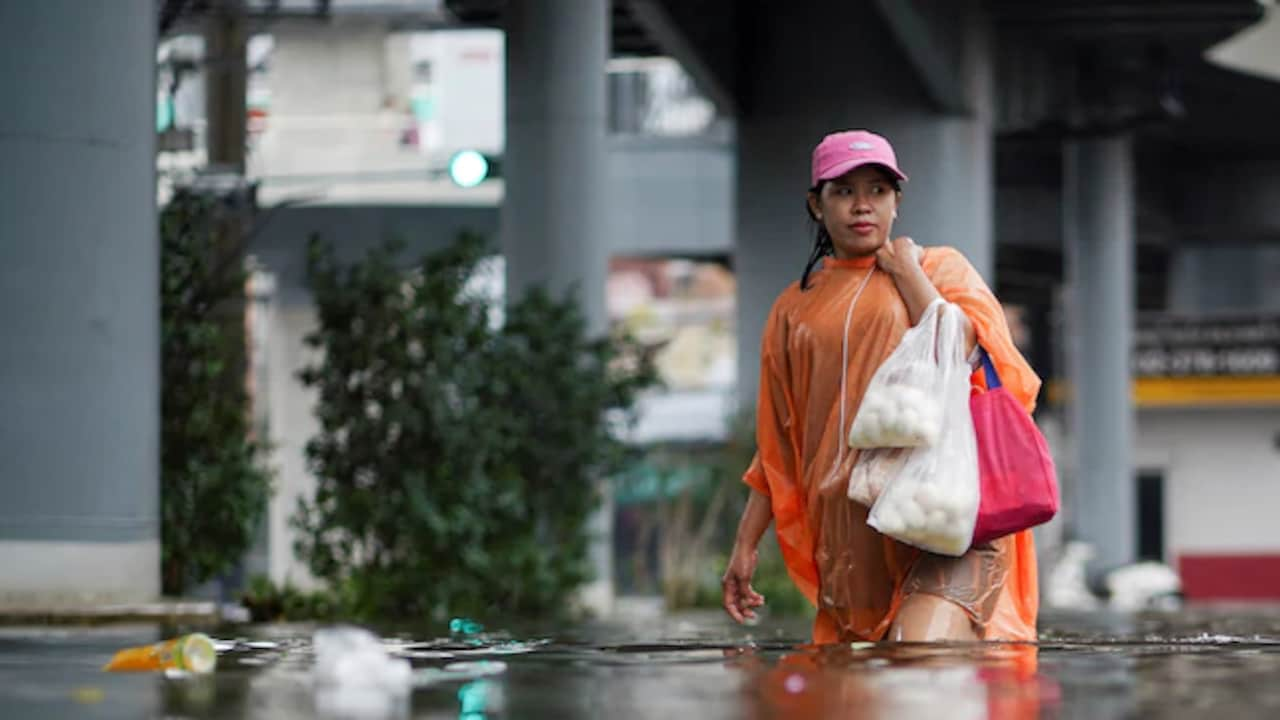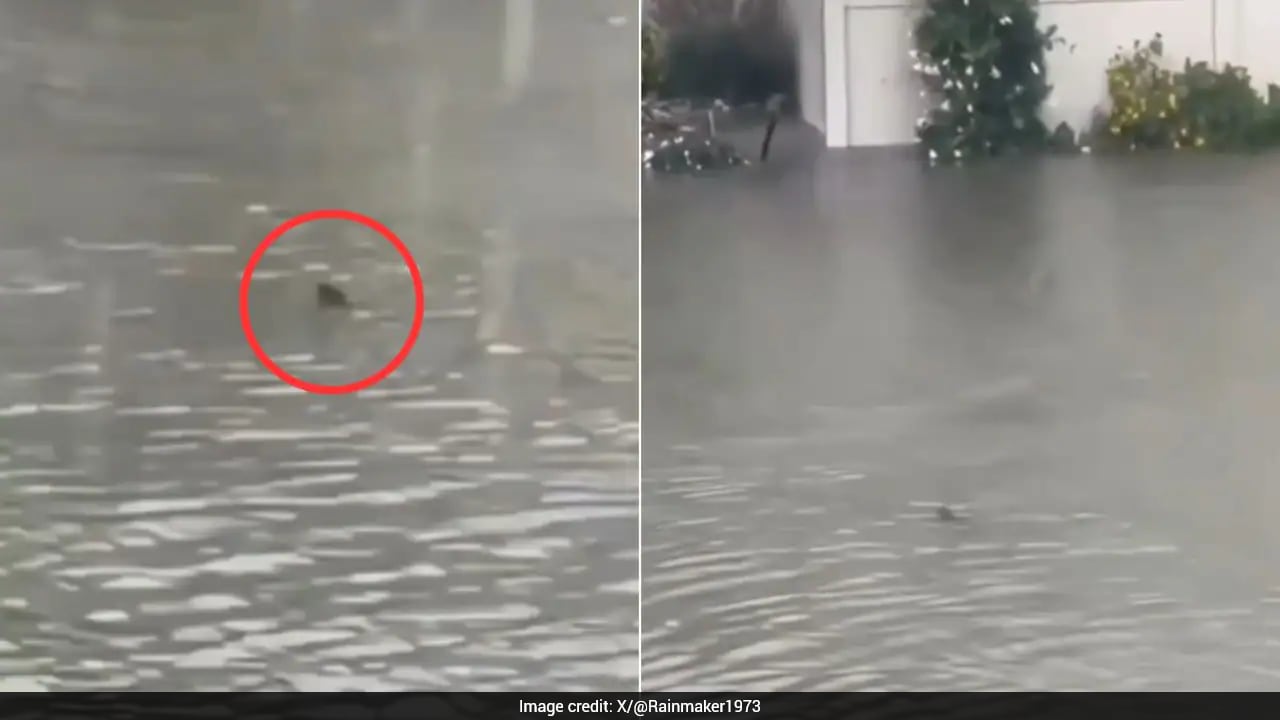
Heavy rain batters the eastern seaboard, transforming familiar asphalt into saltwater rivers. Within hours, municipal drainage systems fail, cars stall out near suburban intersections, and local residents pull out their phones to document the rising tide. Among the floating debris and swirling refuse, a distinct dorsal fin cuts through the surface water of a flooded New Jersey street. The video spreads across social media platforms with terrifying speed, capturing the imagination of millions who wonder how a marine predator ended up navigating a residential neighborhood.
Urban flooding has evolved from a routine seasonal inconvenience into a complex environmental hazard. Climate shifts, aging infrastructure, and rising sea levels create conditions where coastal towns regularly find themselves submerged. When severe storms push massive storm surges inland, the ocean breaches normal boundaries, carrying marine life far beyond the shoreline. The image of a shark swimming down a flooded suburban street is striking, yet it serves as a stark indicator of a much larger, systemic failure in coastal water management.
The Mechanics of Coastal Inundation
Water takes the path of least resistance. When torrential downpours hit heavily paved suburban areas, the ground cannot absorb the volume. Concrete and asphalt seal the earth, leaving nowhere for millions of gallons of rainwater to go except down. Storm drains, many of them constructed decades ago for lower capacity, quickly back up.
Tidal forces compound the crisis. During high tides or nor'easters, seawater pushes backward through outfalls meant to drain rainwater out to sea. This dual pressure—rain falling from above and saltwater pushing up from below—creates sudden inland seas. Coastal municipalities find their standard mitigation strategies overwhelmed in minutes.
Marine organisms ride these surges. Sharks and other coastal fish inhabit shallow estuaries, bays, and salt marshes adjacent to many suburban developments. When water levels rise several feet above normal high-tide marks, the boundary between the ocean and the street dissolves entirely. A fish swimming over a submerged parking lot is simply following the current, unaware that it has crossed from natural habitat into human territory.
Separating Viral Rumors From Environmental Reality
Viral videos thrive on shock value. Every time a major hurricane or severe coastal storm hits the Atlantic coast, recycled clips or exaggerated footage of marine animals in unexpected places circulate widely online. During past storms, fabricated images of sharks swimming down highways have fooled millions.
Yet, genuine occurrences happen. Marine biologists confirm that juvenile sharks frequently utilize shallow, protected coastal bays and marshes as nursery grounds. These areas experience natural fluctuations in water depth. When extreme weather events cause severe coastal flooding, these aquatic zones expand dramatically, allowing marine life temporary access to flooded terrestrial zones.
The danger to humans during a flood is rarely the wildlife. Contaminated runoff poses an immediate and severe health hazard. Overflowing sewer systems mix human waste, industrial chemicals, and petroleum products directly into the floodwaters washing over driveways and lawns. Stepping into a flooded street exposes individuals to dangerous pathogens, sharp hidden debris, and live electrical currents from downed power lines. The shark is an anomaly; the toxic soup of urban runoff is a guaranteed threat.
Infrastructure Under Pressure
Municipal budgets across the country are strained by the sheer cost of deferred maintenance. Many storm management systems were engineered for a climate and population density that no longer exists. Upgrading a municipal drainage network requires billions of dollars in capital investment, lengthy environmental reviews, and major disruption to local traffic and commerce.
Elected officials frequently prioritize short-term economic growth over long-term climate resilience. Waterfront developments continue to expand, replacing natural wetlands that once acted as natural sponges for storm surges. Paving over these critical buffers removes the earth's natural defense mechanism, ensuring that future storms will push even higher volumes of water directly into residential areas.
Engineering solutions exist, but they are expensive and politically difficult to implement. Cities must transition from reactive emergency responses to proactive adaptation. This involves creating multi-layered defense systems, including restored wetlands, elevated roadways, enhanced pumping stations, and intelligent drainage networks that can dynamically reroute stormwater before it inundates neighborhoods.
Living With Rising Waters
The sight of marine life navigating city streets forces a confrontation with uncomfortable truths about modern infrastructure and environmental management. Coastal communities cannot rely on sandbags and temporary pumps to hold back rising seas indefinitely. The relationship between human development and the natural environment requires a fundamental reassessment.
As extreme weather events increase in frequency and intensity, urban landscapes will continue to face unprecedented challenges. The viral moments—whether a shark in a flooded driveway or a kayak on a suburban lawn—capture public attention for a fleeting news cycle. Once the floodwaters recede and the cameras turn away, the underlying vulnerability of coastal infrastructure remains, waiting for the next storm to test its limits.