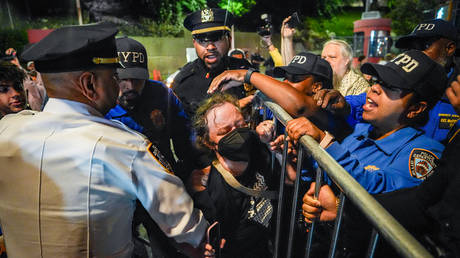
Enforcement operations executed by federal immigration agencies within dense municipal environments create immediate cascading feedback loops between tactical deployment methods, civic resistance groups, and local municipal police forces. When federal directives intersect with sanctuary city legislative frameworks, the friction generates acute operational volatility, physical confrontations, and widespread jurisdictional friction.
Understanding this dynamic requires dissecting the mechanics of urban enforcement, the structural friction points between federal authority and local ordinances, and the predictable behavioral responses of affected communities and activist networks.
The Operational Anatomy of Urban Enforcement Actions
Federal immigration enforcement in high-density metropolitan areas relies on distinct tactical phases: intelligence gathering, target acquisition, transit interception, and extraction. Each phase presents unique points of failure when executed in a densely populated environment like New York City.
The primary operational constraint is spatial density. Unlike suburban jurisdictions where enforcement actions occur in controlled or isolated settings, urban environments feature high pedestrian foot traffic, dense vehicular congestion, and immediate civilian observation. When an apprehension occurs on a public thoroughfare or outside a municipal building, the timeline from initial contact to crowd formation is compressed.
Civic response networks leverage real-time communication infrastructure to mobilize observers and protestors to specific geographic coordinates within minutes. This dynamic alters the operational calculus for federal agents, shifting the primary objective from a controlled apprehension to crowd management and tactical extraction under hostile conditions.
The Jurisdictional Fault Line
The severity of clashes during immigration enforcement operations is heavily correlated with the legal and operational distance between federal agencies and municipal authorities. New York City operates under specific local laws that restrict the cooperation of local law enforcement with federal immigration authorities, absent a judicial warrant signed by a federal judge.
This statutory separation creates a fragmented security environment. Federal agents operate without the local situational awareness, traffic control support, and crowd management infrastructure typically provided by municipal police departments during high-visibility operations.
[Federal Enforcement Action Initiated]
               │
               ▼
[Civic Mobilization via Real-Time Networks]
               │
               ▼
[Spatial Density & Local Police Non-Cooperation]
               │
               ▼
[Tactical Friction & Public Clashes]
When local police respond to the resulting disorder, their immediate priority is public safety and traffic control, which frequently places them in a buffering role between federal agents and civilian protestors. This institutional ambiguity exacerbates tension, as protestors view any uniformed presence as complicit in the federal action, while federal agents operate under the assumption of localized hostility.
Behavioral Feedback Loops in Civil Unrest
The escalation from a routine administrative enforcement action to physical clashes follows a predictable behavioral model driven by three variables: visibility, perceived legitimacy, and collective efficacy.
- Visibility: High-profile arrests conducted in public spaces generate immediate visual evidence, typically captured on mobile devices and disseminated across digital platforms. This digital amplification removes geographic barriers, rapidly summoning secondary and tertiary participants to the scene.
- Perceived Legitimacy: The operational legitimacy of federal agents is actively contested by local populations who perceive the actions as a direct violation of municipal community standards. This ideological divergence lowers the threshold for physical intervention by bystanders.
- Collective Efficacy: As protestors observe crowd size increasing, individual perceptions of safety in numbers rise, encouraging active physical blocking, verbal confrontation, and interference with law enforcement vehicles.
Conversely, federal tactical units are trained to prioritize target security and extraction above crowd appeasement. The deployment of physical restraints, chemical deterrents, or vehicular maneuvers to secure an extraction route is interpreted by crowds as disproportionate escalation, feeding back into the cycle of resistance.
Systemic Outcomes and Municipal Adaptation
The recurrence of clashes during federal operations forces structural adaptations across all participating entities.
Federal agencies face increased operational costs, necessitating enhanced intelligence precautions, altered timing for operations—frequently shifting to pre-dawn hours to minimize civilian density—and increased reliance on tactical backup. Municipal agencies are forced to continuously calibrate their response protocols to manage public order without violating local non-cooperation statutes.
Ultimately, urban enforcement actions in sanctuary jurisdictions do not occur in a vacuum. They are high-friction events where national policy directives collide directly with local governance structures, producing inevitable civil resistance and public disorder.