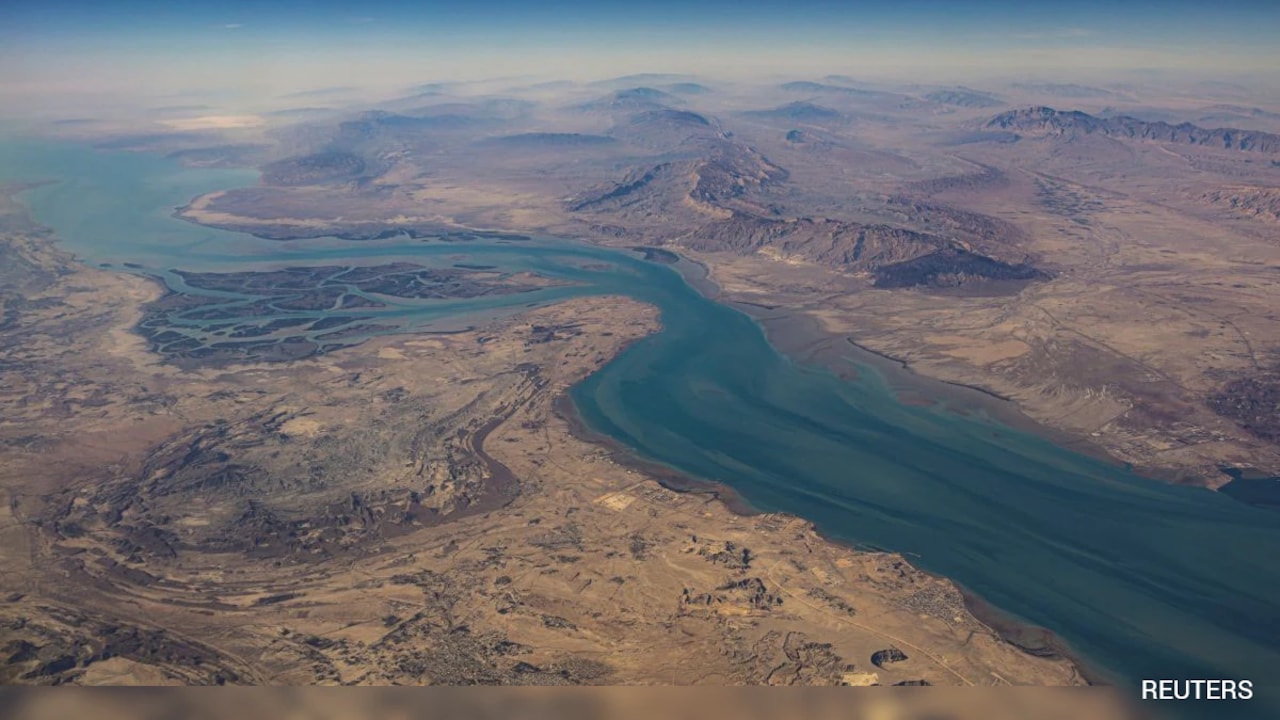
The Ink on Donald Trump and Masoud Pezeshkian's diplomatic breakthrough wasn't even dry before the entire deal started spinning out of control. Just days after signing an interim memorandum of understanding to halt a devastating regional war, Iran's joint military command announced it is closing the Strait of Hormuz again.
If you're watching global energy markets or tracking Middle East diplomacy, this is the worst-case scenario. The closure directly retaliates against relentless Israeli airstrikes in southern Lebanon that killed over 20 people on Saturday, including two children near Nabatiyeh.
Here is the real problem. Neither Israel nor Hezbollah actually signed the U.S.-Iran deal. Washington and Tehran tried to map out a grand peace without forcing their own local allies to fall in line first. Now, the world's most critical energy chokepoint is a hostage to a war that neither superpower seems able to stop.
The Chokepoint Illusion
When the U.S. and Iran signed their 14-point memorandum of understanding earlier this week, the immediate prize was the reopening of the Strait of Hormuz. Tehran had blockaded the passage during the peak of the 100-day war, choking off roughly a fifth of the world's oil and liquefied natural gas.
For a brief moment, it worked. The U.S. lifted its naval blockade on Iranian ports, and commercial ships flooded back into the waterway. On Saturday alone, U.S. Central Command reported that 55 merchant ships safely transited the strait, carrying more than 17 million barrels of crude oil.
Then the Islamic Revolutionary Guard Corps issued a chilling warning. Ships must not approach the strait, or their security will be at risk.
Iran claims this is a direct response to a "clear breach of trust" by Washington. Clause one of the secret memorandum called for an immediate, permanent halt to military operations on all fronts, explicitly including Lebanon. Tehran views America's failure to restrain Israel as a total collapse of the contract.
The Reality of the Gap Between Claims and Control
If you talk to Washington officials, they'll tell you Iran is playing a game of chicken. Vice President JD Vance explicitly told Fox News that the U.S. sees no physical evidence of an actual blockade yet. Captain Tim Hawkins, speaking for U.S. Central Command, went further, stating flatly that Iran does not control the Strait of Hormuz and traffic is still moving under the watchful eye of American warships.
But don't mistake Washington's confidence for stability. Even if the Iranian navy hasn't physically lined up ships to block the water, the mere threat of IRGC missile strikes or ship seizures drives maritime insurance rates through the roof. Tanker captains aren't going to roll the dice on a multi-million-dollar cargo when the IRGC says your security is compromised.
Why Lebanon Always Breaks the Deals
This isn't the first time a truce has dissolved over the hills of southern Lebanon. A similar ceasefire attempt blew up back in April for the exact same reason.
Benyamin Netanyahu's government is completely indifferent to Trump’s timeline in Switzerland. The Israeli military claims Hezbollah fired over 50 projectiles into southern Lebanon overnight, prompting retaliatory airstrikes across 20 locations. Israeli Ambassador Yechiel Leiter insists Israel is simply honoring the ceasefire while defending itself against ongoing terrorist ambushes.
Meanwhile, Netanyahu has vowed to keep Israeli boots on the ground in what he calls a forward defense zone for as long as it takes to secure Israel's northern border. Hezbollah refuses to stop fighting until those troops pull out completely. It's a classic deadlock.
Iran's Foreign Ministry spokesperson, Esmail Baghaei, didn't hold back before boarding a plane to Switzerland for the technical talks. He warned that if the U.S. can't make its ally comply with the comprehensive ceasefire, the memorandum of understanding as a whole will be jeopardized.
What Happens Next
The diplomatic theater is shifting to Burgenstock, Switzerland, where negotiators from the U.S., Iran, Qatar, and Pakistan are sitting down for emergency talks. Trump's special envoy Steve Witkoff and Jared Kushner are already on the ground trying to salvage the 60-day window meant to negotiate a permanent nuclear agreement and sanctions relief.
If you are exposed to global energy markets or international shipping logistics, you need to prepare for extreme volatility over the next 72 hours. Here are the immediate realities you should track:
- Watch the Insurance Premium Spikes: Do not assume standard transit routes through the Persian Gulf are safe just because CENTCOM says the lanes are open. Watch for war-risk insurance surcharges to return by Monday morning.
- Track the Swiss Negotiations: The real indicator of whether this closure is permanent or a tactical bluff will come from the rhetoric out of the Iranian delegation in Switzerland, led by parliamentary Speaker Mohammad Bagher Qalibaf. If Iran refuses to discuss nuclear concessions until a verified Israeli withdrawal from Lebanon occurs, the deal is effectively dead.
- Expect Supply Chain Rerouting: Shipping firms are already calculating the cost of bypassing the Persian Gulf entirely, forcing a return to the lengthy, expensive journey around Africa's Cape of Good Hope.