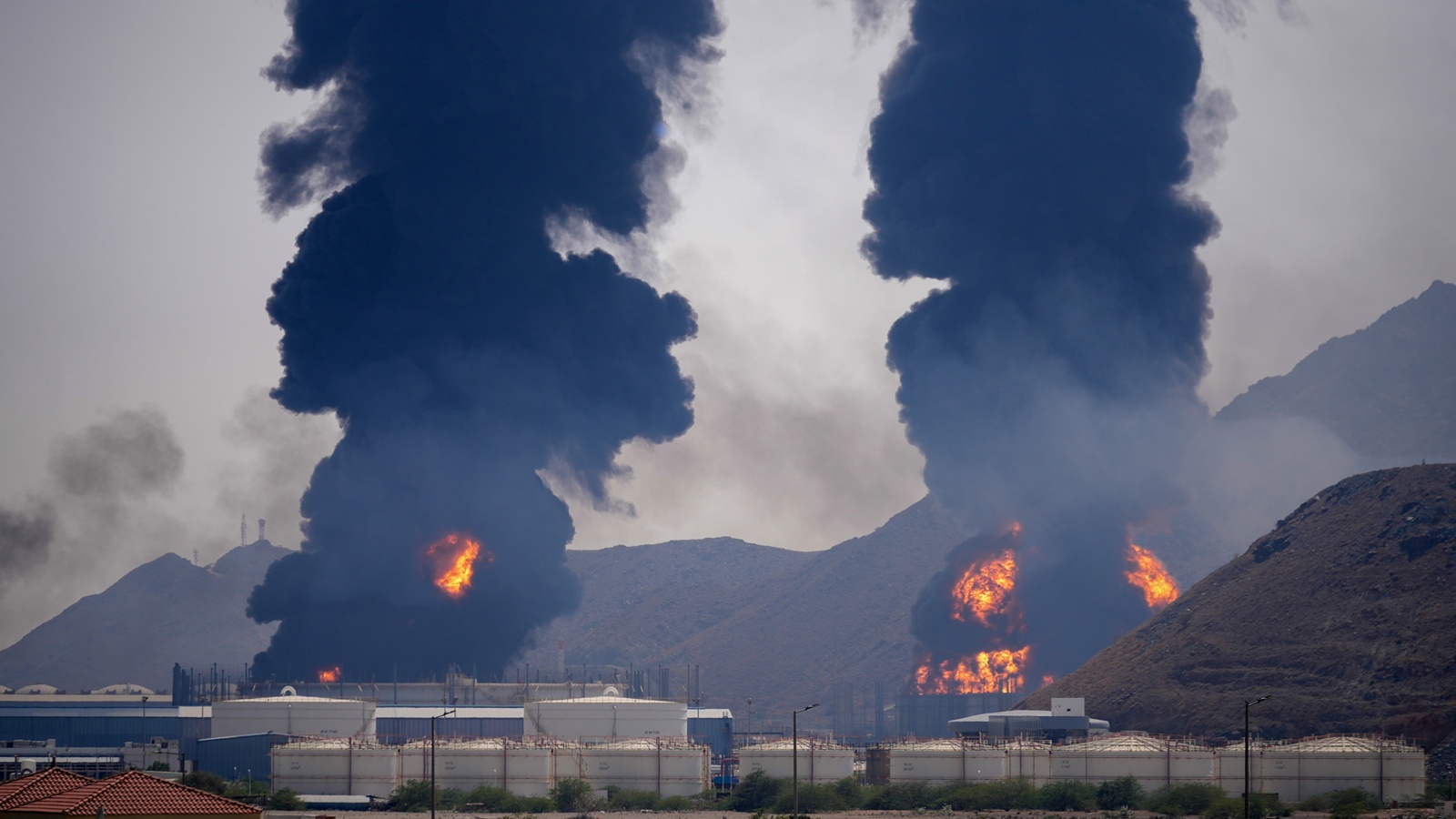
The media has a script for Middle East escalations, and they read from it every single time.
The moment a drone flies over the Strait of Hormuz or rhetoric heats up between Washington and Tehran, the financial press rushes to publish the same copy-pasted warning: War is coming, supply routes will close, and oil is headed to $150 a barrel. Don't forget to check out our earlier post on this related article.
It is a comfortable, lazy consensus. It is also completely wrong.
If a full-scale military conflict breaks out between the United States and Iran, oil prices will not skyrocket to triple digits. After an initial, algorithm-driven knee-jerk spike that lasts perhaps 48 to 72 hours, crude prices will actually crater. To read more about the background of this, The New York Times provides an excellent summary.
The conventional wisdom relies on outdated 1970s panic models. It ignores the mechanics of modern energy production, the brutal reality of strategic reserves, and the actual defense capabilities of the Islamic Revolutionary Guard Corps (IRGC).
Here is the cold, hard data on why the standard escalation playbook is broken, and why India—contrary to popular panic—is not about to face an economic apocalypse.
The Myth of the Chokepoint: Why the Strait of Hormuz Cannot Be Blocked
The cornerstone of the "oil shock" thesis is the Strait of Hormuz. We are constantly reminded that roughly 20% of the world's petroleum liquids pass through this narrow strip of water. The narrative assumes Iran can simply flip a switch, sink a few tankers, lay some mines, and starve the global economy.
I spent years analyzing energy logistics and supply-chain vulnerabilities during my time in physical commodity trading. I have watched risk desks write down hypothetical losses based on this exact scenario. It is a paper tiger.
First, let us look at the geography and military reality. The shipping lanes in the Strait of Hormuz are not a single, fragile thread. They consist of a two-mile-wide inbound lane, a two-mile-wide outbound lane, and a two-mile-wide buffer zone between them. Sinking a container ship or a Very Large Crude Carrier (VLCC) does not "block" a deepwater channel the way a jackknifed semi-truck blocks a two-lane highway.
Furthermore, any active attempt by Iran to physically seal the strait is an act of war that invites an immediate, overwhelming kinetic response from the US Navy’s Fifth Fleet.
Strait of Hormuz Transit Mechanics:
[Inbound Lane: 2 Miles] <--- [Buffer Zone: 2 Miles] ---> [Outbound Lane: 2 Miles]
Total depth and width make physical blockage via sunken hulls mathematically highly improbable.
If the IRGC begins mining the shipping lanes, they do not just anger Washington. They instantly cut off their own economic life support, along with the exports of Iraq, Kuwait, Qatar, Saudi Arabia, and the UAE. Do you honestly believe China—Iran’s primary customer for sanctioned crude—will sit quietly while its industrial engine is choked out?
Iran knows this. Their naval doctrine is based on asymmetric harassment, not total closure. The moment they cross the line into a hard blockade, they lose their leverage, their fleet, and their domestic refining capacity within a week of US airstrikes.
The Supply Deluge: The Monsters Waiting in the Wings
Even if we assume a temporary disruption in Persian Gulf shipments, the global oil market is not the fragile, supply-starved ecosystem it was in 1973.
The moment Persian Gulf barrels are restricted, three massive deflationary forces trigger automatically.
1. The US Shale Spigot
The United States is the largest oil producer in the world, pumping upwards of 13 million barrels per day. American shale operators do not run on state-mandated production quotas; they run on price signals.
If crude spikes to $90 on initial war panic, every private operator in the Permian Basin will immediately deploy capital to drill and complete DUC (drilled uncompleted) wells. This is not a slow process. Modern hydraulic fracturing techniques can bring new production online in weeks, not years. The resulting supply response would swamp the market.
2. The OPEC+ Spare Capacity Buffer
Saudi Arabia, the UAE, and Kuwait are currently sitting on millions of barrels of idle, shut-in spare capacity to maintain price floors.
In a war scenario where Iranian barrels are forcibly removed from the market, Saudi Arabia will not play the victim. They will do what they have done in every major Gulf conflict since 1991: open the taps to capture market share and position themselves as the stable, indispensable energy partners of the West. They hate Tehran far more than they love high oil prices.
3. Strategic Reserves Mobilization
Under International Energy Agency (IEA) rules, member countries hold emergency stocks equivalent to at least 90 days of net imports. The US Strategic Petroleum Reserve (SPR), even after recent drawdowns, still holds hundreds of millions of barrels.
A coordinated IEA release of 2 million to 3 million barrels per day would easily bridge any short-term physical deficit.
When you add up American shale flexibility, Saudi spare capacity, and emergency Western reserves, you do not get a shortage. You get a massive, structural oversupply the moment the initial panic subsides.
Demystifying the "Impact on India" Panic
Let us address the "People Also Ask" consensus regarding South Asia. The standard narrative claims that because India imports over 80% of its crude, a US-Iran conflict will trigger runaway inflation, a collapsed rupee, and a fiscal deficit crisis.
This is a classic case of evaluating a dynamic system with static assumptions.
India's energy procurement strategy has undergone a structural revolution. Indian refiners are no longer beholden to traditional Middle Eastern supply contracts. They have spent the last few years mastering the art of buying discounted, sanctioned, or complex heavy crudes and refining them into high-value products.
Imagine a scenario where a war breaks out. Shipping insurance rates in the Persian Gulf skyrocket. What happens to the price of oil produced outside the combat zone?
Indian refiners will simply pivot. They will increase their intake of Russian Urals, West African grades, and Latin American heavy crude.
Furthermore, India's state-owned refiners have highly sophisticated configuration setups. Reliance Industries’ Jamnagar refinery, the largest refining complex in the world, possesses a complexity index that allows it to process the dirtiest, cheapest crudes imaginable and turn them into ultra-low sulfur diesel and gasoline for export to Europe.
Refinery Optimization Strategy:
[Dirty / Discounted Crudes] ---> [Jamnagar Complex (High Complexity Index)] ---> [Premium Export Fuels]
Result: Indian refiners expand profit margins during regional crises.
When oil prices spike temporarily, Indian refiners actually make more money on their export margins. The nation’s current account deficit does not widen; it shifts. The domestic economy is insulated by government fuel subsidies and strategic reserves, while the refining sector exports high-margin fuels to a panicked global market.
The Contrarian Playbook: How the Trade Actually Runs
If you want to understand the true trajectory of a geopolitical oil shock, you must follow the money, not the cable news headlines.
During the 2019 attacks on Saudi Arabia’s Abqaiq processing facilities—which temporarily knocked out 5% of global oil supply—crude spiked nearly 20% in seconds. Within two weeks, it was trading lower than it was before the attack.
The same thing happened during the 2020 escalation when the US targeted Qasem Soleimani. The same thing happened in 2022 during the initial weeks of the Russia-Ukraine war. The spike is always temporary; the demand destruction and supply response are permanent.
High prices cure high prices. If crude approaches $100, global demand drops immediately. Central banks hike interest rates to combat inflation, which slows economic activity and crushes industrial fuel consumption.
A US-Iran war would not be a long, drawn-out stalemate. It would be a rapid, devastating air campaign that destroys Iran's military infrastructure, followed by a massive release of Western oil reserves and a surge in non-OPEC production.
The downside of this contrarian take? If you trade this view, you have to be willing to look like an idiot for the first 48 hours of a crisis while the algorithmic trading bots bid up futures contracts on pure emotion. You have to write out your risk tolerances to survive that initial margin call.
But once the emotional trading runs its course and physical delivery realities settle in, the supply overhang becomes undeniable. The market realizes there is more oil than ever before, the shipping lanes are open under naval escort, and global demand is slowing down.
Stop buying the escalation scare stories. The next time you see headlines screaming about a US-Iran war driving oil to the moon, get ready to short crude.