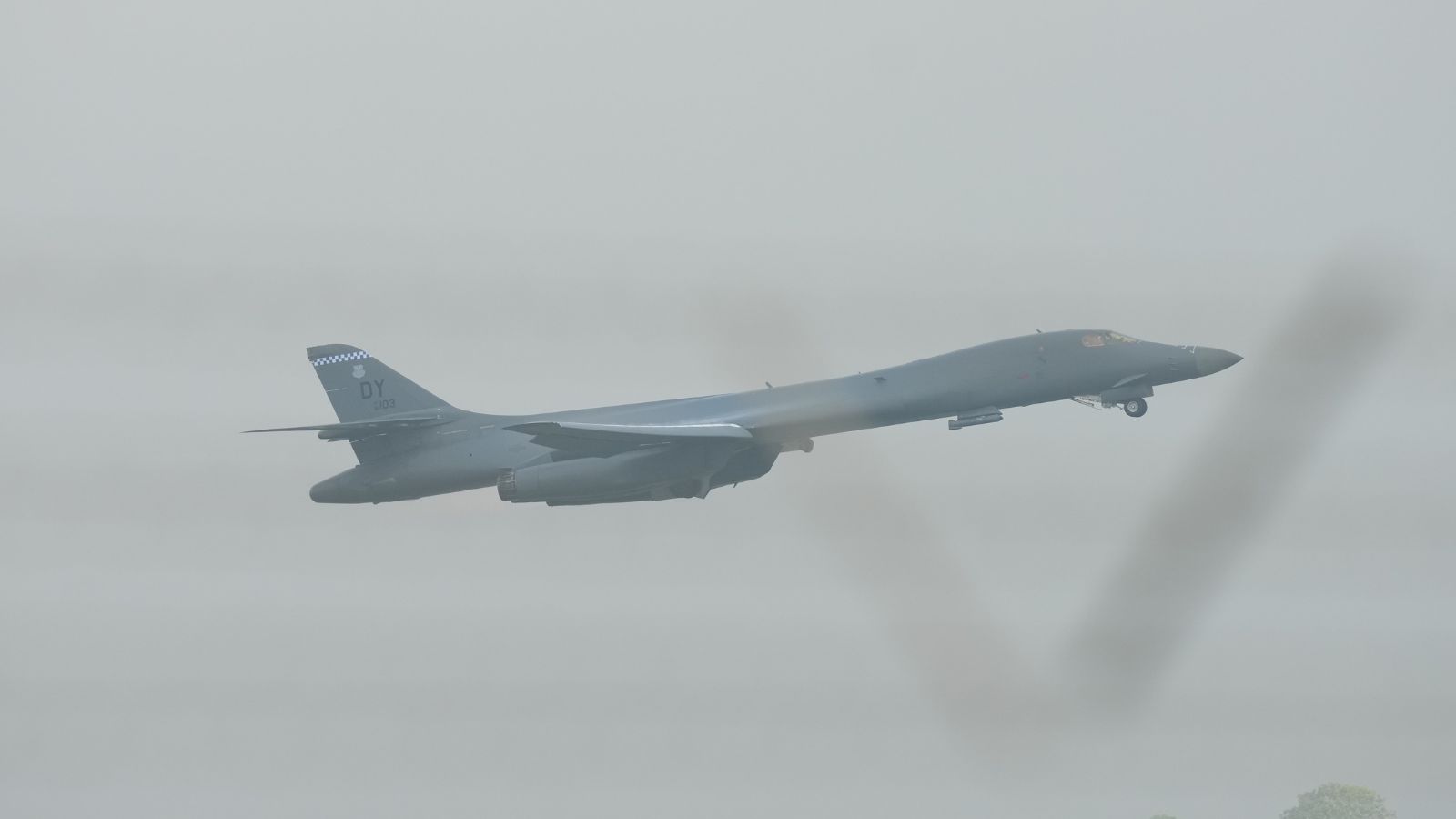
Moving a dozen B-1 bombers out of Britain sounds like a routine logistics tweak. It wasn't.
When the Pentagon pulled those heavy bombers from Royal Air Force Fairford in early October 2026, quick-hit headlines boiled the story down to a simple drone scare. That misses the bigger picture. Pulling strategic bombers from a forward base in Gloucestershire—and then watching another wave of American aircraft clear out of RAF Mildenhall weeks later—shows how fast asymmetric threats can force a superpower to shuffle its board.
Let's look at what actually happened, what court filings and security briefings have revealed since, and why this withdrawal matters way beyond one English airfield.
Why US B-1 Bombers Were Pulled From the UK Base
RAF Fairford sits in Gloucestershire, a few hours west of London. For years, it has served as a prime staging ground for long-range American strike aircraft. During the US-Iran conflict in 2026, B-1 bombers operating out of Fairford took part in strikes against Iran.
Then came late September. British police arrested five suspects near a UK airbase used by US forces on suspicion of preparing a terrorist act, alongside a dual British-Iranian national. Police said they found fuel drums rather than ready-made explosives, and the suspects were initially released on bail. Days later, the Pentagon confirmed that all B-1 bombers deployed to RAF Fairford had redeployed back to their home stations in the continental United States.
A Pentagon spokesperson framed the move around global strike flexibility, noting that B-1s, B-2s, and B-52s can launch and recover from the US mainland. Fair enough. The US Air Force has practiced continental-to-Middle-East bomber runs for decades. Still, pulling forward-deployed bombers right after a perimeter scare in rural England isn't business as usual.
The Drone Angle Versus the Ground Plot
Some reports framed the pullout around an expected Iranian drone attack. Others pointed to the vehicle-borne plot on British soil. Both concerns sit on the same chessboard.
Back in July 2026, Iran's Islamic Revolutionary Guard Corps (IRGC) warned that Fairford and other bases used to launch strikes against Iran were legitimate targets. Tehran's ambassador to Britain denied involvement in plots against British bases, and Iranian Foreign Minister Abbas Araghchi dismissed London's accusations. Yet British assessments shared with Parliament concluded the suspected Fairford plot was highly likely coordinated in Iran and almost certainly directed by the IRGC.
Court filings in November 2026 added sharp detail to how the alleged plot worked. Federal prosecutors in New York indicted three men over a broader wave of nearly 20 attacks and attempted attacks across Europe and the United States. According to that indictment, an operative in Iran paid associates in Britain starting in August to film RAF Fairford's perimeter. They allegedly picked up vans with fake branding for a fuel delivery firm and a pool supply company, gathered drums of fuel and metal items that could act as shrapnel, and looked into chemical accelerants. On September 26, three vans headed toward the base. Security roadblocks and British authorities stopped and seized them.
Look at the contrast between a swarm of long-range drones and a handful of vans rolling down English country lanes. Drones get tracked on radar. A van with fake commercial logos blending into local traffic tests local policing, fence lines, and gate protocols in a completely different way.
What Most Coverage Misses About This Withdrawal
Standard breaking-news summaries treat the Fairford move as a standalone event. That's a mistake.
First, look at what happened next. In early November 2026, the US evacuated more than a dozen aircraft from RAF Mildenhall in eastern England after upgrading the security threat level at Mildenhall and nearby RAF Lakenheath. Flight-tracking data pointed to KC-135 air tankers moving to bases in Germany, Spain, and Scotland, while Osprey tiltrotor aircraft shifted to Lakenheath.
Think about what happens when tankers leave. Bombers can fly long missions from the US mainland, sure. Refueling tankers keep those missions alive across oceans and theaters. When tankers scatter across Europe, the entire logistical chain feels the strain.
Second, consider the cost-exchange ratio. Iran didn't need to destroy a single B-1 on the tarmac at Fairford. A reconnaissance probe, a few vans, and credible threats forced the Pentagon to pull high-value bombers out of the UK and push tankers further out. In modern deterrence, forcing an adversary to spend extra fuel, flight hours, and political capital counts as a win.
Third, there's a domestic political twist in Britain. UK officials insisted RAF Fairford remained safe after the bombers left, and the Ministry of Defence kept its usual line that aircraft movements happen routinely based on operational needs. Meanwhile, UK reviews and Parliament debates dug into airbase security boundaries and local policing arrangements. When a foreign power's bombers pack up after a local scare, host-nation politicians inevitably ask hard questions about perimeter security.
Common Misconceptions About Forward Bomber Bases
Whenever troops or aircraft pull back from an allied base, pundits jump to extremes. Let's clear up a few myths.
Myth 1: The US Abandoned Its Strike Capability Against Iran
Pulling B-1s from Fairford did not blind or disarm Washington. B-1B Lancers carry massive payload capacities—tens of thousands of pounds of ordnance—and regularly fly long-range missions supported by aerial refueling. Moving them back to US home stations adds transit time and tanker demand, not zero capability.
Myth 2: A Base Withdrawal Means an Open War Is Over
Military posture shifts happen mid-conflict all the time. You pull high-value assets out of a crowded or exposed hub when intelligence flags a specific vulnerability, then adjust routes or decoys. A withdrawal from Gloucestershire is a force-protection move, not a peace treaty.
Myth 3: Drone Threats Are the Only Reason Bases Move
Drones dominate defense headlines, and suspect drone activity around UK airbases has drawn plenty of scrutiny. Still, the documented RAF Fairford case centered heavily on ground surveillance, commercial-style vans, and improvised materials rather than an incoming drone swarm. Treating every base move as a pure drone story oversimplifies how hybrid threats operate.
How Allied Base Security Works Under Pressure
Operating US aircraft in the UK isn't like running a closed domestic base in Texas or Nevada. RAF Fairford, RAF Mildenhall, and RAF Lakenheath sit inside a densely populated country with public roads, farms, and towns right next to perimeter fences.
Here is how defense planners weigh risk when a threat spikes:
- Hardened aircraft vs. soft perimeters: Hangars and flightlines protect jets from many hazards, yet access roads, gates, and nearby staging points remain harder to seal completely without disrupting local life.
- Intelligence thresholds: Commanders don't wait for a smoking crater to redeploy aircraft. Credible surveillance plus suspicious logistics—like vans carrying fuel drums toward a base—can trigger an immediate move.
- Dispersal as defense: Spreading tankers across Germany, Spain, and Scotland, or shifting bombers stateside, reduces the chance that one lucky strike or sabotage event wipes out a concentrated package.
Even so, dispersal has a catch. Every extra leg on a flight path wears down airframes, stretches crew rest rules, and exposes supply lines to more eyes.
Practical Ways to Track What Comes Next
If you're following this story—whether as a defense watcher, a journalist, or someone tracking energy and market jitters—don't rely on single-day headlines. Watch concrete indicators instead:
- Follow the New York and UK court dockets: Prosecutors in the Southern District of New York and British courts have active cases tied to the Fairford plot and wider European operations. Unsealed filings often reveal how surveillance and logistics networks actually operated.
- Watch tanker and support aircraft, not just bombers: Bombers grab cameras. Tankers, surveillance planes, and transport flights show whether the US is preparing sustained operations or stepping back.
- Separate official denials from posture changes: Statements from Tehran or routine Ministry of Defence lines rarely tell the full story. Look at where aircraft actually land and how long threat levels stay elevated.
The B-1s left Fairford because keeping them in place looked riskier than flying them home. In a conflict built on probes, proxies, and deniable pressure, moving the pieces is sometimes the sharpest signal in the room.