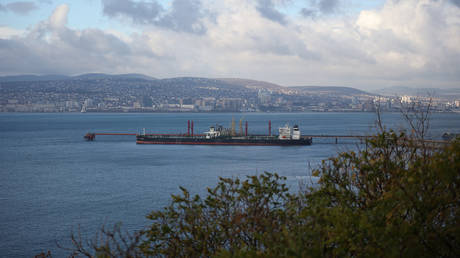
The White House just flipped the script. For months, the messaging from Washington was clear and unyielding. They told us the era of flexibility with Russian energy exports was over. They promised that the Russian oil waiver—a mechanism that allows certain countries to bypass sanctions without getting hit with secondary penalties—would expire. It was supposed to be the final squeeze on the Kremlin's wallet.
Then the deadline hit. The rhetoric met reality.
Instead of the hard line we expected, the US government quietly reversed course. They’ve extended the waivers. If you’re feeling a bit of whiplash, you aren't alone. This move signals a radical change in how the administration views the balance between punishing geopolitical rivals and keeping the global economy from falling off a cliff. It turns out that breaking the back of a major oil producer is a lot harder when your own voters are staring at $5.00 a gallon at the pump.
The Crude Reality of Market Stability
Let’s be real about why this happened. The global oil market is a delicate machine. When you remove millions of barrels of Russian Urals or ESPO crude from the equation, you don't just hurt Russia. You create a supply vacuum that sends prices screaming upward.
US officials realized that sticking to their "no renewal" pledge would’ve been an economic suicide mission. According to data from the Energy Information Administration (EIA), global spare capacity is thinner than most people think. If Indian or Chinese refineries can’t legally process that Russian oil because of a lack of US waivers, they’ll start bidding up the price of Brent and WTI crude.
That creates a massive problem for the Biden administration. You can’t fight an election or maintain public support for a foreign conflict if the domestic cost of living is spiraling. It’s a classic case of geopolitical goals crashing into the brick wall of math. They chose the path of least resistance. They chose price stability over a perfect sanctions regime.
Why the Russian Oil Waiver is Such a Big Deal
To understand the weight of this reversal, you have to look at what these waivers actually do. They aren't just pieces of paper. They’re the grease that keeps the wheels of international trade turning. Specifically, they allow banks, shipping companies, and insurance firms to handle transactions involving Russian oil without fearing they’ll be blacklisted from the US financial system.
Without these waivers, shipping Russian oil becomes a legal minefield. Most of the world's maritime insurance is handled by the International Group of P&I Clubs, which is heavily influenced by Western regulations. If the US says "no waiver," these insurers back out. No insurance means no shipping. No shipping means no oil on the market.
The reversal tells us the US isn't ready to test the "shadow fleet" theory yet. There’s been a lot of talk about Russia using old, uninsured tankers to move its oil. By renewing the waivers, the US is admitting it would rather have that oil move through regulated, transparent channels than see it disappear into a black market where they have zero oversight.
The India Factor in the US Decision
You can't talk about Russian oil without talking about India. Since the conflict began, India has become one of the largest buyers of Russian crude. They aren't doing it to be difficult. They’re doing it because they have a massive population and a developing economy that needs cheap energy.
Washington has been pressuring New Delhi for a long time to diversify. But the Indians were blunt. They told the US that if they stop buying Russian oil, the global price will hit $150 a barrel. This reversal is a silent acknowledgment that India was right.
I’ve seen this play out before in other sanctions regimes, like those on Iran or Venezuela. The US starts with a "maximum pressure" campaign, but eventually, they realize that total isolation is impossible in an interconnected world. By renewing the waivers, the US is effectively giving India—and several other key partners—the green light to keep the global supply chain moving. It’s a diplomatic "get out of jail free" card.
Misconceptions About the Price Cap
Many people think the price cap and the waivers are the same thing. They aren't. The price cap is designed to let the oil flow while limiting the profit Russia makes. The waivers are what make the whole system legally viable for the middle-men.
If you remove the waivers, the price cap doesn't even matter because no one will touch the oil. The US realized that the price cap was actually working reasonably well as a compromise. It kept Russian oil in the market but forced it to trade at a discount compared to global benchmarks. Scrapping the waivers would’ve destroyed that balance and forced Russia to find even more desperate ways to sell its resources.
The Political Fallout at Home
The optics here are terrible for the administration. Critics are already calling this a sign of weakness. They’re saying the US is funding the Russian war machine by refusing to pull the plug on these waivers. And honestly? They have a point. Every barrel of oil Russia sells helps keep their economy afloat.
But look at the alternative. If the US had stuck to its guns, we’d be looking at a global energy crisis by next month. The administration is betting that the public cares more about the price of gas than they do about the technicalities of OFAC (Office of Foreign Assets Control) regulations. It’s a cynical bet, but it’s probably a smart one.
The reversal shows that the "economic war" has its limits. You can only squeeze a global commodity so hard before it starts squeezing you back. This is the US admitting that they don’t have enough leverage to dictate the energy policies of the entire world without causing massive self-inflicted wounds.
What This Means for the Next Six Months
Expect to see more of this "strategic flexibility." The US is likely to continue renewing these waivers in short increments. This keeps the pressure on Russia—because they never know if the next renewal is coming—but it prevents a sudden shock to the system.
If you’re an investor or someone who follows the energy markets, the takeaway is clear. Supply is still king. The US government is now a "price taker" rather than a "price maker." They’re reacting to the reality of the market rather than trying to force the market to bend to their will.
Watch the shipping rates. When waivers are renewed, the cost of moving oil usually stabilizes. If we see the US start to tighten the rules on specific tankers or individual insurance companies, that’s the real signal that they’re trying to have it both ways. For now, the floodgates stay open.
Practical Steps to Navigate This Volatility
If you’re trying to figure out how this impacts your business or your portfolio, don't just look at the headlines. Look at the spread between different types of oil. When waivers are renewed, the discount on Russian oil tends to narrow because the "risk premium" for buyers goes down.
- Monitor the Treasury Department’s OFAC releases. They often drop these waiver renewals on Friday afternoons to minimize news coverage.
- Watch the Brent-Urals spread. A narrowing spread means the market feels safe buying Russian oil under the current rules.
- Pay attention to tanker tracking data. If the "shadow fleet" continues to grow despite the waivers, it means Russia is preparing for a future where the US eventually does follow through on its threats.
Stop waiting for a "total ban" on Russian energy. It isn't coming. The US just proved that when push comes to shove, they’ll choose a stable economy over a total blockade every single time. It's a messy, complicated, and somewhat hypocritical policy. But in the world of global energy, it’s the only one that actually works.