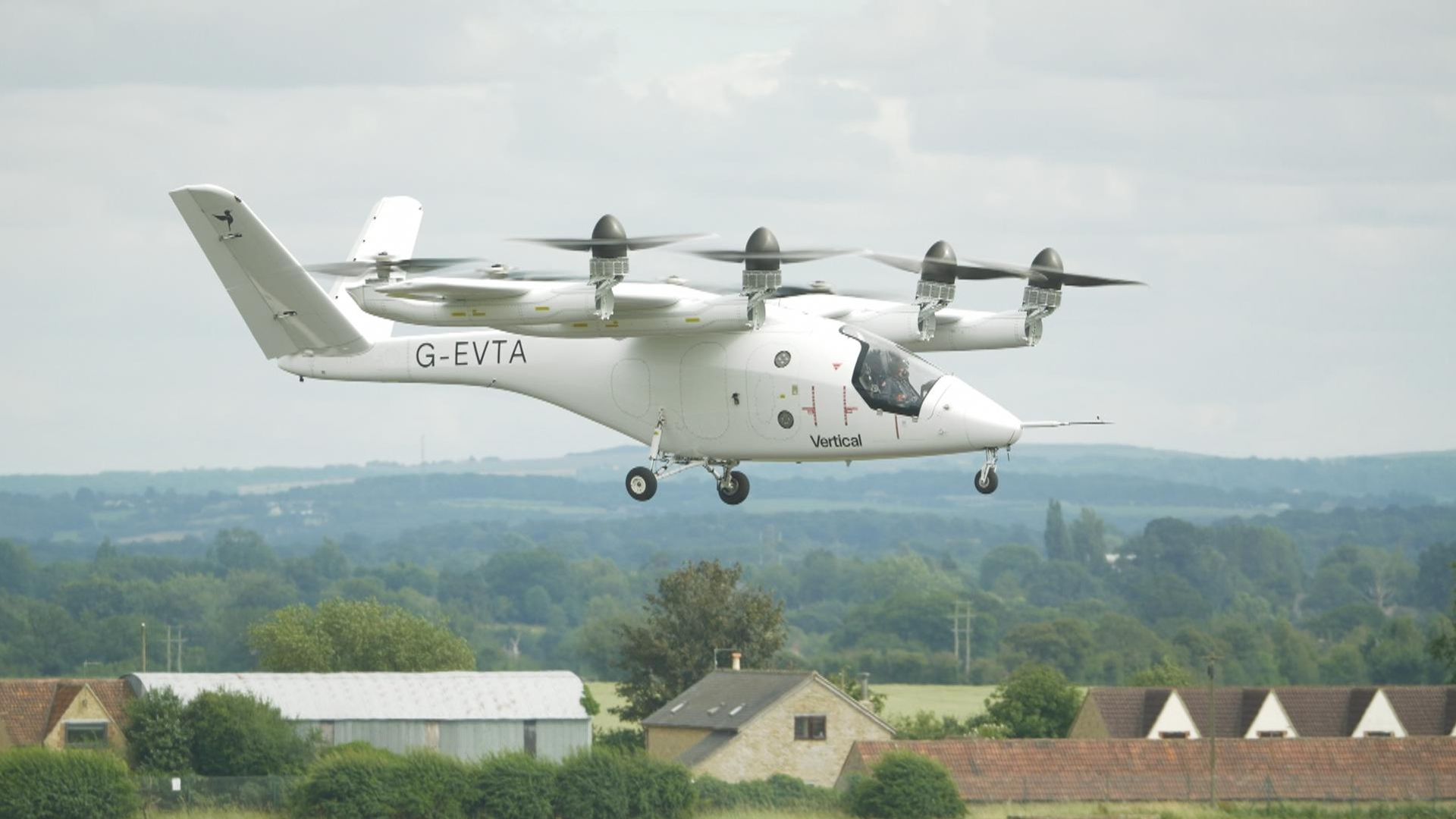
The Rotary Trap
Military tech commentators love glossy press releases. A defense contractor unveils a helicopter strike drone, and right on cue, the media parroted the marketing deck: vertical takeoff will change battlefield logistics forever. It sounds brilliant on paper. Eliminating the need for a runway means you can deploy strike assets anywhere.
It is a complete fantasy.
In actual combat zones, helicopter-style strike drones—or any platform relying heavily on vertical takeoff and landing (VTOL) mechanics—introduce a cascade of engineering failures that far outweigh their convenience. I have watched defense programs burn through tens of millions of dollars chasing VTOL promises, only to end up with platforms that trade away the three things that actually matter in high-intensity conflict: range, payload capacity, and acoustic stealth.
If you are evaluating vertical strike platforms through the lens of modern air defense capabilities, you are asking the wrong questions. The metric that matters is not where a drone can launch from; it is whether the drone can survive long enough to deliver its warhead and return.
The Physics Problem Nobody Talks About
The media treats rotary-wing strike drones as an evolutionary leap. Physics treats them as an inefficient compromise.
When a fixed-wing aircraft flies, the wings generate lift passively through forward motion. Energy goes directly into propulsion. When a helicopter drone hovers or transitions, a massive chunk of its battery or fuel payload is wasted simply fighting gravity through raw thrust.
+---------------------+-----------------------------------+
| Platform Type       | Tactical Trade-Off                |
+---------------------+-----------------------------------+
| Rotary / VTOL Drone | High flexibility, pathetic range  |
| Fixed-Wing Drone    | Requires runway, superior endurance|
+---------------------+-----------------------------------+
That mechanical tax manifests in brutal ways:
- Acoustic Signature: High-RPM rotors generate a distinct low-frequency acoustic signature. Long before an optical sensor spots the airframe, passive audio arrays and troops on the ground hear it coming.
- Thermal Footprint: Pushing enough power to keep a heavy ordnance package hovering creates a massive thermal signature. That makes the platform a trivial target for modern shoulder-fired infrared seekers.
- Payload Penalty: Every pound dedicated to heavy actuation servos, complex swashplates, or tilt-rotor gearboxes is a pound taken away from sensors, armor, or explosives.
Imagine a scenario where an infantry squad needs precision loitering support ten miles out. A rotary strike drone spends nearly 40% of its total fuel state just getting airborne, transitioning to forward flight, and maintaining stability against crosswinds. By the time it arrives, its effective station time is down to minutes.
The Illusion of Runway Independence
The central thesis behind helicopter strike systems is that runways are vulnerability vectors. True. An airfield is a static target easily mapped by satellite imagery and struck by long-range artillery.
Replacing a runway with a rotary drone simply shifts the logistical bottleneck; it does not eliminate it.
A helicopter drone requires complex field maintenance. Small, dirt-filled operational environments wreck high-precision rotor heads and exposed swashplates. Sandy or dusty launch pads turn into abrasive blasters the second those blades spin up, eroding blade edges and clogging cooling intakes.
You do not need a runway, but you do need an entire mobile support shop, dedicated technicians, specialized diagnostic gear, and a constant stream of high-wear replacement parts. That is not rapid maneuverability. That is a heavy logistics train disguised as flexibility.
How Air Defenses Actually See Vertical Strike Assets
The current consensus assumes small-to-medium helicopter strike platforms bypass traditional radar coverage by flying low and utilizing terrain masking.
That assumption collapsed in recent conflicts.
Modern integrated air defense systems (IADS) do not rely solely on traditional sweeping radar towers. Battlefield airspace is saturated with passive RF detection, acoustic tracking networks, and short-range electro-optical sensors.
- Low-altitude drag: Flying low forces a rotary aircraft into denser air, forcing engines to work harder and increasing heat emissions.
- Hover vulnerability: The moment a helicopter drone pauses or slows down to acquire a target, its radar cross-section effectively stabilizes, making it an easy track for automated counter-drone systems.
- Frequency jamming: A complex rotary system relies heavily on continuous control inputs to adjust blade pitch and maintain stability in turbulent conditions. Jamming the control or GPS link on a complex flight controller often results in instant control loss compared to a self-trimming fixed-wing glide path.
What Actually Works on the Modern Battlefield
If rotary strike drones are a money pit, where should defense acquisition actually throw its weight?
Stop trying to force one airframe to do everything. The push to combine vertical takeoff with long-range strike capability yields an asset that is mediocre at hovering and terrible at cruising.
The real counter to runway dependence is cheap, pneumatically-launched or rocket-assisted fixed-wing platforms paired with belly-skid or parachute recoveries. A catapult fits on the back of a standard flatbed truck. It launches a streamlined, fixed-wing asset with three times the operational range and half the thermal footprint of a rotary equivalent. When the mission finishes, it pops a chute or lands in the grass.
It is not pretty. It does not look sleek in corporate promo videos. But it works, it stays in the air, and it does not melt its own budget in replacement swashplates.
The military-industrial complex loves mechanical complexity because complexity commands high margins and long-term service contracts. But until an airframe vendor breaks the laws of thermodynamics, the rotary strike drone remains a costly solution searching for a problem that simple fixed-wing engineering solved decades ago.