The air in a rural barn or a long-forgotten attic carries a specific scent. It is the smell of stillness—dry wood, old hay, and the fine, grey powder of time. Most people breathe it in without a second thought while reaching for a cardboard box or sweeping a floor. But for those who know the biology of the Four Corners region or the sweeping plains of South America, that dust is a minefield.
Hidden within the waste of common field mice and rats is a pathogen that does not behave like the seasonal flu. It does not wait for a handshake or a cough in a crowded elevator. It waits in the dirt. When the dust is stirred, the virus becomes airborne. You breathe. It enters.
This is hantavirus. It is rare, terrifyingly efficient, and carries a mortality rate that makes most modern ailments look like a nuisance. For decades, it has been a localized shadow, a "niche" threat that the broader world ignored because it didn't move fast enough to shut down an airport. But the math of global health is shifting. Moderna, the company that became a household name by decoding a different kind of spike protein, has decided that the shadow is worth chasing.
Investors caught the scent of this shift recently, sending Moderna’s stock climbing as the company pulled back the curtain on its newest mission. They aren't just looking at the next version of a booster. They are hunting the "Orphan Viruses"—the ones that kill with brutal consistency but have lacked the commercial incentive for a cure.
The Anatomy of a Breath
To understand why a massive biotech firm is pivoting toward a virus found in rodent droppings, you have to understand what happens to a human body when the infection takes hold.
Imagine a hypothetical patient. We will call him Elias. Elias is thirty-four, a carpenter in Colorado, and as healthy as a mountain lion. He spends a Saturday cleaning out a shed. Three days later, he feels like he has the flu. His bones ache. He is tired. He assumes he just overextended himself.
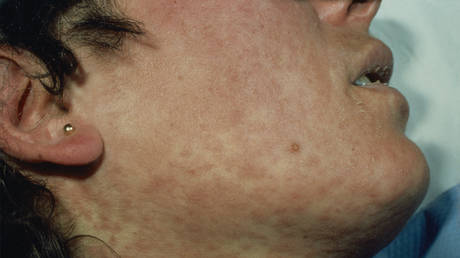
But hantavirus doesn't just replicate in the throat. It targets the endothelium—the thin, delicate lining of the blood vessels. Specifically, it goes for the lungs. In Hantavirus Pulmonary Syndrome (HPS), the blood vessels begin to leak. They don't break; they simply become porous, as if the very walls of the body's plumbing turned to gauze.
Elias’s lungs begin to fill with his own plasma. He isn't coughing up fluid; he is drowning from the inside out while sitting in a dry room. By the time he reaches the emergency room, his oxygen levels are plummeting. There is no pill. There is no specific antiviral. Doctors can provide oxygen and hope his immune system wins the race before his heart gives out.
Nearly 40% of people like Elias do not make it home.
The Pivot from Pandemic to Preparation
The market responded to Moderna’s announcement not just because of the altruism involved, but because of the validation of a platform. For years, the knock against mRNA technology was that it was a one-hit wonder, a product of a unique global crisis. By moving into the hantavirus space, the company is proving that their laboratory is essentially a software suite.
If a virus is a malicious code, mRNA is the patch.
The traditional way of making a vaccine involves growing the virus in chicken eggs or giant vats of mammalian cells, weakening it, and then injecting it. It is slow. It is messy. It is analog. Moderna’s approach treats the hantavirus as a sequence of data. By identifying the specific protein that allows the virus to latch onto human cells, they can instruct the body to recognize and dismantle the intruder before the "leaky pipe" phase ever begins.
This is a business move, certainly. But for the families in regions where Sin Nombre virus—the North American variant—is endemic, it feels like a long-overdue rescue.
The struggle with hantavirus has always been its unpredictability. It doesn't strike in predictable waves. It flares up when environmental conditions change. A wet winter leads to more seeds; more seeds lead to more mice; more mice lead to a higher probability that a human will sweep the wrong corner of a garage. It is an environmental lottery where the prize is a ventilator.
The Invisible Stakes of Bio-Security
There is a deeper, colder reason why the world is suddenly paying attention to hantaviruses. They are geographically diverse. While we worry about the strains in the American West, different versions like the Andes virus in South America have shown a terrifying potential: person-to-person transmission.
Most hantaviruses are a "dead-end" in humans. You get sick from a mouse, but you can’t give it to your spouse. The Andes variant changed that script. It proved that this family of viruses has the genetic flexibility to jump between people under the right circumstances.
When a biotech giant invests in this research, they are building a firebreak. They are betting that the cost of developing a vaccine now is a fraction of the cost of reacting to a mutated strain later. It is a shift from reactive medicine to proactive architecture. We are learning to build the umbrella before the clouds even form.
Consider the complexity of the task. Hantaviruses are enveloped viruses, meaning they are wrapped in a fatty layer that makes them fragile outside the host but sneaky inside it. They have been around for millions of years, evolving alongside rodents. They are masters of staying under the radar of the innate immune system until it is too late to mount an effective defense.
The Economics of the Unseen
Critics often wonder why it takes a stock market jump to trigger progress in life-saving medicine. The reality is that drug development is a gauntlet of failure. Most candidates die in the lab. Those that make it to human trials cost hundreds of millions of dollars.
Until now, hantavirus was too small a "market" for the old guard of big pharma. The numbers didn't make sense. But mRNA has lowered the barrier to entry. Because the manufacturing process is standardized—the "factory" stays the same regardless of which virus sequence you plug into it—the cost of tackling rare diseases is falling.
This isn't just about hantavirus. It is about the end of the "orphan" disease.
The jump in share price reflects a growing confidence that the technology can be applied to a dozen different shadows at once. Today it is a rodent-borne respiratory killer. Tomorrow it could be Lassa fever, Nipah, or the next mystery that crawls out of the permafrost.
We are witnessing the professionalization of the "just in case."
The Dust Settles
The goal is a world where a carpenter in Colorado doesn't have to fear the dust in his own shed.
Success in this field isn't measured in the absence of the virus; it is measured in the absence of the drama. A successful vaccine is a non-event. It is a quiet afternoon where someone gets a shot, goes about their day, and never has to know the feeling of their lungs turning to stone.
Modern medicine is finally moving toward a model where we don't wait for the tragedy to write the cure. We are beginning to map the monsters before they leave the woods.
The next time you walk into a sun-drenched barn and see the dust motes dancing in the light, remember that the air is never truly empty. It is filled with history, with biology, and increasingly, with the silent, microscopic tools we have built to keep the breath in our lungs.
The race isn't just against a virus. It is against our own tendency to forget about the shadows until they are at the door.
For the first time, we aren't just waiting. We are reaching into the dark.