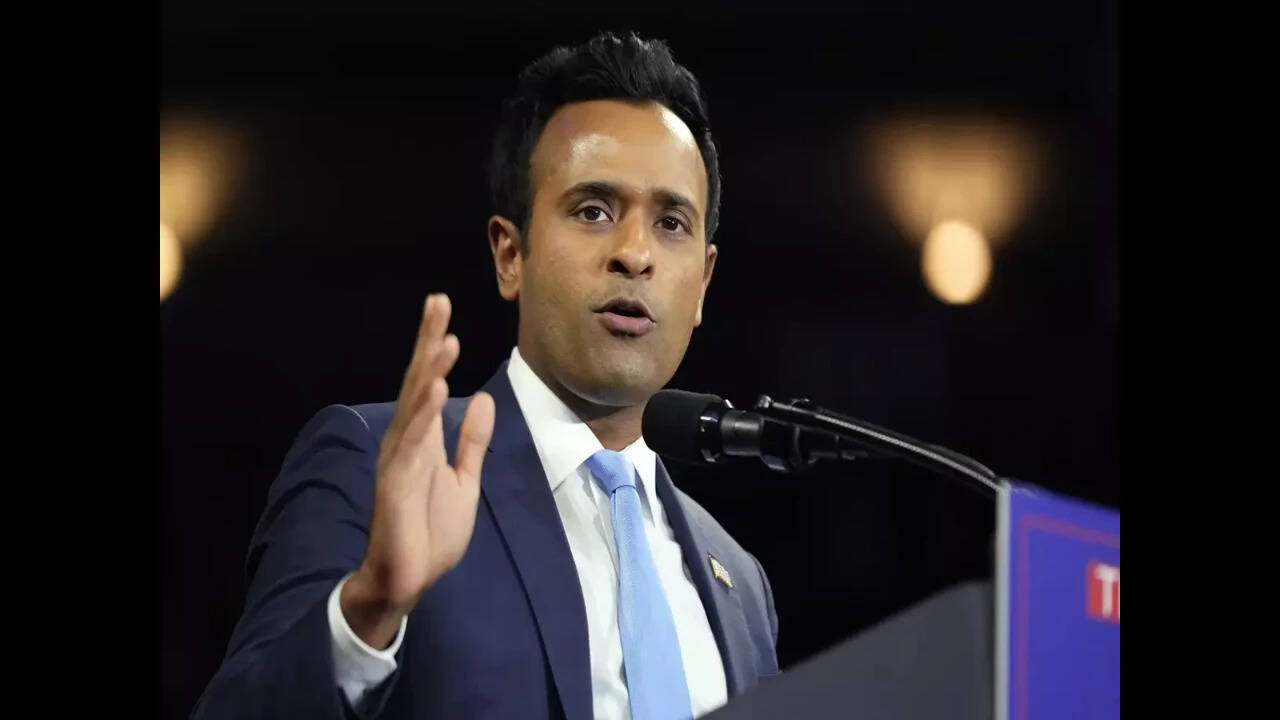
Political pundits love a clean morality play. When Vivek Ramaswamy pulled his campaign ad featuring Democratic rival Amy Acton’s estranged mother in the Ohio gubernatorial race, the beltway consensus snapped shut in record time.
They called it a humiliating retreat. They called it a rookie mistake. They pointed to the rare bipartisan condemnation—Republicans and Democrats holding hands in unified outrage—as proof that Ramaswamy had stepped on a rake and broken his own nose. Meanwhile, you can explore other events here: Three Arrests and a Shattered Apartment Reveal a Darker Reality Behind the Central Athens Explosion.
That reading is lazy. It relies on an outdated playbook from 1998 that assumes modern political advertising is about buying television airtime to persuade undecided voters in their living rooms.
In 2026, paid media is not the battlefield. Earned media is. And by launching a nuclear strike, watching the political establishment lose its collective mind for forty-eight hours, and then gracefully stepping back, Ramaswamy didn't lose a news cycle. He hijacked the entire state's attention economy for pennies on the dollar. To see the full picture, check out the detailed report by Associated Press.
The Myth of the "Retreat" in Modern Campaigning
I have spent fifteen years inside war rooms watching campaigns burn eight-figure budgets on focus-grouped, consultant-approved television spots that disappear into the ether without moving a single point in the polls. Conventional political consultants are terrified of blowback. Their primary goal is not winning; it is protecting their own reputations so they get hired for the next cycle.
When a traditional candidate runs an ad that draws "bipartisan criticism," they panic because they measure success by editorial board approval and donor cocktail party chatter.
Ramaswamy operates on an entirely different set of mechanics. Look at the sequence of events:
- The Detonation: The campaign drops an ad featuring an estranged family member—a classic, deeply personal attack that violates the unspoken etiquette of modern political decorum.
- The Amplification: Cable news, local Ohio affiliates, and political Twitter immediately pick up the spot. Journalists who would never cover a standard policy ad about state tax rates suddenly play the clip on loop for free.
- The Pivot: Once every voter in Ohio knows the core narrative—that Amy Acton has serious personal and relational baggage—the campaign pulls the ad, citing a desire to keep the focus on policy or taking the high road after the point has been made.
You cannot buy that kind of saturation. If you spend two million dollars on local broadcast television in Columbus, Cleveland, and Cincinnati, half the audience skips the commercial, and the other half tunes it out. If you drop a radioactive spot and pull it two days later, every local news anchor in the state reads the script aloud during the 6:00 PM broadcast.
What Everyone Gets Wrong About Negative Advertising
The mainstream press treats "bipartisan criticism" as a fatal wound. In reality, bipartisan criticism from the political class is often an endorsement to anti-establishment voters.
To understand why, you have to separate elite consensus from voter psychology.
When career politicians in both parties rush to microphones to condemn a campaign tactic, they are signaling to each other that they still respect the rules of the club. Voters outside the club—particularly in a populist-heavy state like Ohio—do not care about the etiquette of political consultants. They care about whether a candidate looks weak or strong, and they remember the underlying accusation long after they forget the outrage over how it was delivered.
Psychologists call this the sleeper effect, first documented by Carl Hovland and Walter Weiss in the 1950s. When people receive a message from a source or in a format they initially reject or find distasteful, they discount the message at first. Over time, however, the memory of the distasteful source fades faster than the memory of the core claim.
Weeks later, the average voter does not remember the press release condemning Ramaswamy's ad buy. They simply retain a vague, lingering impression that Amy Acton has unresolved family drama and credibility issues. The ad did its job before it was ever pulled.
The Illusion of the "Line Too Far"
Political commentators love to claim there is a sacred boundary around family members in political campaigns. History proves that boundary only exists when a campaign lacks the nerve to cross it.
Look at Paul Gosar’s siblings cutting ads against him in Arizona, or Robert F. Kennedy Jr.’s family publicly denouncing his campaigns. The media loves family betrayal when it serves a narrative they like, and they clutch their pearls when it comes from a direction they dislike.
The mistake most campaigns make isn't running a sharp-elbowed ad; it's getting bogged down in a three-week trench war defending the ad instead of moving on to the next news cycle. Pulling the spot cut off the media's ability to keep beating him over the head with the process story, while leaving the substantive smear hanging in the air.
The Real Downside Nobody Talks About
To be clear, this tactic is not without severe risks, and pretending otherwise would be dishonest. Weaponizing personal estrangement and then backing down carries three distinct liabilities that can rot a campaign from the inside out if mismanaged:
- The Weakness Trap: To hardline supporters who want a street fighter, pulling an ad looks like caving to media pressure. If a candidate develops a pattern of throwing a punch and then apologizing for it, their base stops believing they have the spine to govern against entrenched opposition.
- Donor Nervousness: Major institutional donors hate unpredictability. While small-dollar online donors love fireworks, big check-writers in Columbus and Cincinnati prefer stability. Too many unforced controversies dry up the financing needed for the final October push.
- Sympathy Backfire: Attacking someone through an estranged relative can humanize the target. Amy Acton, known primarily to Ohioans as the clinical face of the state's COVID-19 response, suddenly gets cast as a sympathetic figure enduring an unfair personal hit. Turning a polarizing public health official into a victim is a dangerous gift to give an opponent.
If Ramaswamy makes a habit of launching attacks he cannot sustain, those three factors will compound and sink him. A feint only works if your opponent believes you are willing to follow through on the next swing.
How Campaigns Actually Win the Attention War
If you are running a campaign, a corporate crisis response, or any high-stakes public persuasion effort, stop taking advice from people who think media coverage is a scorecard of moral virtue. Attention is a zero-sum currency.
Here is how you actually execute an asymmetric media play without destroying your own credibility:
1. Never Apologize for the Premise
Notice the difference between pulling an ad and groveling. When you pull a controversial piece of creative, you state that the point has been made and you are moving forward to the next issue. The moment you issue a tearful apology, you validate your opponent's framing and hand them a permanent talking point.
2. Force the Press to Report the Controversy
Never spend heavy money amplifying a controversial ad yourself. Put a modest buy behind it, send it directly to political reporters, and let their outrage fund the distribution. Let the opposition campaign waste their own fundraising emails linking to the story. Every time your rival sends an email saying "Look at this terrible thing my opponent did," they are distributing your opposition research to their own list for free.
3. Pivot Immediately to Contrast
The window after a major controversy is when your microphones are hottest. Everyone is listening. Do not spend that window talking about campaign ethics. Pivot immediately to the hardest, most undeniable policy contrast you have—in Ohio, that means locking down the narrative around lockdowns, economic recovery, and state spending.
Stop Confusing Etiquette With Strategy
The pundits writing obituaries for Vivek Ramaswamy’s campaign discipline are making the exact same mistake they made in 2016, 2020, and 2024. They are grading a street fight using the rulebook for a fencing match.
By Tuesday, nobody in Washington will remember why the ad was pulled, and nobody in Ohio will care what a bipartisan panel of cable news commentators thought about campaign decorum. Every voter in the state will have heard the whisper about Amy Acton's personal life, Ramaswamy will have kept his war chest intact for the fall, and the political press will still be congratulating themselves for winning an argument that ended three days ago.


