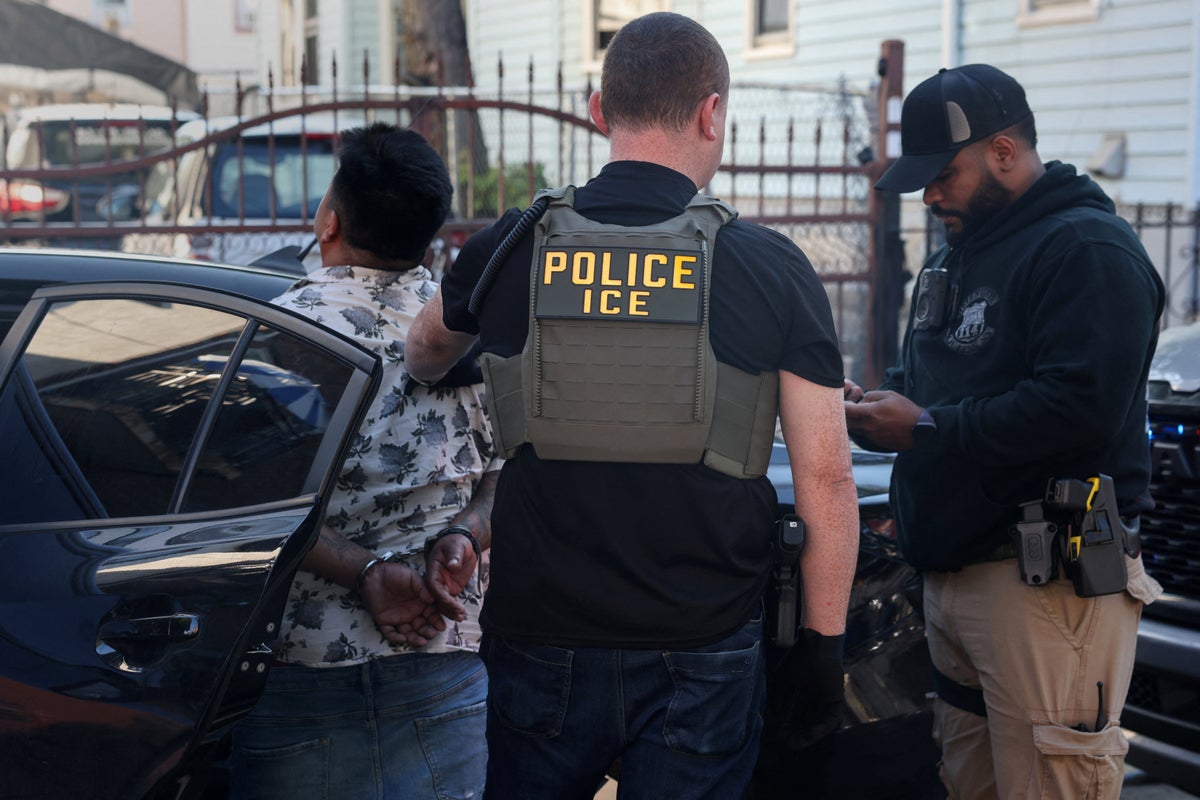
The headlines write themselves because they are easy to write. Civil rights coalitions file emergency lawsuits. They frame federal immigration enforcement near polling stations as a direct assault on democracy. They scream voter intimidation. They claim agents in tactical gear are standing outside school gymnasiums just to scare marginalized communities out of casting a ballot.
It is a clean narrative. It fits neatly on a picket sign. And it completely misses how the modern enforcement apparatus actually operates.
I have spent years watching institutional accountability mechanisms grind against federal jurisdiction, and I can tell you right now that treating immigration enforcement at polling places as a traditional voter suppression tactic is a tactical error. It assumes the state's goal is to stop people from voting on Tuesday. It is not. By the time an agent is near a voting booth, the systemic filtering has already happened months prior. Focusing all our legal firepower on election day theater ignores the structural machinery that shapes the electorate long before anyone touches a ballot.
Let us look at the mechanics of what is actually happening. When civil rights groups run to federal court to block enforcement actions during early voting and on election day, they are treating a symptom while ignoring the disease. The argument is straightforward: the presence of armed federal personnel creates a chilling effect. People stay home. Undocumented family members fear being tracked. Naturalized citizens with foreign-sounding names worry about profiling.
The logic holds up on the surface. Fear is a powerful deterrent. But look at the data coming out of jurisdictions where these enforcement spikes happen. The actual drop-off in legal, eligible voters walking into precincts due to outdoor federal presence is statistically difficult to isolate from broader socioeconomic distrust. Meanwhile, the legal challenges consume millions of dollars in billable hours and court resources to secure temporary restraining orders that address an eventuality that rarely manifests as a mass dragnet at the door.
Federal agencies are bound by internal memos, policy guidance, and sensitive location protocols. They know that staging a visible operation outside a polling station is a public relations catastrophe that invites immediate judicial intervention. Most of the time, the proximity of enforcement personnel to a voting site is a logistical coincidence of overlapping jurisdictions, municipal boundaries, and routine field work rather than a centrally coordinated voter suppression campaign.
By framing every sighting of a federal vehicle near a precinct as a coordinated conspiracy to suppress votes, advocacy groups fall into a trap. They validate a narrative that the ballot box is inherently unsafe because of who might be standing outside it, rather than proving that the democratic process is robust enough to withstand it.
Imagine a scenario where we stopped treating election day as the perimeter of the fight.
If you want to protect the integrity of the vote and the safety of the voter, you do not start by arguing over a three-hundred-foot buffer zone around a community center. You look at how municipal databases share information, how state motor voter laws interact with federal immigration status updates, and how administrative friction creates a two-tiered system of civic participation.
The real suppression does not happen under the glaring lights of a high school gymnasium on a Tuesday in November. It happens in the bureaucratic shadows. It happens when minor municipal citations are funneled into federal databases. It happens when language access provisions are quietly defunded in county clerk offices. It happens when administrative backlogs stall naturalization applications for years, leaving millions of legal residents stranded in a political purgatory where they pay taxes but hold no voice.
When we focus solely on the spectacle of agents near polls, we commit a category error. We confuse physical intimidation with structural exclusion. Physical intimidation is loud, messy, and legally vulnerable. Structural exclusion is quiet, efficient, and entirely legal.
The legal battles led by voting rights organizations against agencies like Immigration and Customs Enforcement rely heavily on the Voting Rights Act and the Ku Klux Klan Act of 1871. These are heavy legal hammers designed to stop direct, racially motivated intimidation at the polls. Invoking them against modern federal law enforcement agencies creates a fascinating constitutional collision between civil rights law and federal immigration authority.
Courts are forced to balance the fundamental right to vote against the broad statutory mandates given to immigration officials. More often than not, this results in narrow injunctions that apply only to specific geographic zones or temporary windows. It is a game of legal whack-a-mole. Every time a judge issues a ruling blocking enforcement near a precinct, the agency adjusts its radius, claims routine operations, and the core structural issue remains entirely untouched.
We need to talk about the collateral damage of this litigation strategy. Every dollar spent drafting emergency injunctions against phantom polling place raids is a dollar not spent auditing local voter registration purges or challenging discriminatory ID requirements that disenfranchise thousands more citizens than a parked federal SUV ever could.
The obsession with election-day optics gives political actors on all sides an easy script. For opponents of immigration, calling for increased enforcement near sensitive areas plays well to a base that loves the aesthetic of law and order, even if it yields negligible operational results. For advocates, filing lawsuits against these actions provides an immediate fundraising spike and a clear villain to mobilize against.
Both sides get their theater. The voter gets caught in the middle, conditioned to believe that exercising a constitutional right is an act of supreme courage that requires dodging federal agents.
That is the psychological cost. When we constantly tell marginalized communities that the state is waiting to pounce on them the second they try to participate, we validate their alienation. We reinforce the exact barrier we claim to be tearing down.
If we are serious about defending the franchise, we have to grow up past the politics of the immediate spectacle. We need to redirect that legal capital toward the administrative roots of disenfranchisement. Stop fighting the ghosts outside the polling station and start dismantling the paperwork machine inside the statehouses.