Silence.
That is what hits you first when you walk down the E-Ring of the Pentagon late at night, long after the tourists have gone home and the brass have retreated behind mahogany doors, leaving only the hum of fluorescent tubes and the faint, metallic tang of floor wax hanging in the recycled air.
I spent years covering the machinery of national defense from the outside, watching press briefings where men in crisp uniforms spoke in acronyms designed to dull the senses until war sounded like a quarterly spreadsheet. You learn quickly that Washington treats human beings like chess pieces. Until the knives come out. Then, suddenly, everything becomes intensely, painfully personal.
This week, the knives came out for Pete Hegseth.
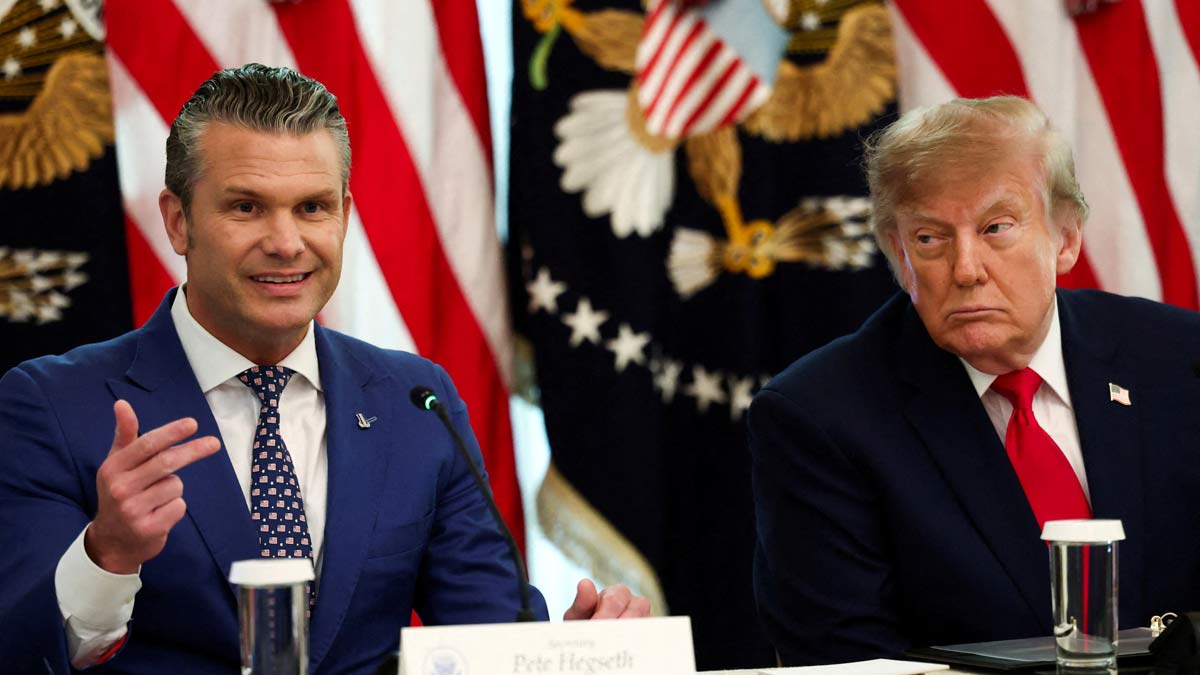
If you only skimmed the headlines, you saw a familiar Washington script. House Democrats launched an impeachment effort against the Secretary of Defense, an effort that collapsed under the weight of political reality and party-line resistance, prompting President Donald Trump to declare the outcome the "exoneration of a patriot." On paper, it reads like another routine skirmish in an endless partisan trench war. A vote tallied. A gavel banged. A victory lap taken on social media.
But paper lies.
To understand what actually happened on the House floor—and why the defeat of that impeachment bid sends shockwaves from the halls of Congress straight down to a twenty-two-year-old corporal cleaning a rifle in the dust of a forward operating base—you have to strip away the cable-news punditry and look at the invisible stakes. This was never merely a referendum on one man's fitness for high office. It was a collision between two fundamentally incompatible visions of who gets to command the most lethal military force in human history, and what happens when the constitutional weapon of impeachment is pulled from its scabbard in the middle of a geopolitical storm.
The Anatomy of a Political Ambush
Consider a hypothetical scenario to grasp the mechanics of what transpired. Imagine you are the captain of a massive container ship navigating a narrow, storm-tossed strait at midnight. Rocks jut out on both sides. Radar screens flicker with approaching vessels. Suddenly, half the bridge crew decides they dislike how you were hired, question your credentials, and demand an immediate mutiny trial right there on the deck while the waves crest over the bow.
That is the precise friction that defined the push to impeach Pete Hegseth.
From the moment Trump tapped Hegseth—a former Fox News host and decorated Army National Guard infantry officer who served in Guantanamo Bay, Iraq, and Afghanistan—the Washington defense establishment recoiled. To the entrenched bureaucracy, Hegseth was an outsider who had not spent decades climbing the polished ladders of think tanks, defense contractors, and four-star command staffs. He spoke bluntly about dismantling diversity initiatives in the ranks, purging what he termed "woke" ideology from military academies, and restoring an unapologetic warrior ethos.
Critics did not simply disagree with his policy agenda; they viewed his very presence at the helm of the Department of Defense as an existential threat to institutional norms. When controversies swirled around his management style, personnel decisions, and the rapid pace of his restructuring inside the Pentagon, opposition lawmakers reached for the heaviest hammer in the constitutional toolbox.
Impeachment.
Let us pause and look honestly at that word. Under Article II, Section 4 of the United States Constitution, the President, Vice President, and all civil officers of the United States shall be removed from office on impeachment for, and conviction of, treason, bribery, or other high crimes and misdemeanors. Historically, the impeachment of a cabinet secretary is rarer than a solar eclipse. Before the modern era of hyper-polarized politics, it happened only once in American history—in 1876, when Secretary of War William Belknap resigned minutes before the House voted to impeach him over a kickback scheme involving trading posts in Indian Territory.
For nearly a century and a half, Congress treated cabinet impeachment like nuclear ordnance—a weapon so destructive to the separation of powers that you only used it when criminal corruption threatened the republic itself.
Yet here we were again.
Inside the Chamber When the Vote Collapsed
Watch the floor of the House of Representatives during a high-stakes procedural vote, and you will notice something the cameras rarely capture: the exhaustion in the posture of the members. Nobody looks triumphant when the roll call drags on. They look like people trapped in a cramped elevator waiting for the cables to snap.
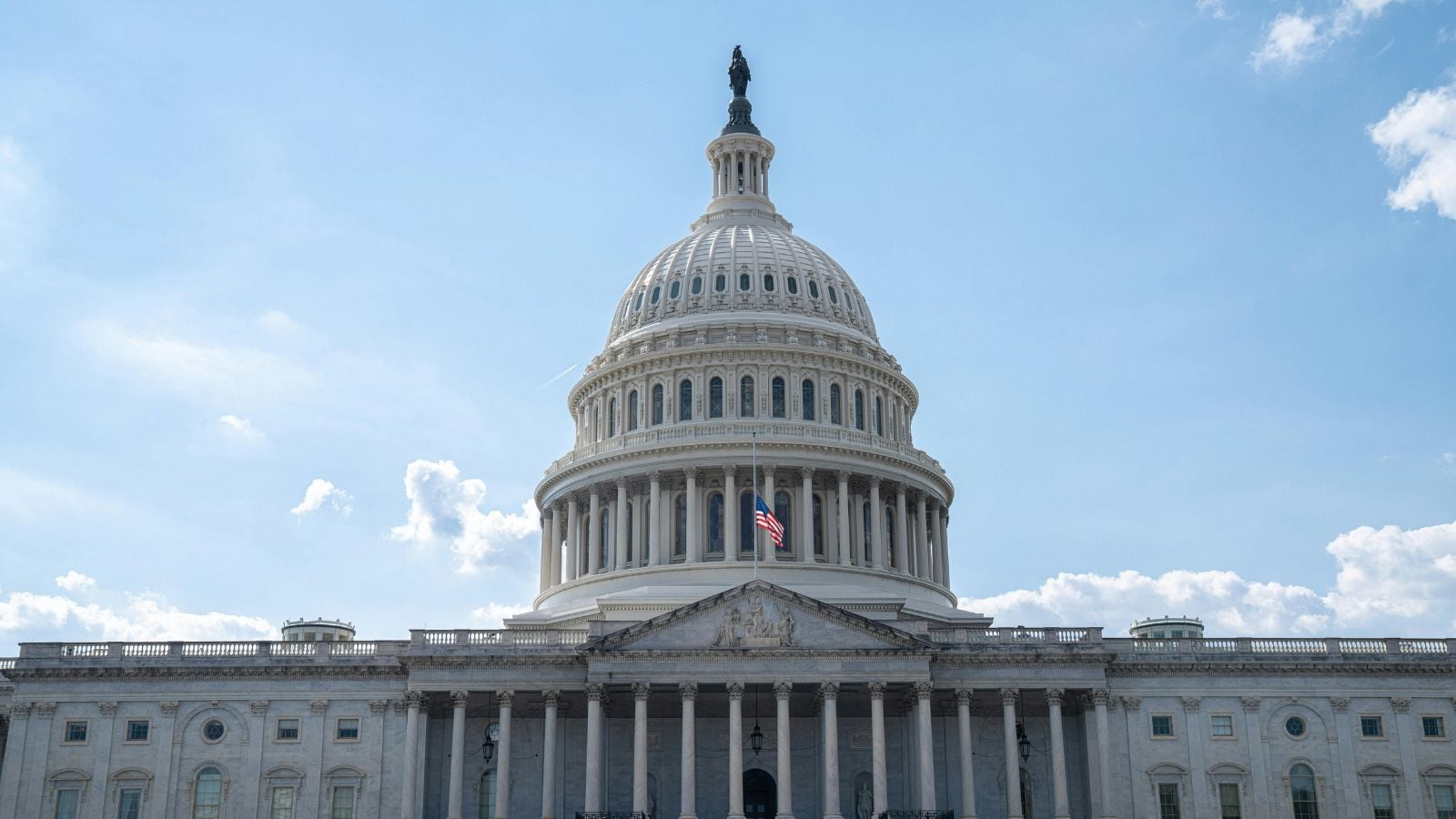
When House Republicans moved to table—effectively kill—the impeachment resolution against Hegseth, the outcome was never purely about procedural minutiae. Every member casting a vote knew what the cameras were recording. Democrats argued that accountability demanded nothing less than a formal rebuke and removal proceeding, insisting that oversight of the Pentagon cannot be deferred when questions arise over leadership conduct and adherence to protocol. Republicans countered that the effort was a transparent political stunt, an attempt to overturn executive branch appointments through legislative harassment because the opposition lacked the votes to block his policies outright.
When the tally locked in and the impeachment bid went down in flames, the reaction from the White House was instantaneous and unmistakable. Trump did not treat it as a narrow escape or a technical victory. He framed it in moral, almost mythic terms.
"Exoneration of a patriot."
Those four words were chosen with surgical precision. In Trump's political lexicon, "exoneration" does not merely mean "not guilty"; it means vindication against an unjust persecution. Calling Hegseth a "patriot" shifted the entire axis of the debate away from administrative paperwork and back toward personal sacrifice—reminding millions of voters that before Hegseth ever stepped onto a television set or behind a Pentagon podium, he wore the uniform of the United States Army and earned two Bronze Stars in combat zones where bureaucrats never set foot.
What the Headlines Miss About Command and Control
Why should a nurse in Ohio, a software engineer in Texas, or a retired schoolteacher in Florida care whether a House impeachment motion against the Secretary of Defense succeeds or fails?
Because command is psychological before it is logistical.
Think about how an army actually functions. We like to believe military power lives in aircraft carriers, stealth bombers, and satellite networks. Those are just steel and silicon. What makes a military coherent is the chain of command—an unbroken line of authority running from the Commander-in-Chief, through the civilian Secretary of Defense, down to the platoon sergeant waking teenagers up at four in the morning in the freezing rain.
When the civilian leader of the Pentagon is locked in a perpetual fight for political survival—forced to spend mornings huddled with lawyers preparing for impeachment hearings instead of reviewing deterrence postures in the Indo-Pacific or supply chains in Eastern Europe—a subtle paralysis creeps through the building.
I have talked to mid-level officers who served during moments of severe political turbulence in Washington. They describe a specific kind of hesitation that infects the hallways. Nobody wants to sign off on a bold operational shift if they think the Secretary might be ousted in thirty days. Foreign adversaries watch this with quiet glee. Beijing does not need to hack a Pentagon server to gauge American resolve; they just turn on C-SPAN and watch Congress try to decapitate its own defense leadership in broad daylight.
Defeating the impeachment bid slammed the brakes on that paralysis. It sent an unambiguous signal through every corridor of the five-sided building: Pete Hegseth is not going anywhere, and his mandate remains intact.
The Human Toll Behind the Armor
It is easy to treat public officials like cartoon characters, impervious to the pounding of twenty-four-hour outrage cycles. We forget that beneath the tailored suits and carefully rehearsed talking points, human beings absorb the blows.
When an impeachment drive is launched against a cabinet official, it does not stay confined to the Capitol dome. It spills onto front lawns. It follows spouses into grocery stores. It turns children's school hallways into minefields of whispered rumors. Every past mistake, every heated text message, every imperfect moment of a messy human life gets magnified under a forensic spotlight until the person disappears entirely, replaced by a caricature painted by political enemies.
I admit, there moments watching this unfold when even seasoned observers feel a deep unease about where American governance is heading. You wonder whether any capable person—left, right, or center—will willingly step into public service ten years from now if the price of admission is surviving an impeachment gauntlet every time a policy sparks outrage. If we turn the constitutional remedy for high crimes into a routine vote of no confidence, we quietly dismantle the stability that separates a constitutional republic from a parliamentary shouting match.
Hegseth himself leaned into that exact tension. Rather than retreating from public view while the threat hung over his head, he kept showing up at military installations, standing beside enlisted troops, leaning hard into the message that his loyalty belonged to the warfighter rather than the Washington establishment. To his detractors, that posture looked defiant, even reckless. To his supporters, it looked like courage under fire.
The Deeper Fault Line Inside American Defense
To grasp why this battle burned so hot, you have to look beyond the personalities and confront the generational fault line cracking open across the American military.
For twenty years after September 11, the United States fought counterinsurgency wars in Iraq and Afghanistan. A generation of young men and women—Hegseth among them—rotated through dusty outposts, dodging improvised explosive devices and watching friends come home in flag-draped coffins, while senior leaders in Washington assured the public that victory was just around the corner. Many of those veterans left the service carrying a quiet, simmering fury toward the institutional elite who managed those wars without ever paying the price for their failures.
When Hegseth walked into the Secretary's office, he brought that fury with him.
That is the emotional core the dry news reports completely miss. When Democrats tried to impeach him, millions of veterans and working-class families did not see a congressional oversight procedure. They saw the same entrenched establishment trying to expel one of their own—a combat veteran who dared to challenge the sacred cows of the defense bureaucracy.
And when Trump hailed the defeat of the impeachment bid as the "exoneration of a patriot," he tapped directly into that reservoir of grievance and loyalty. He turned a legislative defeat for his opponents into a rallying cry for his movement.
What Happens When the Smoke Clears
The gavel has fallen on this impeachment effort, yet the underlying struggle over the soul of the Pentagon is far from finished.
With the immediate threat of removal off the table, Hegseth now holds something rare in modern Washington: political momentum backed by an explicit presidential endorsement. Inside the Defense Department, the message to hesitant deputies and entrenched civil servants is unmistakable. The reforms he promised—reshaping promotion boards, stripping away administrative programs he views as distractions from combat readiness, demanding stricter physical and operational standards—will accelerate rather than slow down.
Meanwhile, House Democrats leave the battlefield empty-handed on impeachment, facing a difficult strategic calculation. Overreaching with an impeachment vote that fails on the floor does not weaken a cabinet secretary; it inoculates him. Every future criticism from the same lawmakers now risks being dismissed by the public as partisan noise—the boy who cried wolf with the Constitution.
Still, real oversight does not vanish just because an impeachment resolution dies. Congress retains the power of the purse, the authority to hold hearings, and the constitutional duty to ensure that civilian control of the military remains accountable to the people. The challenge ahead—for both parties—is rediscovering the difference between legitimate scrutiny and political annihilation.
Late tonight, the fluorescent lights will still buzz down the long, quiet corridors of the E-Ring. Outside the thick blast-resistant windows, across the Potomac River, the marble monuments of Washington will glow cold and white in the dark, indifferent to the furious arguments echoing inside the capital. Somewhere thousands of miles away, in the pitch black of an ocean patrol or a desert watchtower, a young American service member will check the horizon, trusting that the people holding the reins of power back home remember who actually stands on the wall when the shouting stops.