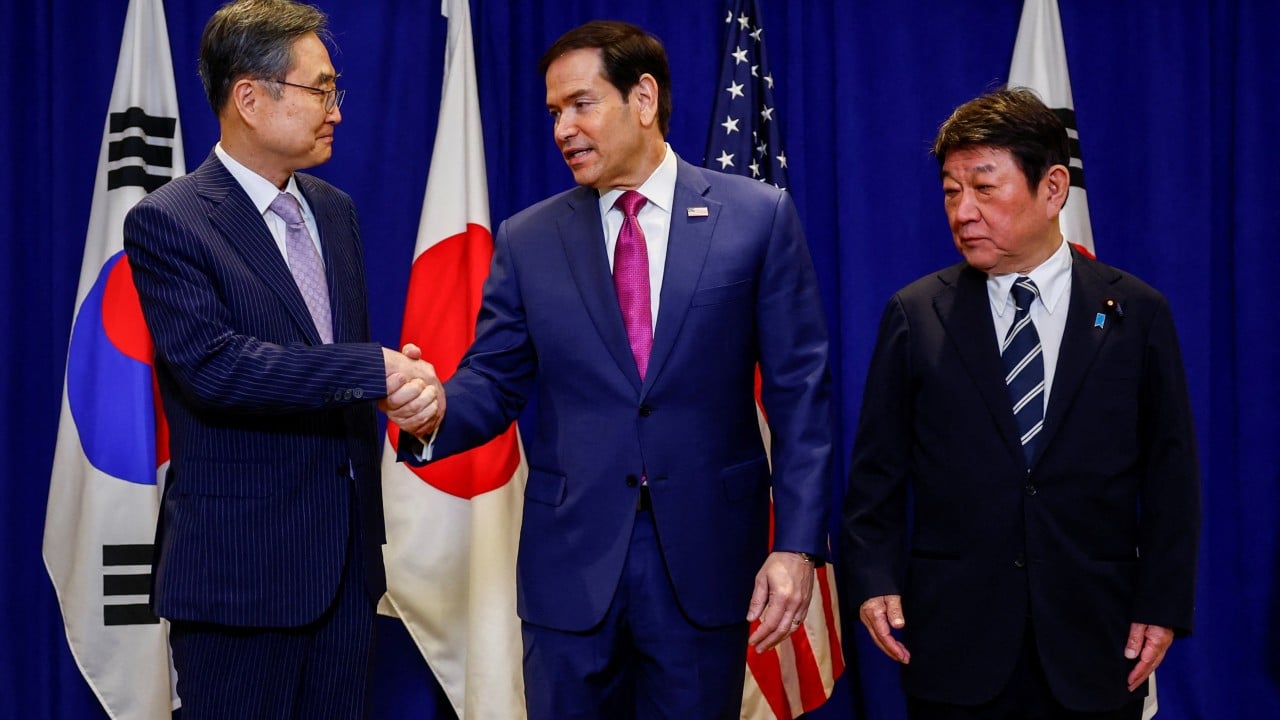
Big diplomatic handshakes don't happen by accident. When Washington, Tokyo, and Seoul align their messaging tightly ahead of a high-stakes leadership showdown like the Trump-Xi summit, you can bet everybody is nervous about what gets traded away behind closed doors.
For months, foreign policy watchers have obsessed over trade numbers and semiconductor supply chains. But the real story is about anxiety. South Korea and Japan share a deep dread that the United States might cut a bilateral deal with Beijing that leaves East Asian security out in the cold. To prevent that nightmare scenario, Secretary of State Marco Rubio and allied foreign ministers locked down a unified stance. They are drawing hard red lines before the heavyweights sit down at the negotiating table. For an alternative view, see: this related article.
The Real Anxiety Behind the Alliance
Let’s be honest about what Tokyo and Seoul actually care about. They aren't losing sleep over corporate branding or minor tariff adjustments. They care about regional stability, nuclear deterrence from North Korea, and the security of the Taiwan Strait.
When Washington engages in high-stakes superpower bargaining with Beijing, allies worry they become bargaining chips rather than equal partners. That explains the flurry of recent joint statements emphasizing ironclad defense commitments. It's a preemptive defensive play. By cementing trilateral coordination early, Japan and South Korea force Washington to carry their core concerns into any room with Chinese leadership. Further insight regarding this has been published by The Washington Post.
Navigating the Tech and Trade Minefield
You can't separate diplomacy from technology anymore. Advanced computing, artificial intelligence development, and access to critical rare earth minerals dictate global power. China dominates rare earth processing, while the United States and its allies hold crucial advantages in semiconductor design and advanced chips.
Washington wants to keep strict export controls tight, but companies in Japan and South Korea face massive commercial pressures because their supply chains run straight through mainland factories. When leaders meet for major summits, the private corporate anxiety is palpable. CEOs want predictable markets, while defense officials want absolute containment. Balancing those two opposing forces takes aggressive diplomacy, and the recent trilateral alignment attempts to bridge that impossible gap.
What Comes Next for Regional Stability
If you're watching global markets or international relations, stop looking at short-term stock bumps or superficial press releases. Pay attention to how tightly Tokyo, Seoul, and Washington coordinate their military exercises and intelligence sharing over the coming months.
The real test of these strengthened ties won't happen during a photo op. It will happen the moment a crisis flares up in the South China Sea or near the Taiwan Strait. If the allies speak with one voice, deterrence holds. If cracks appear, Beijing notices immediately. Keep your eyes on the ground-level defense agreements rather than the summit speeches, because that's where the actual geopolitical reality gets built.