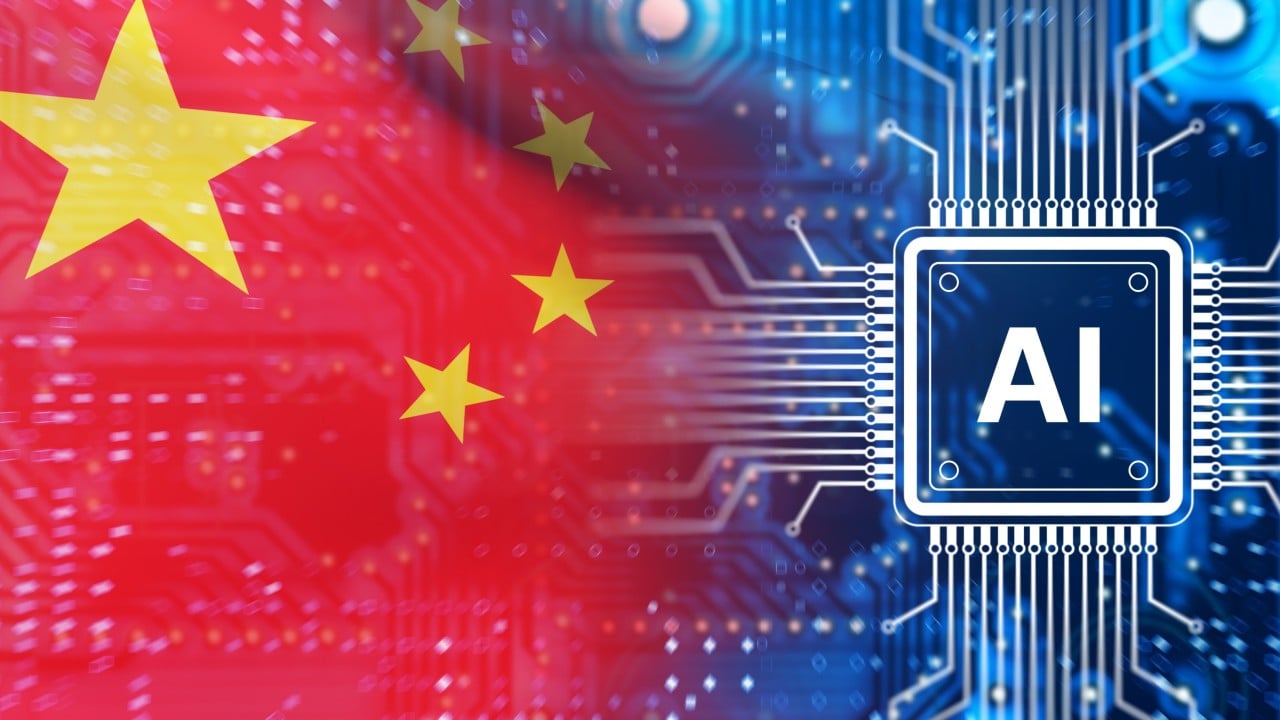
Artificial intelligence training costs billions. When you can shortcut that process by extracting insights from an existing frontier model instead of starting from scratch, you save a fortune. That technique is called model distillation, and it just became the latest flashpoint between Washington and Beijing.
The US government claims that Chinese entities are using malicious AI distillation to siphon intellectual property and bypass export controls on high-end semiconductors. People's Daily recently pushed back hard against these allegations, calling them baseless smears designed to maintain a technological monopoly, while simultaneously hinting at sharp countermeasures. Expanding on this idea, you can also read: The Baltic Vulnerability Trap Why Airport Hybrid Attacks Are Changing European Security.
If you think this is just diplomatic posturing over code, you're missing the bigger picture. This fight exposes the fragile nature of global tech supply chains. It also reveals how hard it is to regulate knowledge when anyone with a cloud GPU can train a smaller, smarter network using synthetic data.
The Real Issue Behind AI Distillation Claims
Let's strip away the political rhetoric. Distillation isn't inherently malicious. Engineers use it every day to compress massive neural networks into compact, efficient versions that run on edge devices like smartphones or IoT hardware. If a company spends months training a flagship model, they naturally want to protect their commercial advantage. Experts at Reuters have also weighed in on this situation.
Washington argues that Chinese labs are taking outputs from American frontier models to train competitive domestic alternatives. That's true, but it's also how open science has functioned for decades. Knowledge propagates. Ideas cross borders. Once a capability exists in software, containing it inside a specific geographic boundary gets messy.
People's Daily slammed these accusations as an attempt to suppress technological progress in the Global South. They pointed out that open-source ecosystems rely on shared breakthroughs. When US regulators threaten sanctions or export restrictions on distillation techniques, they are trying to put a digital genie back into a bottle that shattered long ago.
Why Countermeasures Matter
When state media warns of countermeasures, policymakers pay attention. China dominates rare earth minerals, dominates hardware manufacturing capacity, and holds massive leverage in global tech supply chains.
If Beijing decides to restrict domestic data flows or limit the export of critical hardware components used in server farms, American firms will feel the pinch. Major cloud providers rely heavily on Asian manufacturing hubs to assemble the server racks that power modern data centers.
Most people don't realize how interdependent the hardware ecosystem remains. You can ban the shipment of elite chips all day long, but global supply chains have porous edges. Smart operators find workarounds, routing compute through third-party intermediaries or leveraging decentralized training clusters.
The Technical Reality Washington Refuses to Acknowledge
You cannot copyright a concept, and you certainly struggle to regulate an algorithm that mimics reasoning patterns. Frontier models generate synthetic text and data. When a smaller model learns from that generated data, it absorbs statistical regularities, not proprietary source code.
Trying to stop distillation is like trying to stop students from reading classic textbooks to pass an exam. They aren't stealing the author's printing press. They are reading the output and learning the patterns.
Security hawks in Washington want strict provenance tracking for all training datasets. They want companies to prove every single data point used in model optimization originated from licensed or approved sources. That sounds good in a legislative hearing, but it's an operational nightmare. Data mixes freely in large-scale web scraping. Filtering out every trace of US-origin model outputs from a training corpus requires impossible verification standards.
What This Means For Builders And Investors
If you're building products in this space, stop waiting for regulatory clarity. It isn't coming. Governments will continue trading salvos while the underlying technology moves at a blistering pace.
Diversify your infrastructure stack. Relying solely on US-based API providers or hyper-scalers exposes you to sudden policy shifts, export bans, or compliance bottlenecks. Open-weights models developed outside traditional Western ecosystems are getting remarkably capable. They offer a reliable insurance policy against geopolitical friction.
Keep your compliance team close. If your startup relies on querying US models to generate synthetic training sets for proprietary fine-tuning, audit your pipelines today. Understand where your data comes from, how your models ingest information, and what legal exposure you carry if trade rules tighten next quarter.
The standoff between Beijing and Washington over AI distillation is just getting started. Anticipate tighter border controls on algorithms, increased scrutiny on open-source repositories, and a fragmentation of the global developer community.
Adapt your architecture now, secure independent compute resources, and build systems that can withstand shifting political winds.