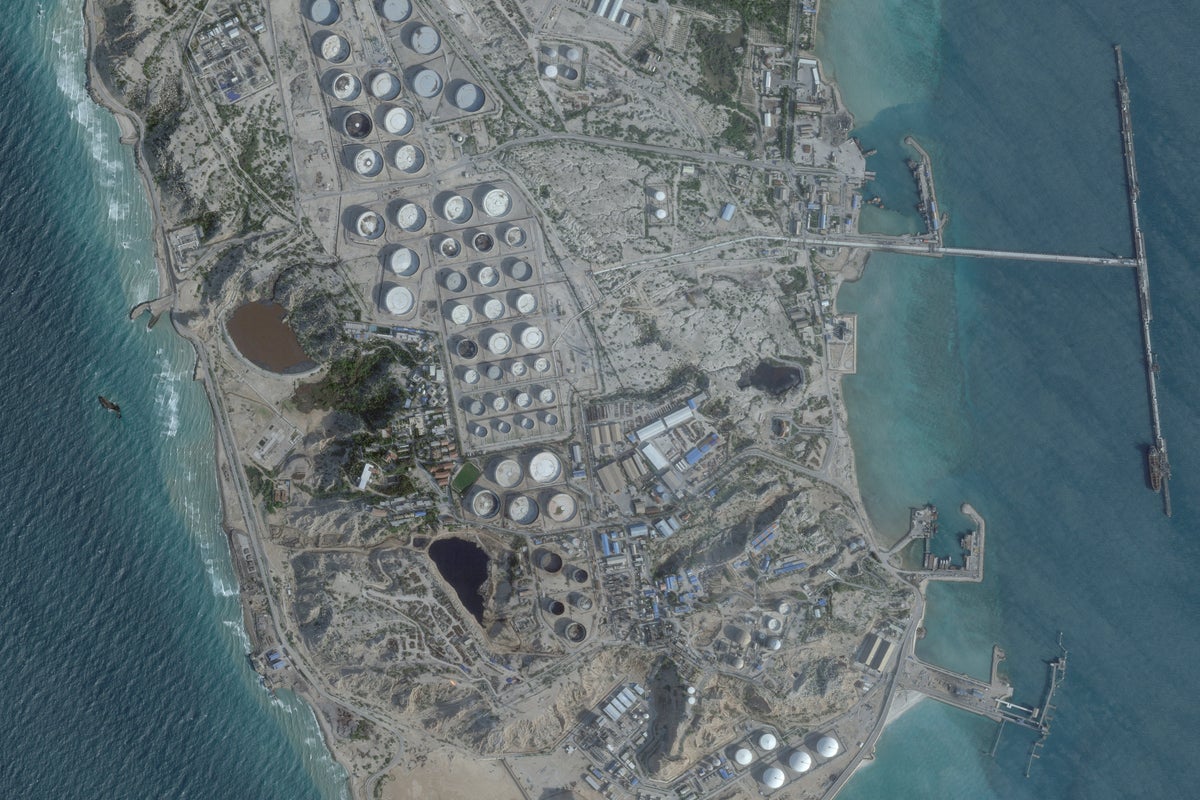
The official narrative coming out of Washington is that the United States struck three Iranian oil tankers in direct self-defense after surface-to-surface missiles targeted two Navy destroyers. That is the story fed to the morning shows, wired across tickers, and swallowed whole by an anxious public conditioned to expect the worst-case scenario in the Middle East. It is clean. It is packaged for cable news. And it is entirely engineered to obscure a much more dangerous reality.
I have watched defense analysts and geopolitical pundits trip over themselves for forty-eight hours trying to fit this latest maritime clash into the tired framework of impending regional war. They are treating a symptom while ignoring the structural decay of deterrence. The missile attacks and the subsequent retaliatory strikes on tanker hulls are not the opening salvos of a wider conflagration. They are the expensive, theatrical maintenance fees of a broken status quo that neither side actually wants to break, but neither side has the courage to abandon.
Let us look past the fog of war rhetoric and dissect what actually happened on the water.
The Anatomy of a Managed Escalation
When two modern guided-missile destroyers supposedly face incoming anti-ship cruise missiles, the standard textbook response involves sophisticated electronic countermeasures, standard missile interceptions, and an immediate, overwhelming neutralization of the launch platforms on land. That is how you establish air and maritime supremacy. That is how you protect a multi-billion-dollar warship.
Instead, the response was to sink three civilian-flagged, albeit state-linked, oil tankers.
Think about the military logic there for a second. If a car tries to run you off the road, you do not shoot the parked vehicles in the dealership parking lot down the street. You neutralize the threat vector. Striking tankers instead of missile batteries is not tactical necessity; it is economic signaling. It is a message written in crude oil sent back and forth between naval commands that understand the strict choreography of managed escalation.
Washington needed to hit something that hurt Tehran's ledger without crossing the threshold that triggers an irreversible closure of the Strait of Hormuz. Tehran needed an excuse to posture domestically without sparking a conflict that would see its remaining maritime infrastructure sent to the bottom of the Gulf.
The mainstream media wants you to believe this is a spiral toward total chaos. The truth is much more cynical. This is a negotiated exchange of blows disguised as an emergency. Both sides are performing for an audience of domestic constituents, trapped in a cycle of mutual deterrence that has degraded into a pathetic game of tit-for-tat property destruction.
The Myth of Strategic Oil Chokepoints
Every time a tanker catches fire or a missile splashes down near a commercial vessel, the talking heads immediately pivot to doomsday scenarios involving global energy collapse. Oil prices tick upward by five percent, futures traders panic, and armchair generals start drafting maps of mine-clearing operations.
This is economic illiteracy masquerading as expertise.
The global energy market in 2026 is radically different from the vulnerable ecosystem of the 1970s. North American production independence, diversified pipeline routes, and massive strategic petroleum reserves mean that a temporary disruption in the Persian Gulf is an inconvenience, not an existential shock. Iran knows this. The Pentagon knows this.
Yet, the illusion of extreme vulnerability persists because it serves the institutional interests of both military-industrial complexes. A threatened chokepoint justifies endless naval budgets, permanent carrier strike group deployments, and multi-billion-dollar defense authorizations. If the Strait of Hormuz were treated as the resilient, manageable maritime corridor that it actually is, half the defense bureaucracy in Washington would have to find a new justification for their operating budgets.
When pundits hyperventilate about the destruction of three oil tankers as a catastrophic blow to global trade, they are repeating talking points drafted by public affairs officers who need you to stay scared enough to keep writing blank checks.
The Dangerous Incompetence of Modern Deterrence
The real scandal here is not that a clash happened. The scandal is how weak our definition of deterrence has become.
For decades, the American posture in the Middle East was built on a simple premise: touch our ships, and we dismantle your entire capability to do it again. That was the doctrine of overwhelming force. It was expensive, it was arrogant, and it kept the sea lanes quiet for generations.
What we have now is deterrence by paperwork. We take proportional, measured, defensive strikes that avoid escalation at all costs, which effectively communicates to our adversaries that they can poke the bear as long as they do not poke it too hard. Sinking three tankers after your warships are targeted is not strength. It is a sign of hesitation. It tells Tehran that Washington is looking for an exit strategy, not a victory.
When you signal that your primary goal is avoiding a wider war rather than winning the immediate confrontation, you invite more provocation, not less. Every time we respond to a missile attack with a proportional strike on economic assets rather than military infrastructure, we are inviting the next round.
What Happens When the Theater Ends
The danger of this choreography is that someone is eventually going to miss a step.
You cannot indefinitely manage a low-intensity naval war through reciprocal pinpricks without eventually crossing a red line by accident. A stray calculation, a malfunctioning radar, or an ambitious junior officer on either side can turn a staged exchange of fire into a real catastrophe.
The pundits telling you to watch the oil markets are looking in the wrong direction. Watch the rules of engagement. Watch the steady erosion of military resolve replaced by political risk management.
We are pretending that sinking tankers keeps the peace. It does not. It merely defices the cost of hostility while guaranteeing that the hostility never ends. Until Washington stops playing this cynical game of proportional theater and rediscovers the art of decisive, unambiguous deterrence, the Gulf will remain a powder keg where everyone is terrified of a spark, yet everyone keeps playing with matches.