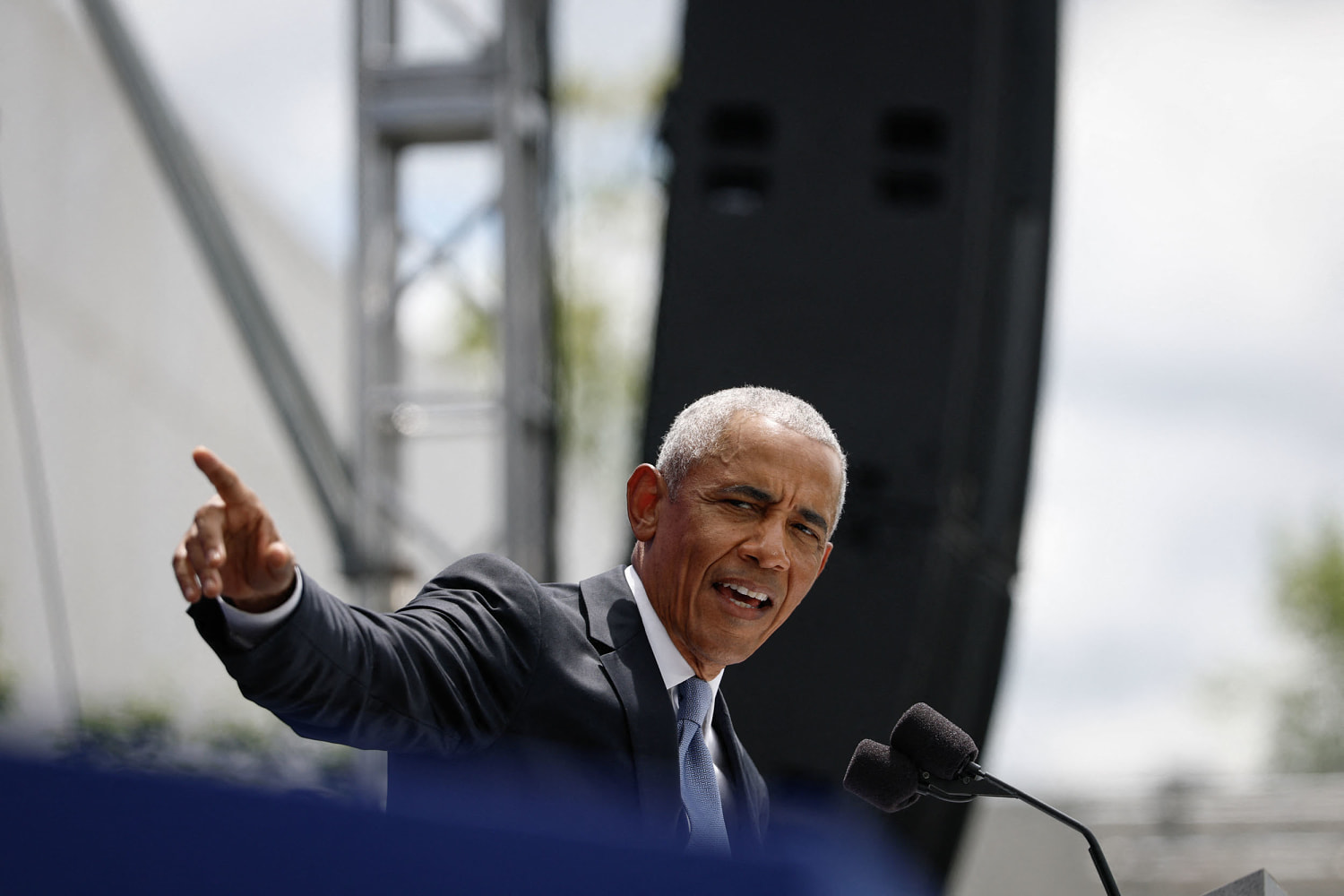
The federal search of Representative Ilhan Omar’s Washington home wasn't just another chapter in a decade-long partisan feud. It marked a fundamental structural shift in how executive power can be deployed against sitting members of Congress. When Homeland Security Investigations agents seized her passport, phone, and laptop under the mantle of a citizenship fraud inquiry, the administration signaled a willingness to cross legal lines that were previously unthinkable. Former President Barack Obama broke years of standard precedent to condemn the action as appalling, warning that converting federal law enforcement into an engine for political retribution sets a dangerous administrative baseline.
This conflict goes far deeper than political speeches. At its core, the dispute centers on the weaponization of denaturalization—a rare administrative remedy historically reserved for convicted war criminals and high-level fraudsters. By threatening to revoke the naturalized citizenship of an elected lawmaker based on immigration paperwork filed decades ago when she was a minor, federal authorities have opened a procedural Pandora's box. The fallout threatens to rewrite the rules of congressional immunity and executive oversight for decades.
The Machinery of Denaturalization
Stripping naturalized status from a United States citizen requires meeting an extraordinarily high burden of proof. Under immigration law, the government must demonstrate that naturalization was procured illegally or through intentional misrepresentation of a material fact. For decades, federal courts restricted denaturalization suits strictly to egregious cases. Prosecutions focused almost exclusively on former Nazis, international criminals, or individuals involved in terror financing networks.
The administrative pivot toward re-examining old immigration paperwork alters that standard completely. Federal investigators claim the current probe focuses on potential discrepancies in historical family documentation and tax records. Yet legal scholars point out that applying retroactively punitive scrutiny to paperwork processed decades earlier sets an unpredictable standard. Every naturalized citizen—regardless of public office or stature—could theoretically face federal review if administrative filings from childhood are subjected to fresh geopolitical scrutiny.
The technical barrier is daunting. The Justice Department must prove not just that an error occurred on a form, but that the individual acted with deliberate intent to deceive federal authorities. When an individual derives citizenship automatically through a parent before turning 18, establishing personal intent to defraud becomes legally complex.
Escalation in Executive Privilege
The raid on a sitting congresswoman’s residence during an active reelection campaign breaks years of unwritten federal protocol. Department of Justice guidelines have traditionally mandated extra judicial caution when executing search warrants on elected officials, particularly in close proximity to elections.
Federal agents removed personal electronics and passports, effectively paralyzing the lawmaker's ability to conduct routine constituent work and legislative business. While executive officials maintain the probe operates without white-house direction, public remarks from high-ranking department figures suggest otherwise. Former border officials and department heads openly discussed denaturalization and deportation options across national media circuits before formal indictments or evidentiary findings were even filed in court.
| Agency / Branch | Primary Mechanism | Stated Intent | Constitutional Risk |
|---|---|---|---|
| Department of Justice | Federal Search Warrants | Evidentiary collection on administrative filings | Chilling effect on legislative speech |
| Homeland Security | Denaturalization Review | Fraud verification on naturalization papers | Erosion of naturalized citizen rights |
| Federal Judiciary | Sealed Record Review | Oversight of executive search procedures | Loss of judicial neutrality under pressure |
This approach bypassing standard administrative subpoenas in favor of high-profile search warrants creates an alarming blueprint. If administrative paperwork discrepancies justify the execution of search warrants on congressional officers, the boundary separating legitimate law enforcement from political intimidation dissolves entirely.
The Flaws in the Defense Strategy
Opponents of the investigation have predominantly framed the raid through a partisan lens, relying heavily on political pushback and public media campaigns. While calling out political bias galvanizes a political base, it leaves the legal flank exposed.
Relying entirely on claims of political retribution fails to counter the administrative machinery operating within the federal bureaucracy. The Department of Homeland Security operates with vast statutory latitude. Challenging search warrants requires technical legal defense focused on Fourth Amendment overreach, procedural irregularities, and lack of probable cause rather than public relations campaigns.
Furthermore, framing the issue purely as a personal defense risks ignoring the larger systemic threat. When political figures treat federal investigations strictly as personal attacks, they overlook the broader legal precedents being established. The primary threat isn't just the impact on a single congresswoman; it is the precedent allowing administrative immigration reviews to serve as weapons against political dissent.
Procedural Hurdles and Sealed Filings
As federal judges weigh whether to unseal the search warrant affidavits, the legal battlefield is shifting toward procedural transparency. Government attorneys have pushed to maintain secrecy over underlying filings, citing ongoing investigative integrity.
Yet keeping search affidavits under seal prevents independent legal evaluation of whether probable cause actually existed to justify raiding a sitting lawmaker's residence. Without public disclosure of the initial evidence, the public is left guessing whether the search was supported by concrete proof or thin speculation.
Broader Constitutional Fallout
The institutional consequences extend far beyond Minnesota or Washington. If denaturalization mechanisms are normalized as tools for political discipline, the structural firewall protecting naturalized Americans disappears. Naturalized status would no longer represent permanent citizenship, transforming instead into a revocable privilege dependent on political favor.
Constitutional protections were designed precisely to prevent the executive branch from deploying law enforcement machinery against legislative opponents. When those boundaries collapse, the balance of power breaks down completely.
Federal courts now face a critical responsibility. Judges must rigorously review sealed filings and hold federal agencies to strict evidentiary standards. Allowing administrative fraud probes to bypass standard procedural protections threatens the foundational independence of the legislative branch.
The true danger lies in letting this strategy become standard practice. Once established, future administrations will inherit a fully operational mechanism to silence critics and target opponents under the cover of routine administrative enforcement.
This video provides important analysis regarding the political and legal fallout surrounding the federal investigation.
Obama calls Trump's investigation into Ilhan Omar 'appalling'