The floor vibrates in a heavy, rhythmic pulse beneath your boots. It is not the rumble of an earthquake or the groan of a dying bridge. It is the steady, insatiable heartbeat of a heavy-industry floor in northern China, where three-story-tall cranes swing containers of raw gray powder through dust-choked air.
Meet Chen. He is forty-two years old, wearing a faded cotton jumpsuit and a stained yellow hard hat. For two decades, Chen’s lungs have tasted the metallic tang of processing plants. He does not spend his evenings reading geopolitical strategy papers from Washington or listening to cable news anchors debate supply chain bottlenecks. He just knows that when the shift supervisor barks an order, the raw mineral moves. It goes into the furnace. It comes out as a purified, dull-gray block that the modern world cannot live without.
Chen is the invisible foundation of a rivalry that defines our century.
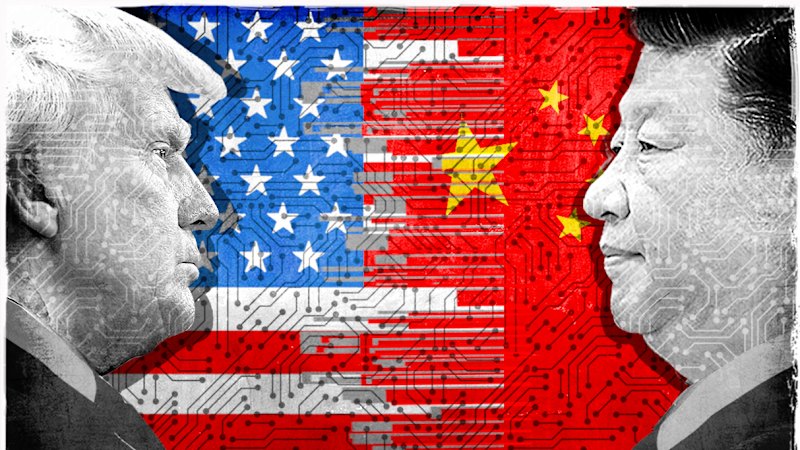
We talk about the trade war between Washington and Beijing as if it were a high-stakes poker game played by men in tailored suits across mahogany tables. We track tariffs like ticker tape. We count microchips the way cold war historians once counted warheads. But that is a distraction. The real contest is not happening in the boardroom. It is happening in the dirt, in the furnace rooms, and inside the quiet laboratories where the physical realities of the twenty-first century are forged.
And right now, Beijing holds the pen.
Consider what happens next: a smartphone leaves a factory in Shenzhen, carrying rare earth magnets inside its tiny vibration motor. A wind turbine spins off the coast of Denmark, its generators reliant on permanent magnets that cannot be built without materials refined almost exclusively in Asia. Every electric vehicle gliding silently down a suburban street in Ohio carries a battery chemistry and a mineral footprint that traces back to a Chinese processing line.
This is not an accident of geography. It is the result of a thirty-year bet that everyone else laughed at.
Back in the 1990s, while Western nations were outsourcing dirty industries to clean up their domestic horizons, Beijing looked at the sludge and the toxic runoff and made a cold calculation. They decided that whoever controls the dirt controls the future. While others chased the clean, weightless profits of software and financial engineering, China locked down the physical pipeline of the periodic table.
(Note: When I speak of a thirty-year bet, I am describing the deliberate industrial policy codified through successive five-year plans starting in the late twentieth century, systematically consolidating mining and refining infrastructure.)
Walk through a rare earth processing facility in Inner Mongolia, and you will understand why this dominance is so difficult to shatter. The process is a nightmare of chemistry. You do not simply dig these elements out of the ground like gold nuggets. They are bound together in stubborn chemical amalgams, locked tightly inside complex ores alongside radioactive thorium. Extracting them requires hundreds of stages of acid washing, solvent extraction, and precise thermal separation.
It smells like sulfur and burning copper. It stains your skin yellow if you touch the sludge. It ruins local water tables if mishrashed.
Western environmental regulators looked at that reality twenty years ago and blanched. Who wants a toxic landscape in their backyard? Who wants to explain to voters why a river turned milky white? So, the West stopped digging. They stopped refining. They closed their mines, dismantled their supply chains, and outsourced the mess. They traded industrial sovereignty for a clean conscience and cheap consumer goods.
Now, the bill has arrived.
Washington has tried to wake up. Billions of dollars are flowing into domestic mining initiatives, recycling startups, and grants for alternative battery chemistries. Politicians stand at podiums in red-state America, promising a manufacturing renaissance. They point to new factory floor blueprints and talk about supply chain resilience.
Paper does not build mines. Permits do.
In the United States, opening a new rare earth mine or processing facility means navigating a labyrinth of environmental impact statements, local zoning battles, public hearings, and federal appeals that routinely stretch past a decade. You can pass all the legislation you want, but you cannot legislate away the physics of chemistry or the glacial pace of western bureaucracy.
Beijing has no such friction. When a strategic resource is deemed essential to national security, the bureaucratic machinery moves with the speed of an avalanche. Land is cleared. Power grids are rerouted. Workers like Chen are mobilized by the tens of thousands. Entire cities pivot overnight to accommodate new processing hubs.
It is a terrifying display of state-directed will.
We comfort ourselves with the belief that innovation will save us. We tell ourselves that American ingenuity will invent a substitute, that we will engineer our way out of dependence through software optimization or lab-grown alternatives. Sometimes, innovation works miracles. Silicon Valley has performed digital alchemy a thousand times before.
But physics is stubborn. You cannot code a permanent magnet. You cannot write an algorithm to replace dysprosium or neodymium inside a high-performance electric motor. You need the rock. You need the acid. You need the furnace.
And right now, China controls the entire ecosystem of that transformation, from the excavator in the pit to the final ingot loaded onto a container ship. They do not just mine the materials; they train the metallurgists, build the specialized machinery, and master the proprietary chemical recipes that keep the yields high and the costs low. They hold a generational monopoly built on sweat, poison, and relentless, uninterrupted focus.
The implications ripple outward into every facet of modern existence.
When geopolitical tensions flare across the Taiwan Strait or trade negotiations break down in Geneva, the weapon is not a missile. It is a customs form. It is a sudden, quiet tightening of export quotas on critical minerals. It is Chen’s furnace running at half capacity because a shipment license was delayed in Beijing. The lights flicker in Detroit. The production line stutters in Stuttgart.
We built a globalized economy on the promise that everyone would specialize in what they do best, assuming the market would always provide. We forgot that national security has a weight, and that weight is measured in tons of raw, unprocessed earth.
Chen finishes his shift. He strips off his yellow hard hat, wipes the gray dust from his forehead with the back of a calloused hand, and walks out into the cool evening air of industrial Hebei. Above him, the sky is bruised and hazy, stained by the perpetual smoke of a nation reshaping the globe one furnace at a time.
He does not know how the geopolitical story ends. Neither do we. But as long as the world runs on silicon, steel, and rare earth, the pen remains in his hand.