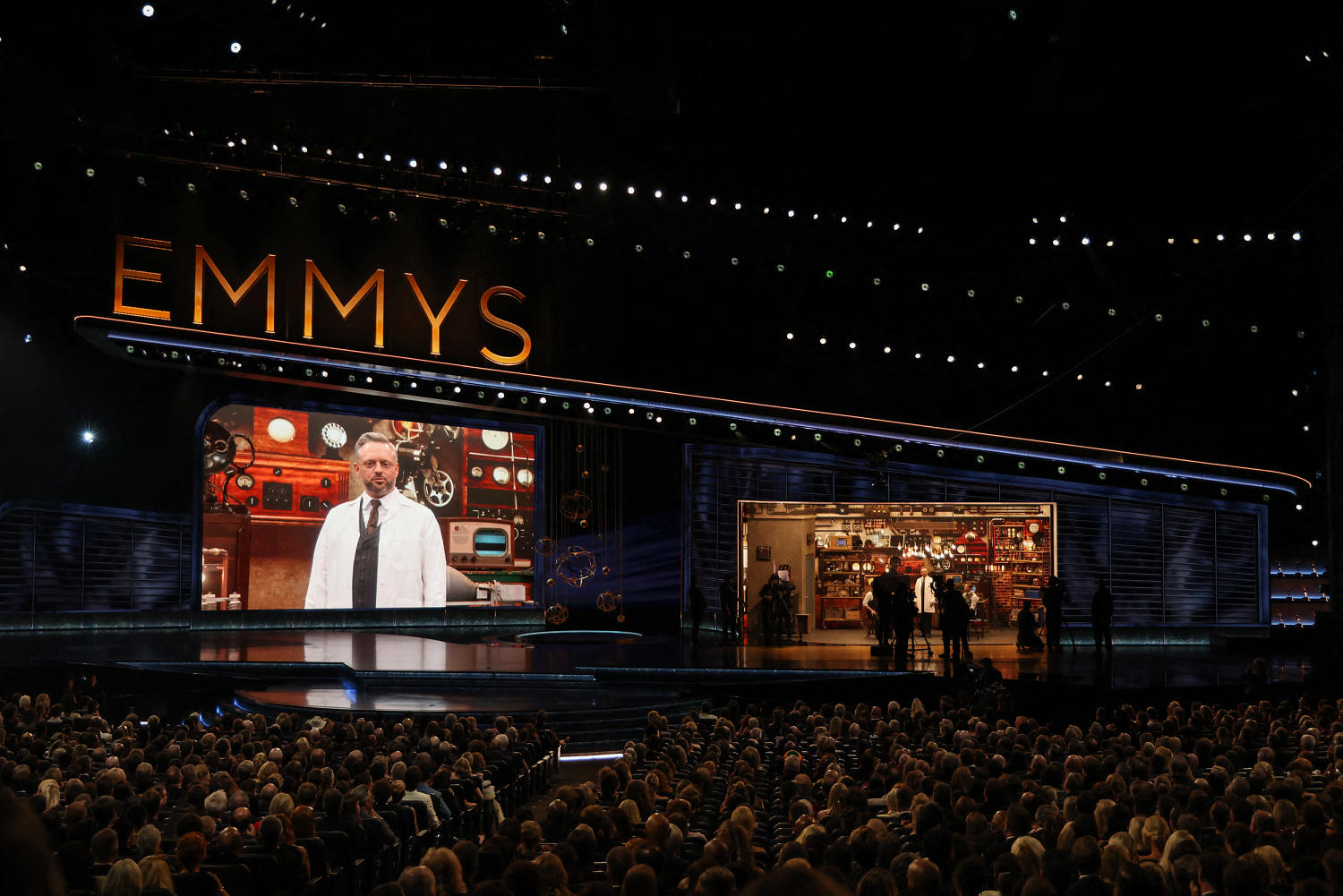
The envelope weighs practically nothing. Paper and ink. Yet inside that sealed flap rests a shift in gravity that can alter a career, resurrect a stalled budget, or validate five years of sleep deprivation in a cramped writers room.
Outside the auditorium, velvet ropes hold back a restless tide of flashing cameras and shouted names. Inside, the air conditioning hums at a clinical chill, designed to keep tailored wool and heavy silk from wilting under the thermal blaze of broadcast lights. Every person in these rows knows the arithmetic of ambition. They know how many drafts were crumpled, how many scenes were shot in freezing rain at three in the morning, and how fragile public adoration really is.
Tonight, the conversation circles back to a familiar tension.
Defending a throne is entirely different from storming the gates. When a series arrives out of nowhere, wrapped in the unexpected armor of critical acclaim, the victory feels like an ambush. Nobody saw it coming. The audience adopts it as a secret shared among the observant. But coming back to repeat that triumph? That requires holding lightning in a bottle while the glass is cracking.
Consider the quiet panic backstage.
The reigning champion walks the carpet with a polite, practiced smile, carrying the invisible anchor of expectation. Every review from the previous season is a ghost whispering about how the current chapter falls short. Perfection is a cruel standard because once an audience grants it, they expect nothing less than an exact replica of that initial lightning strike, delivered with fresh surprise.
Across the aisle sit the challengers. Among them, a surging newcomer threatens to rewrite the hierarchy. Stories spread about a sprawling narrative that caught fire late in the season, pulling in viewers who swore they were done with serialized prestige television. It is the kind of momentum that feels unstoppable until it hits the cold reality of a voting body prone to nostalgia.
Think about the sheer human cost of these productions.
At four in the morning on a soundstage three miles outside the city, a gaffer checks a monitor while drinking lukewarm coffee from a cardboard cup. They will not walk the red carpet. Their names will scroll past in a blur at the end of the credits while viewers reach for the remote. Yet the texture of the show, the bruised shadows under an actor's eyes, the exact amber hue of sunset filtering through a dusty window—that belongs to them. The Emmys are often framed as a celebration of famous faces, but beneath the diamonds and tailored tuxedos lies an army of artisans who measure their lives in call sheets and wrapped cables.
Awards season thrives on narrative arcs. The industry loves a redemption story almost as much as it loves an unstoppable dynasty. When the nominations were announced months ago, the trade publications erupted with predictions, charts, and statistical breakdowns. Pundits parsed every frame for clues about voter psychology.
None of those spreadsheets capture the feeling in the room right now.
The lights flicker. A low hum ripples through the packed auditorium. Presenters step up to the podium, their scripts clutched tightly in trembling hands. For a few hours, millions of viewers at home watch through glass screens, turning collective art into an arena sport.
When the winner is finally announced, the cheer that erupts is rarely just joy. It is an exhale. Years of doubt, executive notes, rejected pitches, and grueling physical labor condense into a ten-second walk to the stage.
And then the music swells. The broadcast cuts to a commercial. The lights come up, and the machinery of storytelling grinds forward once more, already hunting for the next spark in the dark.