The air inside Arthur Ashe Stadium does not circulate. It hangs. It traps the collective breath of twenty-three thousand people, mixing the scent of melted honey roasted peanuts, damp concrete, and electric, jagged anticipation.
Tennis is supposed to be a game of geometry. Angles, velocity, spin, depth. But in the late rounds of a Grand Slam, it stops being about physics and starts being about oxygen. Who has it. Who is running out. And who is willing to suffocate just a second longer than the person on the other side of the net.
Aryna Sabalenka knew the suffocating feeling intimately.
One year ago, she had stood on the precipice of this exact tournament, her hands burning, her chest heaving, watching a title slip through her fingers because the noise inside her own head finally grew louder than the crowd. Loss leaves a residue. It stains the locker room lockers, the practice courts at Flushing Meadows, the quiet hotel rooms where the ceiling fan spins out a hypnotic rhythm at three in the morning.
Across the court stood Linda Noskova.
Nineteen years old. Unburdened. Dangerous. The kind of young player who treats a major quarterfinal not as a terrifying crucible, but as an invitation. Noskova didn't care about Sabalenka's ghosts. She didn't care about the runner-up trophy from the previous autumn or the terrifying reputation of the Belarusian power-hitter. She just hit the ball. Hard. Deep. Flat.
For the first hour, the match felt less like a sporting event and more like a high-speed collision on a dark highway.
Consider what happens when an immovable object meets an irresistible force that is still figuring out how to brake. Noskova came out swinging with total, terrifying freedom. Her serve cut through the humid New York night like a scythe. Every time Sabalenka tried to assert her authority—driving those signature, bone-rattling forehands crosscourt—Noskova met fire with fire, absorbing the pace and redirecting it with clinical precision.
The first set slipped away. Just like that.
If you have ever stood in a stadium when a heavy favorite starts to wobble, you can feel the exact second the mood of the crowd shifts from reverence to predatory curiosity. People love greatness, but they are secretly addicted to the spectacle of a titan falling. A murmur ripples through the concrete bowl. The whispers start. Is it happening again? Can she not close?
Sabalenka didn't panic. Or at least, if she did, she hid it beneath a mask of absolute, terrifying fury.
This is where the difference between a contender and a champion lives. It is not in the absence of fear; it is in the weaponization of it.
Between sets, the changeover is only ninety seconds. Ninety seconds to wipe the salt from your eyes, listen to a coach who is shouting over the roar of a restless crowd, and convince your nervous system that you are not in danger, even though your heart rate is hovering near one hundred and eighty beats per minute.
Sabalenka sat down. Towel over her head. Total isolation.
When she stood back up, the geometry of the match shifted.
Power is seductive, but patience is lethal. Sabalenka stopped trying to blast Noskova off the court and started breaking her down, brick by heavy, punishing brick. She targeted the teenager's backhand, injected more height and heavy topspin into her rallies, and waited for the inevitable micro-hesitation. At this level, matches are rarely won by clean, breathtaking winners; they are won by the person who refuses to blink first.
Noskova fought. God, she fought. Every baseline exchange felt like a physical contest, sneakers squeaking against the DecoTurf, racquets whistling through the humid air. But experience has a weight all its own. It is a dense, heavy armor.
Break point. Second set.
Sabalenka unleashed a return so deep it bit the baseline chalk. Noskova scrambled, stretched, lunged, and floated a desperate backhand slice just inches wide.
The stadium erupted.
The third set was a masterclass in controlled detonation. Sabalenka's serve, which once used to betray her in moments of acute pressure, became an iron-clad anchor. Ace. Service winner. Unreturned ball. She marched through her service games with brisk, terrifying efficiency, starving Noskova of rhythm, starving her of hope.
By the time the final ball clipped the net and dropped harmlessly on the teenager's side, the scoreboard read a hard-fought story: 6-2, 4-6, 6-1.
Survival.
But in the arena of a Grand Slam, survival is just a ticket to a harder test.
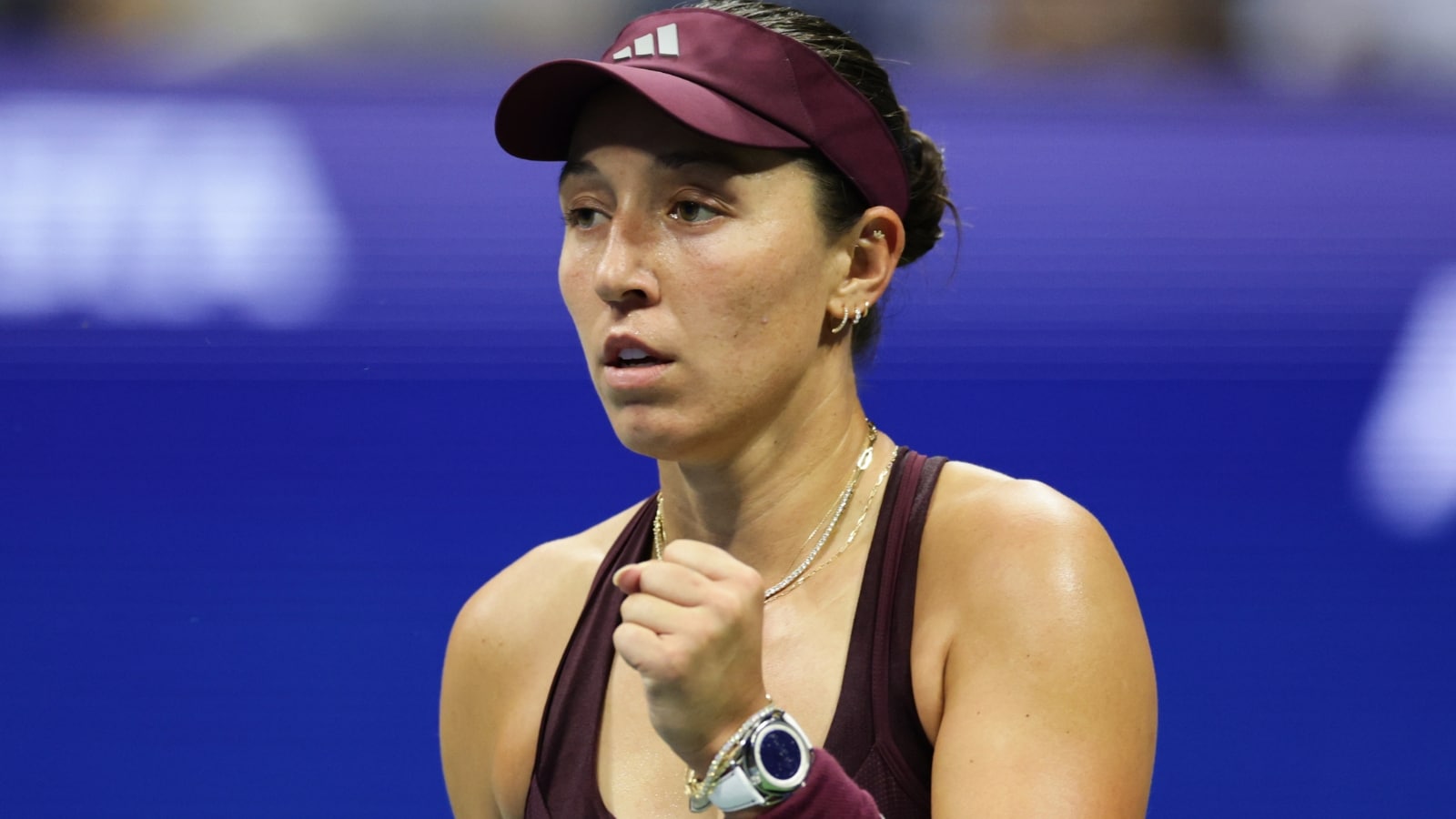
Because waiting in the semi-final was Jessica Pegula.
If Sabalenka is a freight train barreling down the tracks without brakes, Pegula is the ultimate switchboard operator, calm, methodical, capable of redirecting that raw kinetic energy right back at the sender. Pegula does not beat you with brute force; she beats you with geometry, consistency, and an unnerving lack of panic. She dissects power players by making them play one extra ball, and then another, until the frustration rots their game from the inside out.
The rematch was set.
Sabalenka walked off the court into the tunnel, her shoulders wrapped in ice, her breath finally slowing down. The cameras flashed. The journalists waited with their notebooks open, desperate for quotes about revenge, about destiny, about the demons of the past.
She offered none of it. She simply walked back into the darkness, knowing that the real fight—the one against the noise, the pressure, and the ghosts of Flushing Meadows—was only just beginning.