The screen in front of him does not blink. It hums with a steady, low-frequency pulse, casting a pale, ghost-blue glow across a room where silence is the only currency that matters. Thousands of miles away from the gilded chambers of Paris, in the stark, climate-controlled quiet of a tactical operations room, an officer watches a blip trace a sterile arc across a digital map.
Outside, the desert night is pitch black, swallowing the horizon whole.
This is where abstract geopolitics crashes into physical reality. This is where a press release from a ministry transforms into spinning radar dishes and the taut, coiled tension of men and women waiting for something that hopefully will never happen.
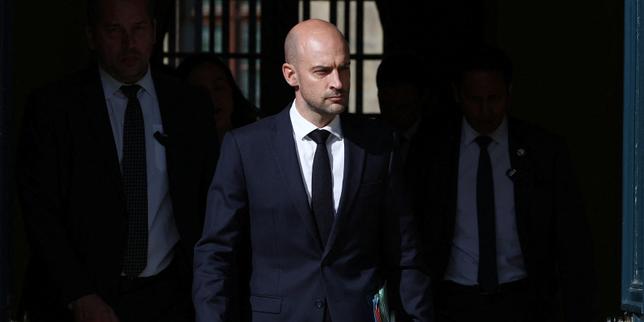
When French Foreign Minister Jean-Noël Barrot stepped before the microphones to address the deployment of French military assets tied to Saudi Arabia, he chose his nouns and verbs with the meticulous precision of a bomb disposal technician. Every syllable was weighed. Every implication was scrubbed raw. The message was delivered with unyielding clarity: whatever assets France provides, whatever hardware or expertise crosses the Mediterranean and anchors itself in the sands of the Arabian Peninsula, it is strictly, categorically, unequivocally defensive.
No swords. Only shields.
To the casual observer scanning headlines over morning coffee, the distinction might sound like diplomatic window dressing. A semantic fig leaf designed to soothe domestic critics and appease regional rivals. But in the razor-thin margins of international conflict, words are structural engineering. A single misconstrued adjective can tilt a regional cold war into a hot conflagration.
Consider what happens next when a missile breaches a sovereign frontier.
In that fraction of a second, nobody checks the diplomatic credentials of the interceptor. Physics takes over. Radar locks. Thrusters ignite. Kinetic energy meets kinetic energy in a blinding flash of white-hot violence fifty thousand feet above the earth. The debris rains down on sand or stone, indifferent to politics.
This is why Barrot’s declaration matters. It is a fence line drawn in the dark.
For decades, the Persian Gulf has been a crowded theater where major powers play high-stakes chess with real pieces. Oil tankers drift like ghost ships past heavily armed frigates. Fighter jets carve silent white scars across the stratosphere. Every nation with a stake in global commerce maintains a standing garrison of interests in the region, hovering like uneasy ghosts over vital shipping lanes and subterranean pipelines.
France has long walked a lonely, distinct path in this theater. Eschewing the blunt-force hegemony of larger superpowers, Paris has historically cultivated an independent posture—a diplomatic tradition rooted in Gaullist self-reliance. It is a posture that whispers rather than shouts, yet insists on being heard in every capital from Riyadh to Tehran.
Yet, walking that path requires an extraordinary balancing act. You cannot sell advanced defense technology, share intelligence, and station personnel in a volatile monarchy without becoming inextricably entangled in its fate. When the regional temperature rises—when drones buzz across borders and proxy conflicts flare into open artillery duels—the margin for neutrality evaporates.
This is the hidden cost of presence.
Imagine being the commander of a French air defense detachment stationed near a critical energy infrastructure hub in the desert. You are not there to project power. You are not there to punish adversaries or redraw maps. You are there to watch. To calculate trajectories. To ensure that if a stray projectile threatens civilian lives or vital economic arteries, your systems can intercept it before catastrophe strikes.
It is a paradox of modern deterrence: you must prepare intensely for war precisely so you never have to witness it.
The public rarely sees the psychological toll of this posture. They see the pomp of ministerial visits, the handshakes in marbled halls, the glossy brochures of defense contractors. They do not see the nineteen-year-old radar technician staring at a cathode-ray simulation until his eyes water, wondering if tonight is the night the alarm finally shrieks for real. They do not see the quiet conversations between foreign ministers at midnight, where diplomacy is conducted not through microphones, but through hurried phone calls and encrypted teletype messages.
Barrot’s affirmation was designed to send a dual signal. To regional partners, it was an assurance of steadfastness—a reminder that France honors its security commitments and stands shoulder-to-shoulder with allies facing existential threats. To regional rivals, it was an equally deliberate boundary—a declaration that French steel is not marching toward an offensive frontier, that Paris will not be drawn into adventures of escalation, and that every asset deployed carries a defensive ceiling that cannot be breached.
It is a very narrow ledge to walk upon.
History is littered with the bones of nations that thought they could control the escalatory ladder once a conflict began. The first step is always calculated. The second step is reactive. By the third step, momentum has replaced strategy, and leaders find themselves sliding down a greased chute toward outcomes none of them originally desired.
By tying French military involvement so explicitly to the concept of defense, Barrot was attempting to saw off the bottom rungs of that ladder.
We forget how fragile peace actually is. We treat it like furniture—solid, heavy, permanent. We sit on it, lean our weight against it, and assume it will hold us indefinitely. But peace in the modern Middle East is not furniture. It is a spiderweb strung across a hurricane. Every tremor in Yemen, every drone launch in the Levant, every political calculation in Washington or Tehran sends shockwaves across the fragile threads.
When a foreign minister declares that his nation's weapons will only catch incoming blows rather than deliver them, he is repairing a frayed strand of that web.
The mechanics of a defensive shield are inherently reactive, which makes them politically vulnerable. Critics will always argue that defense is not enough, that true security requires preemption, that a nation must strike first to be safe. Others will argue that any military presence at all is an invitation to entanglement, a magnet for violence that draws foreign quarrels onto domestic shores.
Both arguments miss the psychological core of what is happening in the Gulf right now.
The leaders in Riyadh are not looking for an offensive vanguard; they are looking for stability anchors. They are navigating a massive, generational transition away from pure resource dependency toward a diversified economic future. You cannot build futuristic cities, tourist hubs, and technological ecosystems while ballistic debris is falling out of your sky. Stability is the prerequisite for ambition.
And France, with its unique diplomatic cachet, is uniquely positioned to provide that anchor without demanding ideological submission in return. It is a transactional relationship, certainly, but it is also one bound by mutual necessity.
Back in the command center, the officer blinks. The blue blip on the screen fades into the static, replaced by the clean, quiet geometry of empty air space. For now, the sky is clear. For now, the radar tracks nothing hostile.
Outside, the first faint smear of dawn begins to bleed across the eastern horizon, turning the vast expanse of sand from obsidian to a bruised, violet gray. The wind picks up, carrying fine dust against the reinforced glass of the bunker, a whispered reminder of the environment outside—harsh, unyielding, and indifferent to human designs.
Jean-Noël Barrot’s words will not stop a missile. Words never do. But they dictate who fires back, and why, and under what flag. They establish the moral and legal architecture that prevents a localized skirmish from cascading into a global disaster.
In a world addicted to escalation, choosing to hold a shield instead of a spear is an act of radical discipline. It is quiet. It is unglamorous. It does not make for rousing cinema or triumphant monuments.
It just keeps people alive.
As the sun crests the horizon, casting long, sharp shadows across the concrete fortifications, the morning shift begins. The coffee is poured. The screens are monitored. The silent vigil continues, anchored entirely by a promise made in a distant European capital—a promise that when the steel flies, it will only ever rise to catch the blow, never to deliver it.