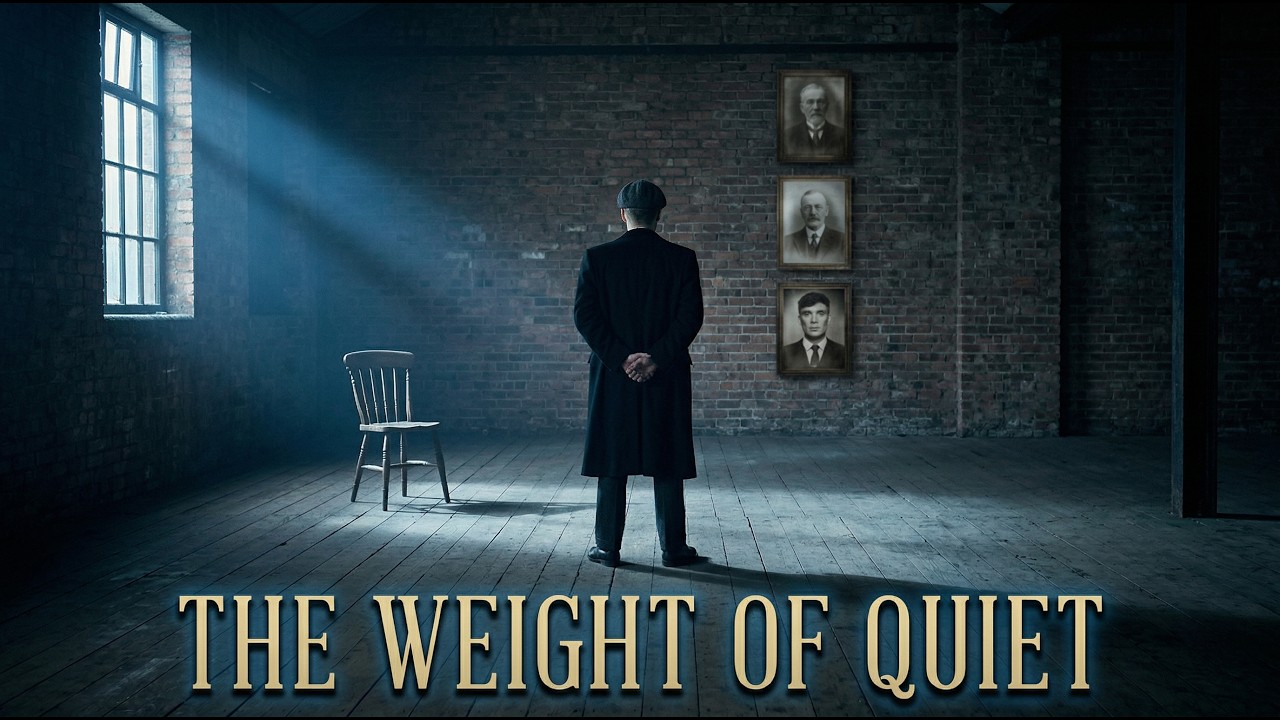
The mahogany table in the seventh-floor conference room is older than most of the staff economists. It bears faint, circular scars from decades of coffee cups belonging to people who once held the steering wheel of the nation's financial destiny. Right now, at two o'clock on a Tuesday afternoon, the room is entirely silent except for the low, rhythmic hum of the air conditioning unit struggling against an unseasonable heatwave outside.
Elena sits at the head of that table. Her jacket is draped over the back of her chair, her shirtsleeves rolled up, and her eyes are fixed on a blinking red light on her encrypted desk phone. Downstairs, protesters are chanting slogans through megaphones, their voices muffled by double-paned acoustic glass. Across town, in a limestone building lined with flags and television cameras, the chief executive of the country has just finished a press conference. In that broadcast, delivered with a theatrical sigh and a sweeping gesture toward the evening news anchors, the leader of the nation called the central bank’s recent policy choices "stubborn," "out of touch," and "actively hostile to working families."
The phone rings.
Elena does not pick it up. She knows who is on the other end, or at least she knows whose office is orchestrating the call. It is a polite inquiry from a junior undersecretary asking if the governor might reconsider the trajectory of benchmark interest rates before the upcoming legislative session. It is framed as a conversation. It is intended as an eviction notice.
We live in an era where the architecture of modern finance is quietly buckling under the weight of political impatience. To understand why independent central banks are suddenly fighting for their survival, we have to look past the dense econometric models, the yield curves, and the alphabet soup of monetary policy terms. We have to look at human nature.
The Original Temptation
Democracy is built for the short term. By design, it is a system that responds to the immediate heartbeat of the electorate. If voters are hurting—if grocery prices are climbing, if mortgages are punishingly expensive, if jobs are scarce—they punish the politicians in power. This is the great engine of democratic accountability.
But money is different. Money requires a horizon that stretches far beyond the next election cycle.
Imagine a baker who inherits an oven that can bake bread for fifty years, provided the temperature is managed with absolute discipline. If the baker turns the heat up too high, the loaves come out fast and massive. Everyone in the village rejoices for a week. They are eating more than ever. But inside the brickwork, micro-fractures are forming. By year three, the oven cracks clean down the middle, rendering it useless for the next four decades.
Politicians are perpetually incentivized to turn the heat up. Low interest rates feel like a sugar rush. They juice asset prices, make borrowing cheap, create illusory booms, and keep unemployment looking pristine just as voters head to the polling booths. The bill for that sugar rush always arrives later—usually when a different government is in office, or when the inflation monster breaks out of its cage.
This fundamental conflict of interest birthed the modern concept of central bank independence. Decades ago, painful historical lessons taught global leaders a hard truth: if you let politicians control the printing press and the interest rate dials, they will invariably steer the economy straight into an inflationary iceberg to win a Tuesday election.
So, a fragile firewall was constructed. Unelected technocrats were handed the keys to the vault. Their mandate was blunt and deeply unpopular: take away the punch bowl just as the party is getting good. Raise rates when everyone wants them low. Act as the institutional adult in the room, insulated from the populist winds blowing outside.
The Debt Trap of the Modern State
That firewall is now burning.
To understand why central bankers find themselves under siege across the globe, follow the debt. Over the past fifteen years, governments gorged themselves on historically cheap borrowing. Central banks, first to fight financial contagion and later to cushion pandemic-shattered economies, pinned interest rates near zero for an unprecedented stretch. Trillions of dollars in public debt piled up on sovereign balance sheets like snow accumulating on a weak roof.
Then, inflation roared back to life. It was fueled by supply chain shocks, massive fiscal stimulus, and geopolitical fractures. To combat that inflation, central banks had to perform a brutal about-face. They hiked interest rates at a historic velocity.
Suddenly, the cost of servicing that mountain of government debt exploded.
Consider what happens next in the halls of power. A finance ministry staring down a ballooning national deficit looks at its options. It can raise taxes—political suicide. It can slash popular public services—electoral poison. Or it can pressure the central bank to slash interest rates and monetize the debt, effectively printing money to pay the government's bills.
The pressure is rarely cartoonish. It does not begin with armed guards or midnight decrees. It begins with institutional erosion. It looks like a governing party questioning the competence of the central bank's research department. It looks like legislators proposing bills to subject monetary policy decisions to parliamentary veto. It looks like public smear campaigns designed to delegitimize economists who dare to forecast higher inflation if spending continues unchecked.
In countries from emerging markets to G7 economies, the playbook is remarkably uniform. When an independent institution stands between a populist leader and easy money, the institution is systematically starved of authority, discredited in the media, or packed with loyalist appointees who know how to nod at the right moments.
The Cost of Surrender
What happens when the firewall finally collapses? We do not have to guess. Economic history leaves a paper trail written in hyperinflation, capital flight, and shattered middle-class savings.
When a central bank loses its independence, its credibility vanishes overnight. Financial markets are ruthless reading machines. They watch the governor's chair. The moment investors suspect that interest rate decisions are being dictated by a finance minister worried about upcoming polls rather than core inflation data, they demand a higher risk premium to hold that nation's currency or bonds.
Currencies slide. Import prices spike. The very inflation that politicians claimed they were trying to ease through cheap credit becomes entrenched, eating away at the purchasing power of the poorest citizens.
Elena knows this. She looks at the blinking red light on her phone and thinks about her grandmother, who lived through a period of currency collapse where a wheelbarrow of cash bought a loaf of bread. The mechanics of financial ruin are boring until they happen to you. They happen in spreadsheets and bond auctions before they happen at the grocery checkout counter.
Yet, the irony of the central banker's life is profound. When Elena and her peers do their jobs correctly, nobody loves them. If they raise rates to kill an inflationary spiral, they trigger a slowdown. Homebuyers curse their names. Small business owners struggling for credit curse their names. Politicians campaign against them. They are the designated villains of the macroeconomic story.
They take the blows so the currency survives.
The Quiet Choice
The red light stops flashing. The office goes quiet again.
Elena turns back to her desk. On her monitor is a draft of the upcoming policy statement—a dry, uncompromising document that holds the line on interest rates for another quarter, despite the political storms raging outside. It will trigger headlines tomorrow morning. Editorial boards will weigh in. Markets will react. The pressure will intensify.
She reaches for her cold cup of tea, takes a sip, and starts editing the third paragraph. There are no cameras in her office. There is no cheering crowd downstairs for the technocrats who choose the harder, correct path over the popular, destructive one. There is only the steady tick of the clock, the weight of the mahogany table, and the quiet realization that the most important defenses of a free and stable society are often the ones ordinary people never get to see.