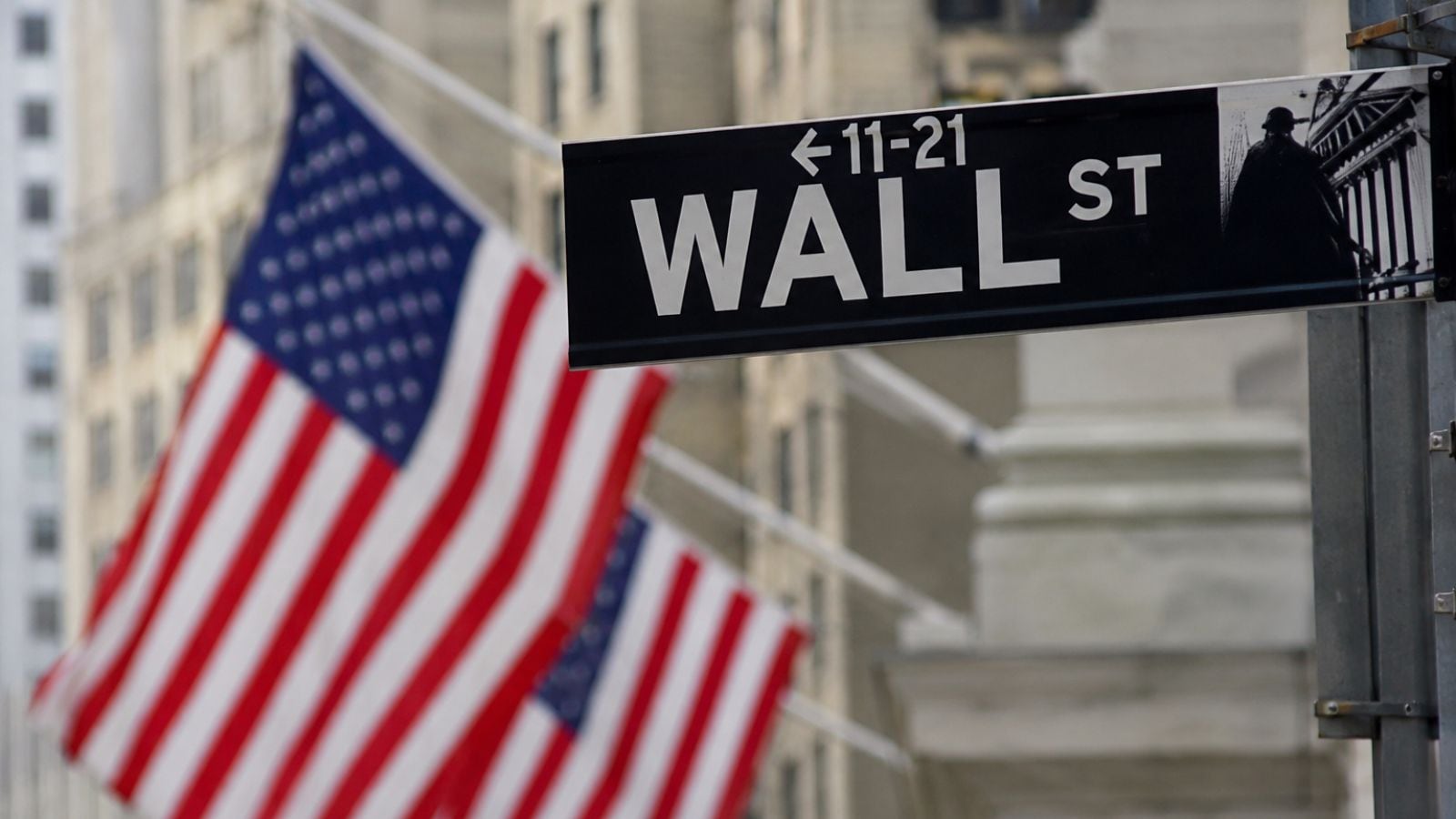
Red.
Before the coffee even finishes dripping into the carafe in a cramped Chicago apartment, before the sun clears the rooftops of Queens, the screens glow a bruised, insistent crimson that makes your stomach drop before your brain registers why. You squint at the pre-market ticker. Nasdaq futures are bleeding out, down more than a percentage point before the opening bell has even cleared its throat, and right at the center of the crater sits a single name dragging the entire index down by its ankles. In related news, take a look at: The Quiet Erasure of Star Island.
Nvidia. Down nine percent.
If you just read the standard morning wire, this is a sterile math problem. A trillion-dollar giant stumbles on overnight reports surrounding its chief executive, Jensen Huang, and algorithmic trading desks immediately dump tech exposure to protect their quarterly bonuses. Simple. Clean. Bloodless. The Economist has also covered this critical topic in extensive detail.
Except there is nothing bloodless about watching your life savings evaporate because a man in a black leather jacket became the structural load-bearing wall of the modern economy.
The Architecture of a One-Man Bridge
Consider a hypothetical investor named Arthur. Let us place Arthur in a modest split-level outside Columbus, Ohio, sitting at his kitchen table with a pair of reading glasses perched on the end of his nose. Arthur is sixty-two. He spent thirty-four years managing regional logistics for a mid-sized manufacturing firm, quietly funneling eight percent of every paycheck into a low-cost index fund because every financial advisor on television told him diversification was the only free lunch on Wall Street.
Arthur thinks he owns a slice of the American economy. He believes his retirement is spread safely across hundreds of innovative companies making everything from cloud software to electric vehicles to robotic surgical tools.
He is wrong.
When you buy a market-cap-weighted index today, you are not buying a balanced meal; you are buying a giant bowl of Nvidia soup with a few croutons floating on top. Over the last few years, the sheer gravitational pull of artificial intelligence hardware turned one semiconductor designer into the undisputed kingmaker of Wall Street. When Nvidia sneezes, the Nasdaq catches pneumonia. When reports surface questioning Jensen Huang’s executive plans, his stock sales, or the regulatory heat closing in around his empire, the shockwaves do not stay confined to Silicon Valley boardrooms. They rattle Arthur’s kitchen table in Ohio.
I remember the first time I stood on a trading floor during a single-stock liquidity panic. It was years ago, back when a different tech titan missed an earnings whisper by two pennies, and the sound in the room wasn't the cinematic shouting you see in movies. It was a low, sickening hum. Dozens of grown men and women staring silently at blinking amber numbers, the air smelling faintly of stale espresso and cold sweat, realizing that the safety net they thought they had woven was actually tied to a single fraying thread.
That is the invisible stake behind this morning's nine percent slide. We have built a financial ecosystem so top-heavy, so utterly dependent on the continuous, uninterrupted perfection of one company and one founder, that any tremor around Jensen Huang feels like an earthquake beneath the entire market.
Why Nasdaq Futures React Like a Nervous Horse
To understand why a headline about one executive sends Nasdaq futures tumbling before breakfast, you have to understand how modern markets price certainty. Wall Street does not actually hate bad news; Wall Street hates surprises.
Think of the tech-heavy Nasdaq as a high-wire walker crossing a canyon in a crosswind. The walker can handle the wind—interest rate hikes, stubborn inflation, sluggish consumer spending—so long as the balancing pole stays level. For the past several cycles, Nvidia has been that balancing pole. Every quarter, institutional fund managers have relied on the company's monstrous data-center demand to justify sky-high valuations across the rest of the technology sector. If Nvidia is selling every chip it can possibly manufacture at seventy-five percent gross margins, then the AI boom is real, the capital expenditure is justified, and nobody gets fired for buying tech stocks.
Then come the reports.
Whether the overnight chatter centers on insider share dispositions under pre-arranged trading plans, shifting supply-chain timelines for next-generation architectures, or heightened scrutiny over Huang’s comments on sovereign AI infrastructure, the market hears only one thing: the pole is wobbling.
In pre-market trading, liquidity is thin. There are far fewer buyers and sellers active at 5:30 AM Eastern Time than there are at noon. When large quantitative funds react to breaking news headlines at dawn, their automated systems sell index futures first and ask questions later. Because Nvidia carries such an outsized weighting in the Nasdaq-100, a nine percent drop in that single ticker mathematically forces the entire futures contract lower.
It is a mechanical chain reaction. Algorithms see Nasdaq futures dropping, which triggers stop-loss orders on completely unrelated software companies, which scares retail traders checking their phones on the commuter train, which accelerates the selling pressure before the New York Stock Exchange even opens its doors.
The Myth of the Indispensable Founder
We have seen this movie before, though we always convince ourselves the ending will be different this time.
Think back to the late nineteen-nineties, when networking hardware was the pick-and-shovel play of the early internet. Or look a decade later at the cult of personality surrounding the founders of the mobile revolution. History shows a recurring behavioral pattern on Wall Street: investors fall in love with a visionary leader, assign a premium to the stock solely because that person is at the helm, and then panic violently the moment reality reminds them that even legends are mortal, fallible, and subject to market cycles.
Jensen Huang is not just a CEO in the eyes of institutional analysts; he is the architect who bet the entire company on parallel computing a decade before anyone else cared about neural networks. He wears the same style of black leather jacket to every keynote like a uniform, projecting calm, deterministic certainty in an industry defined by chaos.
That aura of invincibility is intoxicating when the chart goes up and to the right. It lulls smart people into forgetting basic arithmetic.
Let us look at the numbers honestly. When a company trades at a valuation that assumes years of flawless execution, zero meaningful competition from custom silicon built by its own biggest customers, and uninterrupted global supply chains, there is zero margin for error. None. A nine percent wipeout in a single session erases hundreds of billions of dollars in paper wealth—more than the entire market capitalization of venerable industrial giants that have existed for a century.
Does a nine percent drop mean the business suddenly stopped making world-class processors overnight? Of course not. The data centers are still humming. The engineers in Santa Clara are still designing the next generation of silicon.
What vanished overnight was not the technology. It was the illusion of safety.
Walking Through the Fog Without a Map
I will be candid with you: nobody on television today knows whether this dip is a generational buying opportunity or the first crack in a dam that is about to burst.
If someone sits behind a mahogany desk on a financial network this morning and tells you with absolute conviction that Nvidia will rebound by Friday, they are guessing. If another pundit declares that the AI bubble has officially popped and you should liquidate everything into Treasury bills, they are guessing too.
Markets at inflection points are terrifying precisely because the signal and the noise look identical in real time. I have watched seasoned portfolio managers blow up twenty-year track records trying to catch a falling knife because they confused a great company with an invincible stock price. Conversely, I have watched timid investors sell at the exact bottom of a panic, locking in permanent losses right before the market digested the news and marched to new highs.
The confusion you feel looking at your brokerage app right now is rational. You are watching two competing realities collide. In one reality, artificial intelligence is reshaping global productivity at a breathtaking pace, and Nvidia owns the tollbooth on that highway. In the other reality, concentration risk has reached historic extremes, and every major tech buyer on earth is spending billions of dollars trying to break free from Nvidia’s pricing power.
Both of those things are true at the exact same time.
How to Breathe When the Screen Bleeds
So what do you actually do when the opening bell rings and the sea of red washes over your portfolio?
First, separate the company from the ticker symbol. A stock price is not a report card on engineering excellence; it is a real-time auction driven by fear, greed, margin calls, and institutional rebalancing. When Nasdaq futures slide because of concentrated selling in a single megacap leader, the broader market is simply repricing risk. That repricing hurts, especially if you bought near the peak, but pain is not the same thing as permanent destruction—unless you panic and make it permanent.
Second, check your actual exposure rather than your emotional exposure. Return to our hypothetical retiree, Arthur, sitting at his kitchen table in Ohio. If Arthur looks closely at his statements, he might realize that between his S&P 500 fund, his Nasdaq growth fund, and a few individual tech shares he bought last year, nearly a fifth of his entire net worth rises and falls on the daily mood surrounding one semiconductor company. Recognizing that hidden concentration does not mean dumping everything in a blind terror at 9:31 AM. It means waiting for the morning volatility to settle, looking at the cold geometry of your asset allocation, and deciding how much sleep you are willing to lose over one ticker.
Third, watch the secondary ripples rather than the headline wave. When a dominant market leader suffers a sharp pullback on executive reports, smart institutional money rarely abandons the entire sector. Instead, it rotates. Money flows out of the crowded, hyper-expensive leader and looks for shelter in undervalued software names, defensive healthcare stocks, utilities powering the data centers, or equal-weighted indices where one company cannot hijack the entire boat.
The Quiet Lesson Beneath the Noise
By mid-afternoon, the frantic morning headlines will already start to blur. Financial commentators will move on to parsing Federal Reserve speeches, Treasury yields, and afternoon volume. The algorithms will cool down. The bruised crimson on the screens will either deepen into a broader correction or fade into another volatile footnote in a historic bull run.
Yet the deeper truth exposed by this morning's slide will remain long after the closing bell rings.
We spent years celebrating the rise of a market where a handful of tech titans carried the weight of the world on their shoulders, marveling at how effortlessly they lifted our retirement accounts higher and higher. We forgot that gravity works in both directions. Out in Ohio, Arthur finally closes his laptop, walks over to the counter, and pours a second cup of coffee, watching the morning light hit the kitchen sink while the ticker quietly blinks in the other room.